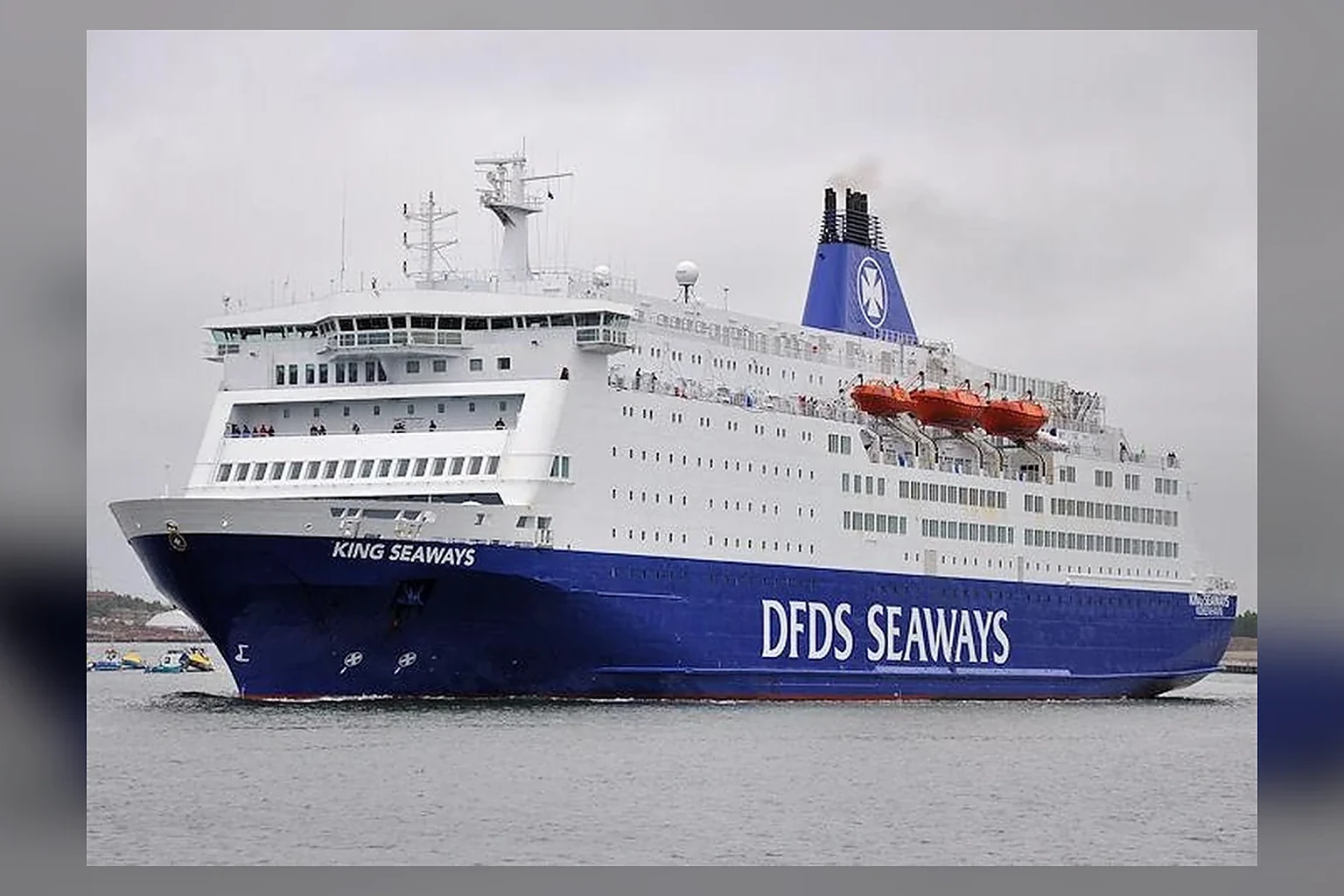
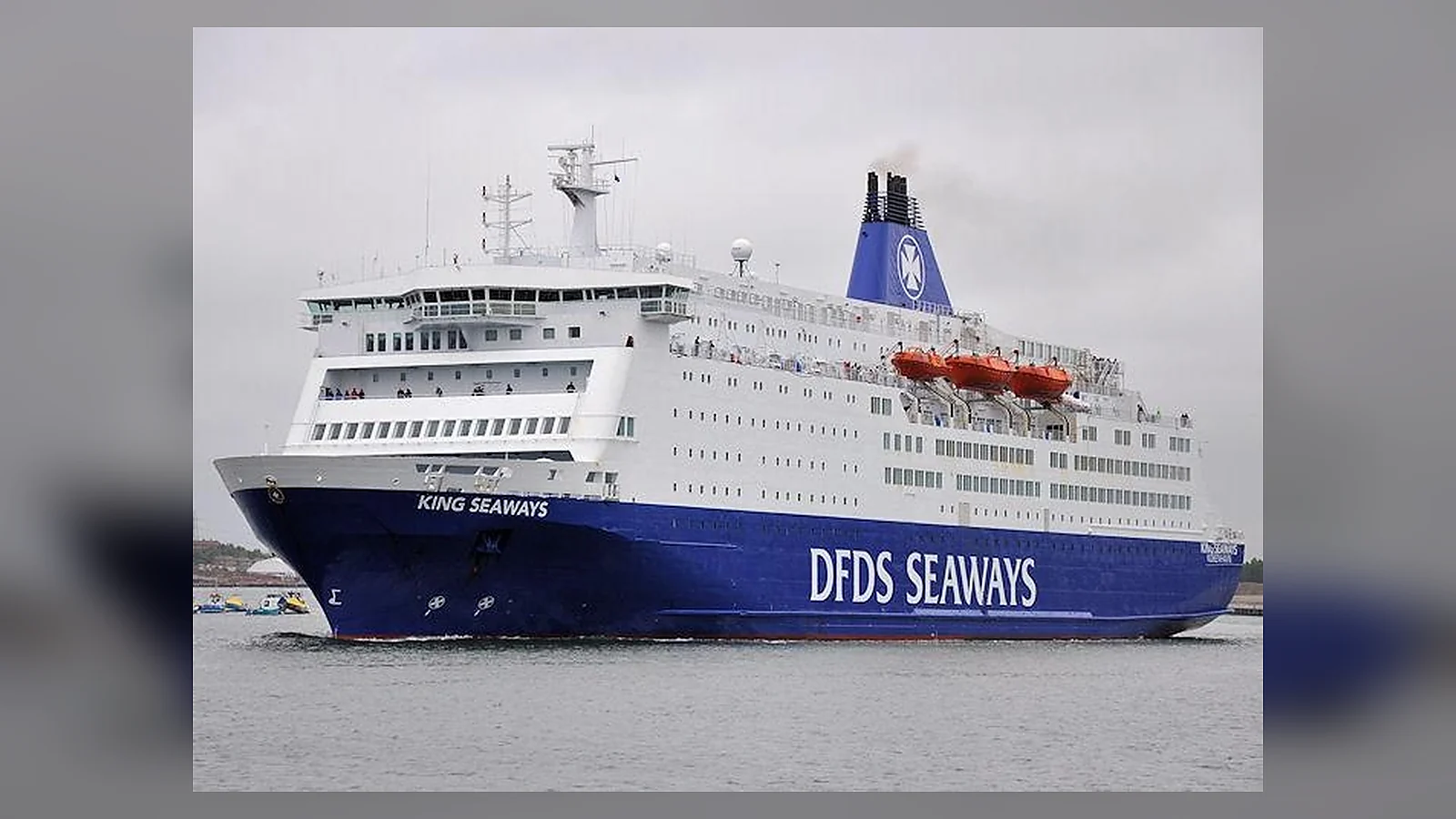
DFDS Seaways passenger ferry at sea
Historic DFDS passenger-ferry name • North Sea & Baltics

DFDS Seaways

A practical guide for travellers searching the DFDS Seaways name, with current DFDS overnight ferry links across the North Sea, Baltic Sea and Ireland–France corridor.

North Sea & Baltic Overnight ferry focus Current DFDS services
Plan your DFDS Seaways journey

Search current DFDS sailings

Compare current DFDS routes that continue the North Sea and Baltic passenger-ferry tradition associated with the Seaways name.

DFDS Seaways is a historic passenger-ferry brand rather than a separate current booking system. Current schedules, fares and operating conditions are published by DFDS and vary by route.

DFDS Seaways ferry
The Seaways name remains familiar across DFDS passenger ships and northern European ferry travel
About the operator

The historic Seaways name behind today’s DFDS passenger ferries

DFDS introduced the DFDS Seaways name in 2010 as part of a group-wide branding strategy that brought its passenger and shipping activities under a common identity. Today the passenger website and booking journey are generally presented simply as DFDS, but the Seaways name remains highly visible in vessel names, terminal references and traveller searches.

For passengers, “DFDS Seaways” is therefore best understood as a gateway into the current DFDS ferry network rather than a separate operator with its own timetable. The strongest Seaways-style journeys are longer North Sea and Baltic crossings where private cabins, restaurants, bars, shopping and overnight travel are central to the experience.

This page focuses on current longer DFDS passenger services that fit the traditional “Seaways” travel style: Newcastle–Amsterdam, Kiel–Klaipeda, Karlshamn–Klaipeda, Kapellskär–Paldiski, Trelleborg–Klaipeda and Rosslare–Dunkirk. Historic routes such as Copenhagen–Oslo are not treated as current DFDS passenger services.

Brand context: DFDS Seaways was introduced as a brand name in 2010. Current passenger bookings are made through DFDS, so FerryEU uses “DFDS Seaways” here as a recognised historic/search term and directs travellers to current DFDS services.
Classic Seaways-style journeys

DFDS Seaways ferry routes

These six current DFDS passenger routes best represent the longer North Sea, Baltic and direct international crossings historically associated with the Seaways identity.

Up to 5 weeklyDirect Ireland–France
IrelandRosslare
to
FranceDunkirk

Rosslare–Dunkirk is a direct Ireland–France crossing of about 24 hours. The passenger product includes a private cabin and meals, making it a practical alternative to travelling through Britain for European road trips.

  • Around 24 hours
  • Vehicles and bicycles accepted
  • Cabin and four meals included in the passenger product
Compare Rosslare–Dunkirk sailings
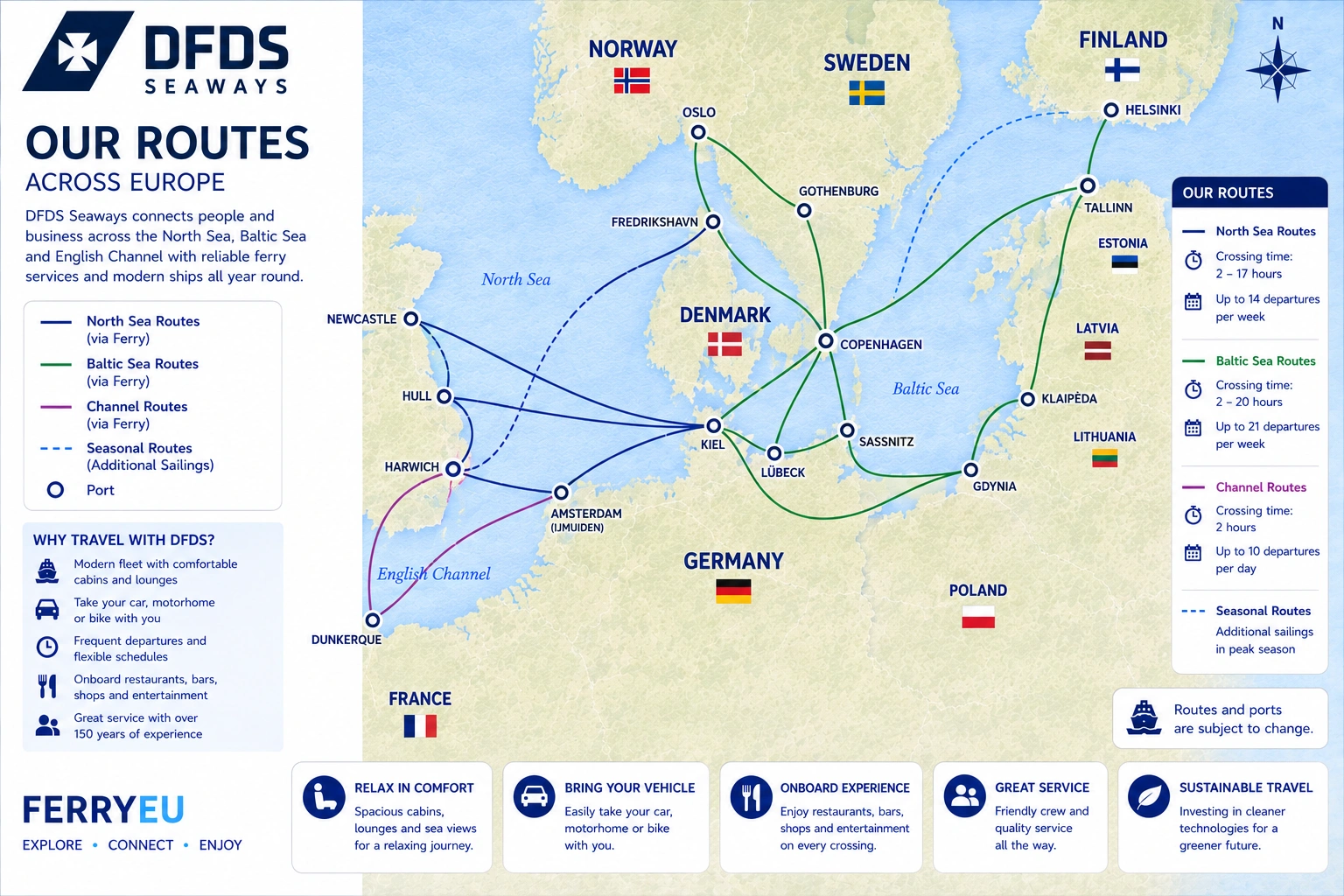
Illustrative network

Selected current routes at a glance

This schematic summarises the three representative current route groups described above. It is not a complete network map or timetable; the live operator booking result is definitive.

For planning with DFDS Seaways, use the map to compare the representative route groups above, including Newcastle–Amsterdam, Kiel–Klaipeda, Rosslare–Dunkirk. It is most useful for judging which departure or arrival point best fits the rest of the journey rather than as a substitute for the live timetable.

After choosing the most practical route, compare the live DFDS Seaways sailing for departure time, calling pattern, passenger requirements and the facilities or accommodation shown for that service. The complete itinerary and arrival location can matter more than a small difference in the headline fare.

Use the map to understand geography, then confirm the live route and departure port through the booking system.

DFDS Seaways route map
Illustrative DFDS Seaways route map. Routes and operating patterns can change; check the live timetable for your date.
Ports that anchor longer journeys

Seaways gateways worth building a trip around

Longer DFDS crossings are often chosen because the arrival port gives a practical starting point for a wider road trip. These three gateways illustrate that role.

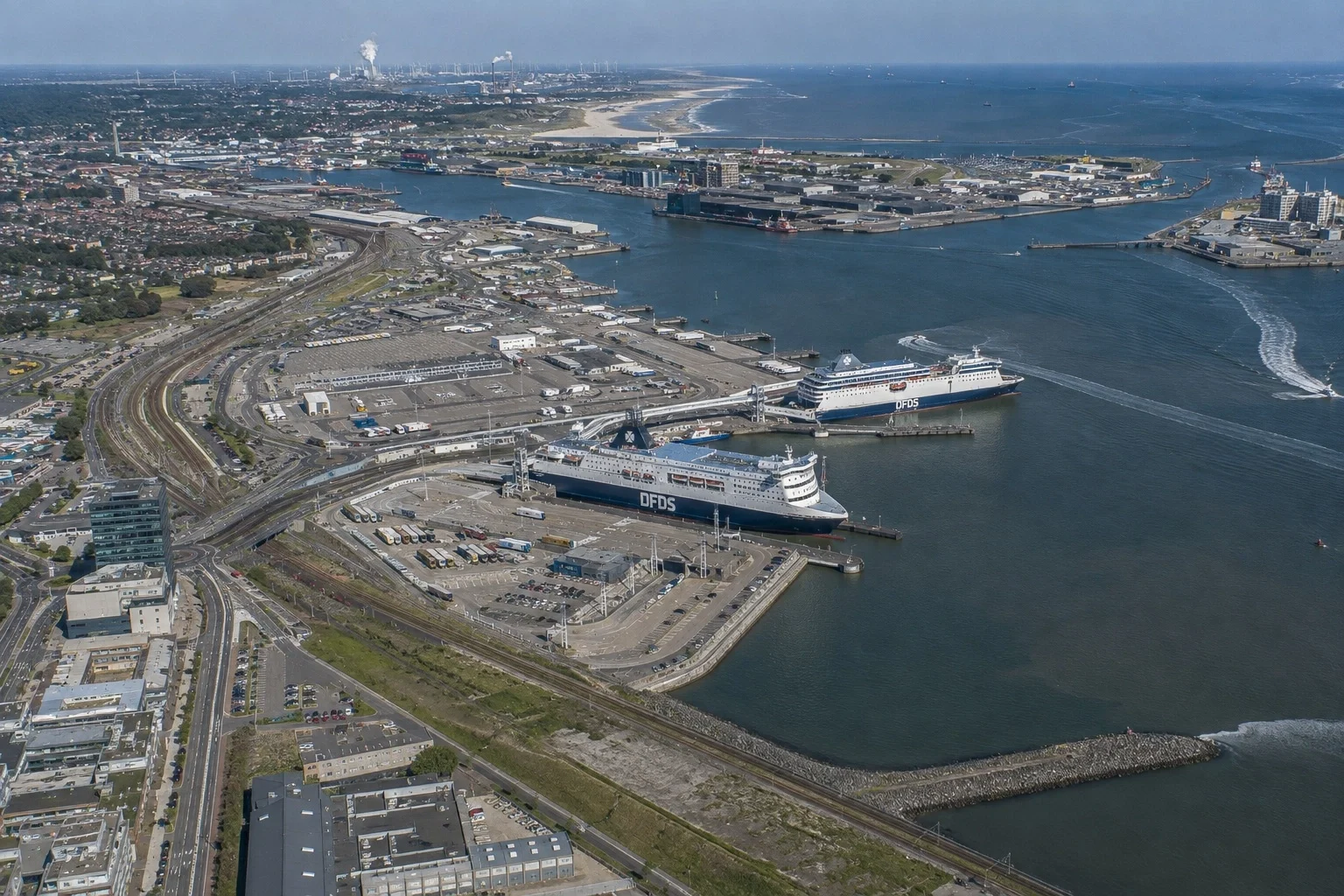
Amsterdam & IJmuiden ferry destination
North Sea gateway

Amsterdam & IJmuiden

The Newcastle ferry arrives at IJmuiden, with Amsterdam and the Dutch motorway network within easy reach. It works equally well for city breaks and onward driving into Belgium or Germany.

Explore Netherlands crossings
Klaipeda ferry destination
Baltic hub

Klaipeda

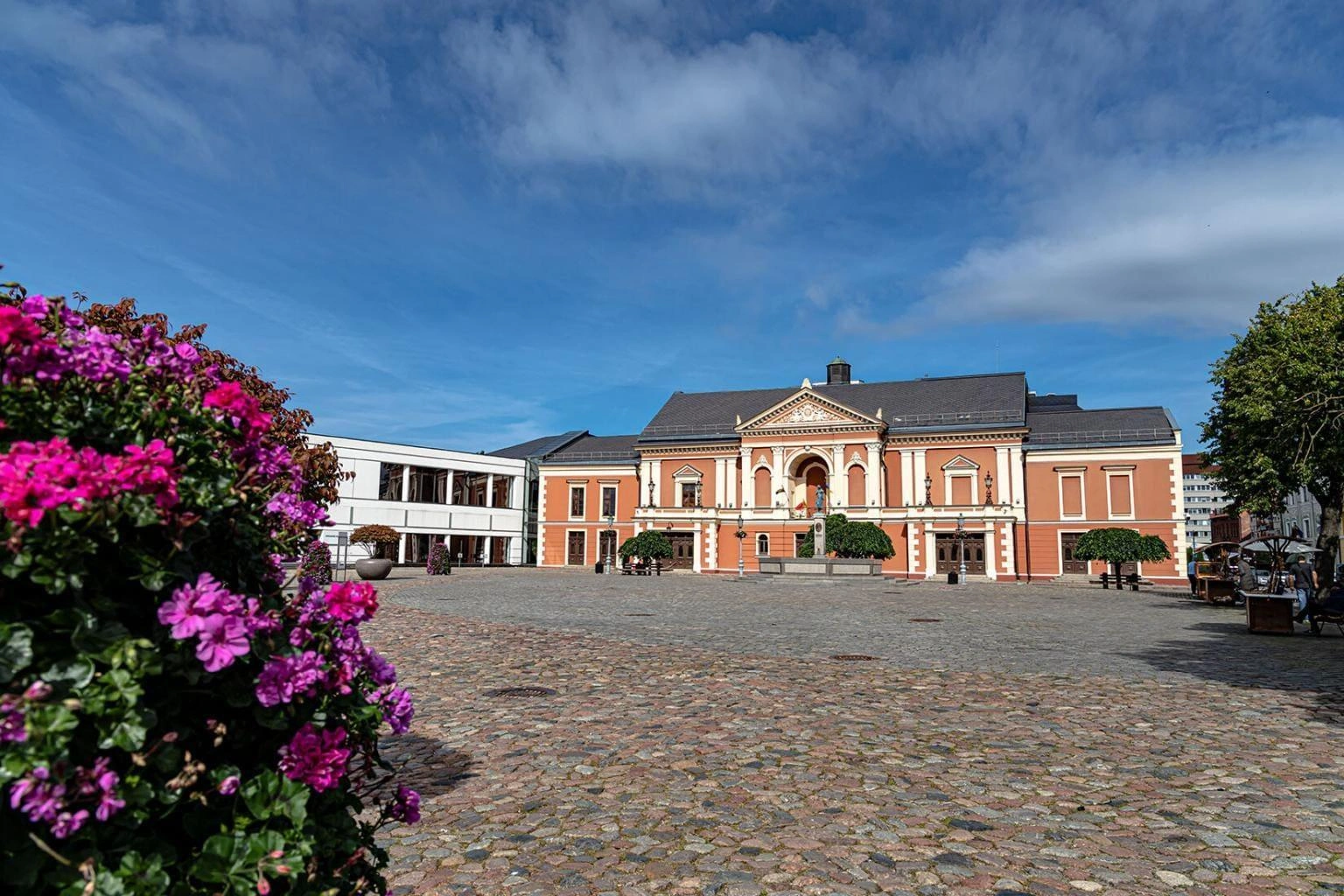
Klaipeda is the central passenger hub for DFDS Baltic links from Kiel, Karlshamn and Trelleborg, placing travellers on Lithuania’s coast with easy road access towards Latvia and the wider Baltic region.

Explore Baltic crossings
Rosslare ferry destination
Ireland gateway

Rosslare

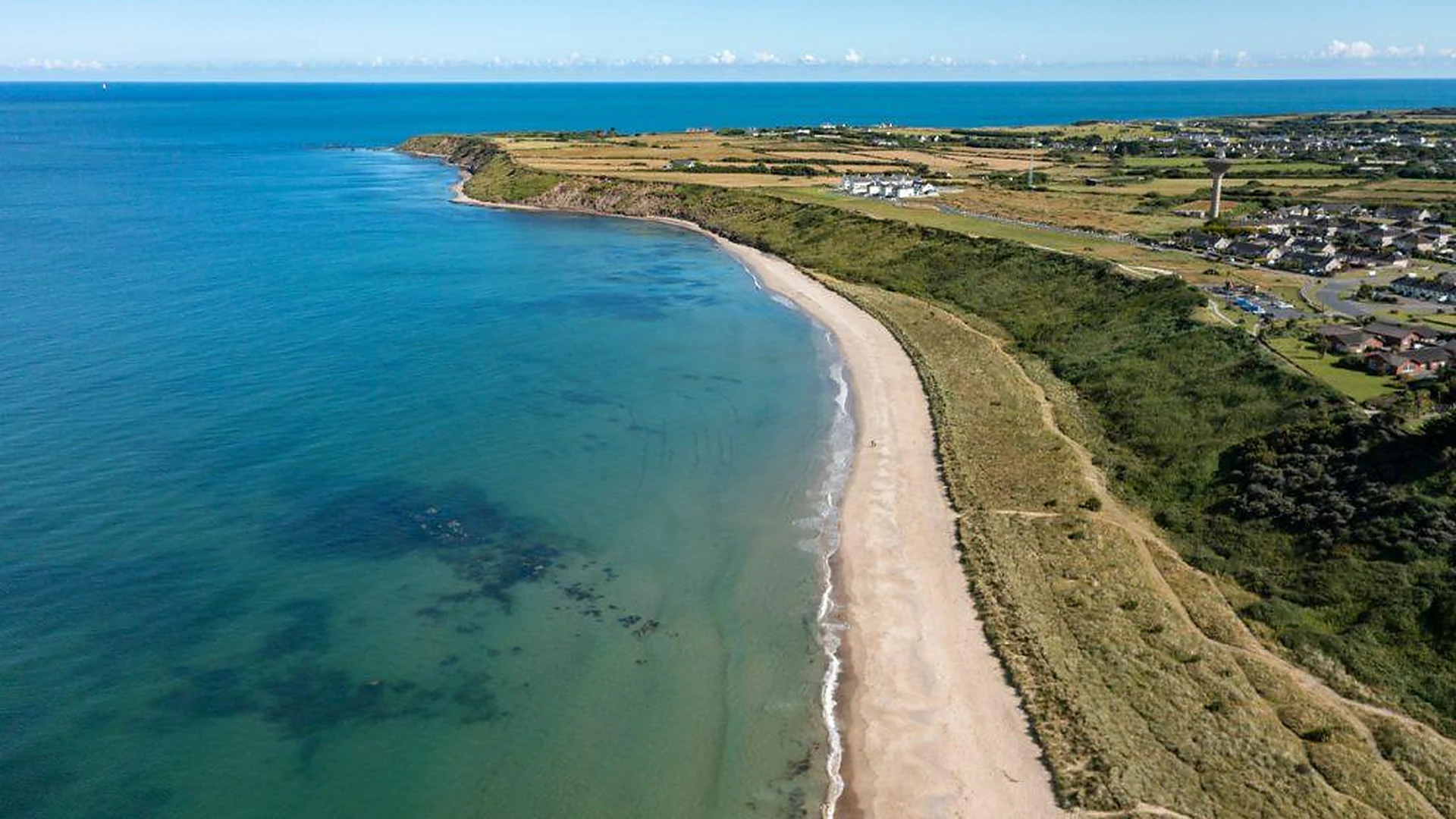
Rosslare provides a direct vehicle-ferry gateway between Ireland and continental Europe. The Dunkirk route can eliminate the need for the British land bridge on long road journeys.

Explore Ireland–France crossings
Also travelling to Jersey?

DFDS currently connects Jersey with Poole, Portsmouth and St Malo. Those crossings have their own vessel types, check-in arrangements and onboard products, so use the live itinerary rather than assuming the Channel or North Sea rules apply.

Sleep, sit or upgrade

Cabins, seats and premium comfort

The Seaways tradition is most visible on longer routes, where accommodation can be part of the transport product rather than an optional extra.

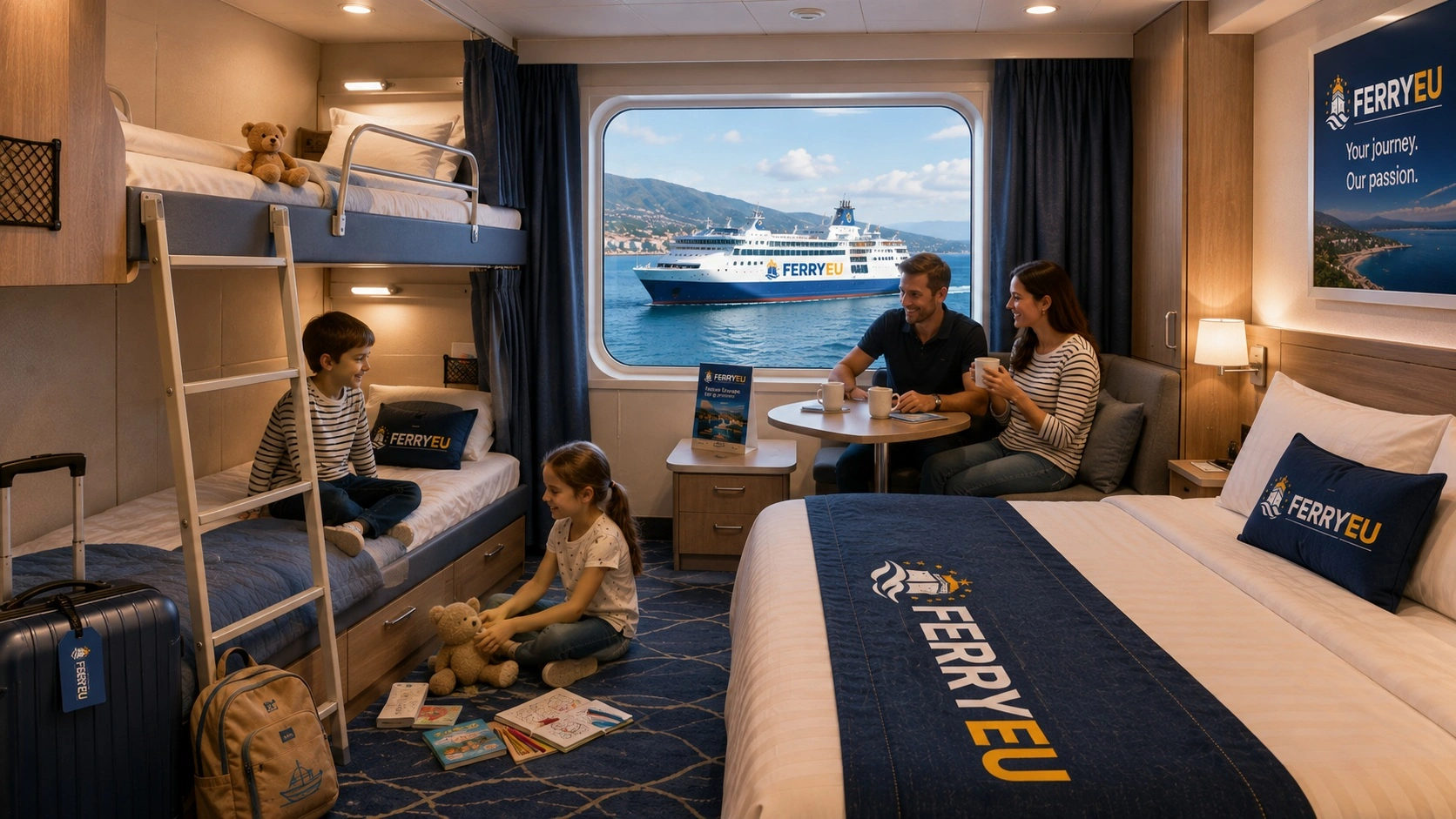
Family ferry cabin with beds
Private en suite cabins turn overnight ferry travel into a practical alternative to an extra hotel stop.
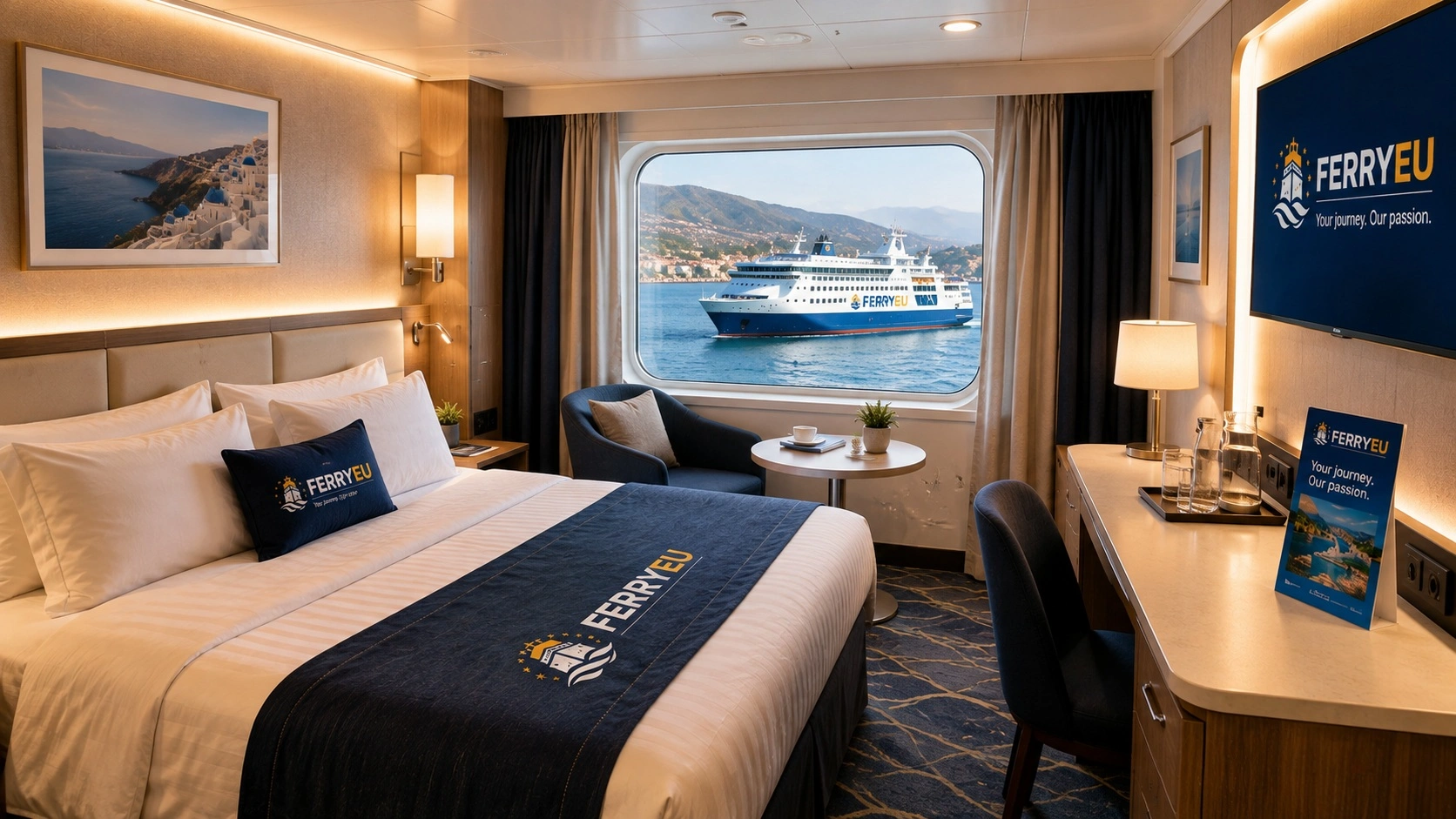
Premium passenger ferry cabin
Upgraded and sea-view cabins add space or comfort on selected North Sea and Baltic sailings.

Standard en suite cabins

Longer DFDS routes offer private cabins in several berth configurations, with inside and sea-view categories depending on ship.

Best considered for Overnight journeys and private rest

Premium and Commodore cabins

Selected routes offer higher-grade accommodation with more space, upgraded furnishings or extra amenities.

Best considered for Travellers wanting more space and comfort

Reclining seats and deck products

Some Baltic sailings offer lower-cost seated or deck-ticket products, but availability depends on route and departure time.

Best considered for Lower-cost travel on eligible sailings

Private cabin on Newcastle–Amsterdam

A cabin is central to the overnight North Sea journey and lets passengers arrive rested for onward travel.

Best considered for Overnight North Sea travel

Pet-friendly accommodation

Selected ships offer pet-friendly cabins or kennels. The permitted product must be booked in advance.

Best considered for Travelling with pets on overnight routes

Accessible cabins

Accessible cabins are available on appropriate vessels, but capacity is limited and assistance should be requested early.

Best considered for Passengers requiring adapted accommodation
Cabin booking tip

Search early for summer weekends and school-holiday dates. A cabin category can sell out even when passenger and vehicle space remains available, and a last-minute upgrade should never be assumed.

Bring the road trip onboard

Cars, campervans, bicycles and pets

The longer Seaways-style routes are particularly useful for travellers taking a vehicle between regions that would otherwise require substantial overland detours.

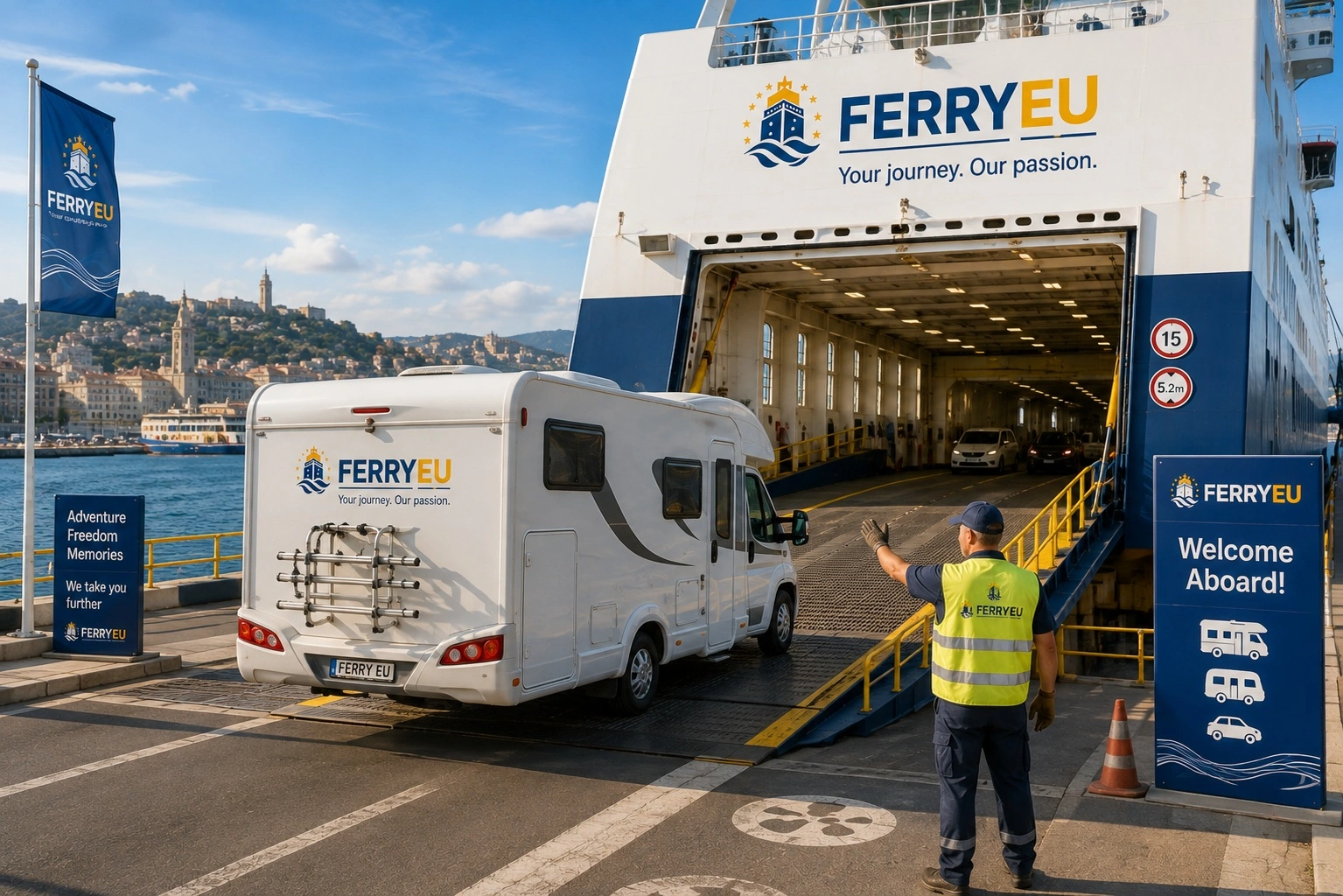
Motorhome boarding a passenger ferry
Campervans and motorhomes should be booked using their full travelling dimensions.
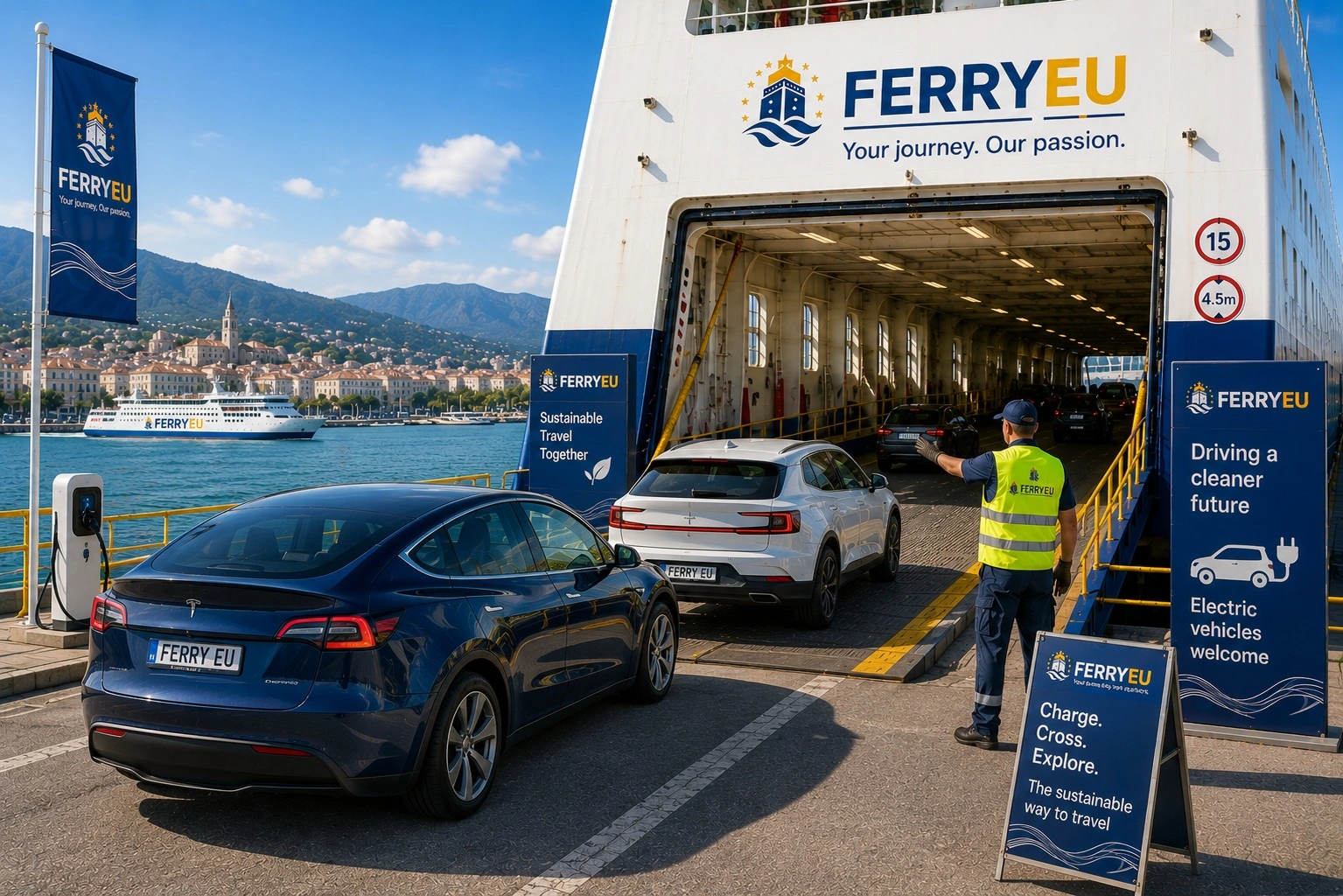
Electric vehicles boarding a ferry
Electric vehicles are accepted on current DFDS routes but cannot be charged onboard.
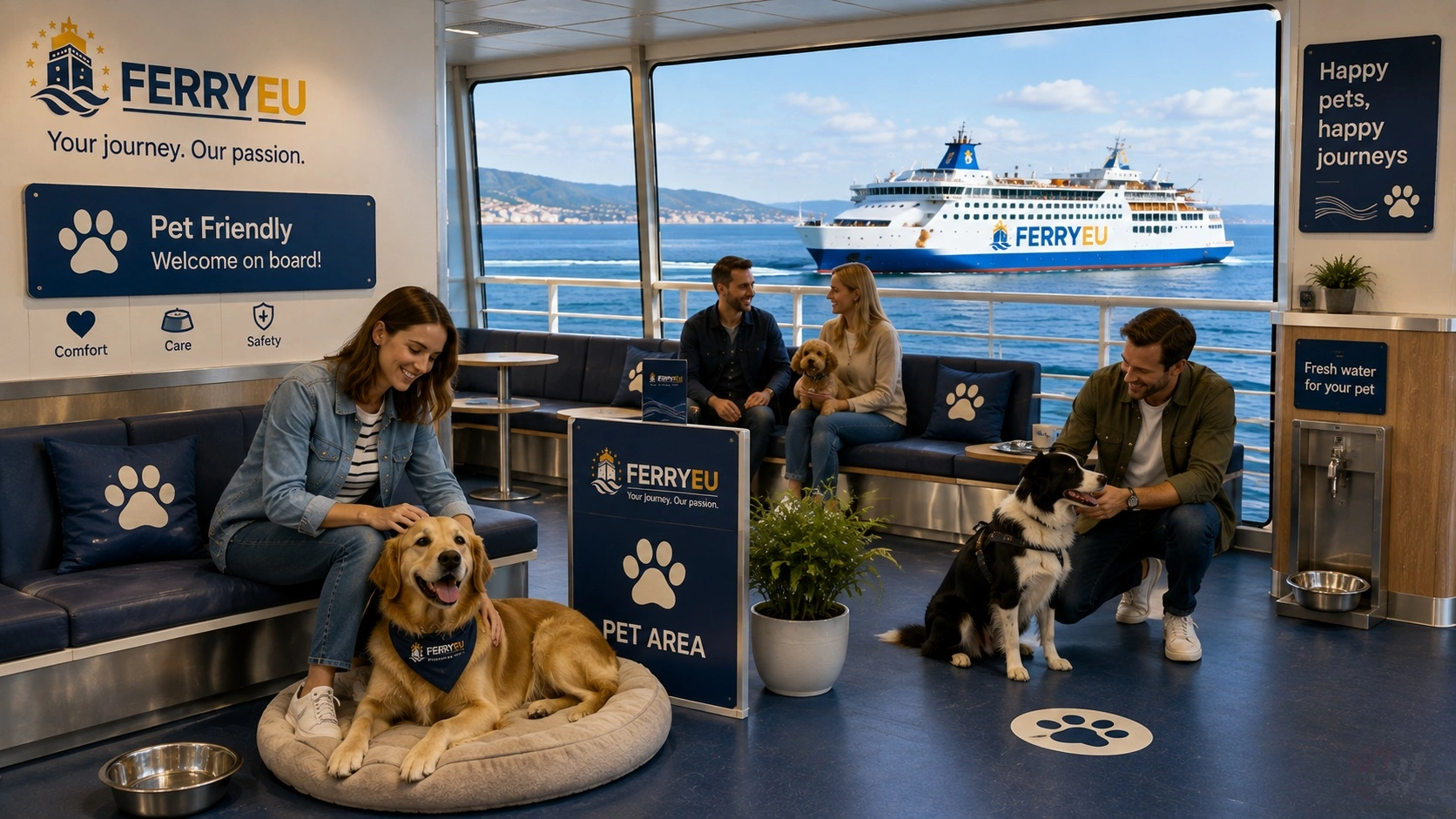
Passengers travelling with a dog by ferry
Pet arrangements can include pet-friendly cabins, kennels or other approved route-specific options.

Cars, motorcycles and touring vehicles

Enter the exact vehicle dimensions, including roof boxes, racks, tow bars, caravans and trailers. Baltic vehicle categories differ from Channel products, so select the correct route and vehicle type.

  • Dover–France services require a vehicle
  • Longer routes are well suited to road trips with luggage
  • Incorrect dimensions can lead to charges or boarding problems

Bicycles and partner-operated routes

Bicycles are accepted on many longer routes. Some Baltic departures are operated under capacity-sharing arrangements, so check the sailing-specific conditions before booking.

  • Select bicycles where the booking flow provides the option
  • Include rear carriers in total vehicle length
  • Check route-specific limits before arriving at port

Travelling with pets

Pets are welcome on many DFDS routes. Microchip and travel documents are checked where required, and the available cabin, kennel or vehicle arrangement varies by crossing.

  • Pet microchips and documents are checked on relevant routes
  • Dogs may not be permitted to remain in vehicles on some crossings
  • Book pet accommodation before capacity fills

Reduced mobility and assistance

DFDS asks passengers requiring special assistance to notify the operator when booking or no later than 48 hours before departure so suitable support can be arranged.

  • State mobility and medical equipment requirements clearly
  • Accessible accommodation is limited on some routes
  • Allow additional time for assisted boarding
Before an overnight crossing

Check-in, documents and boarding

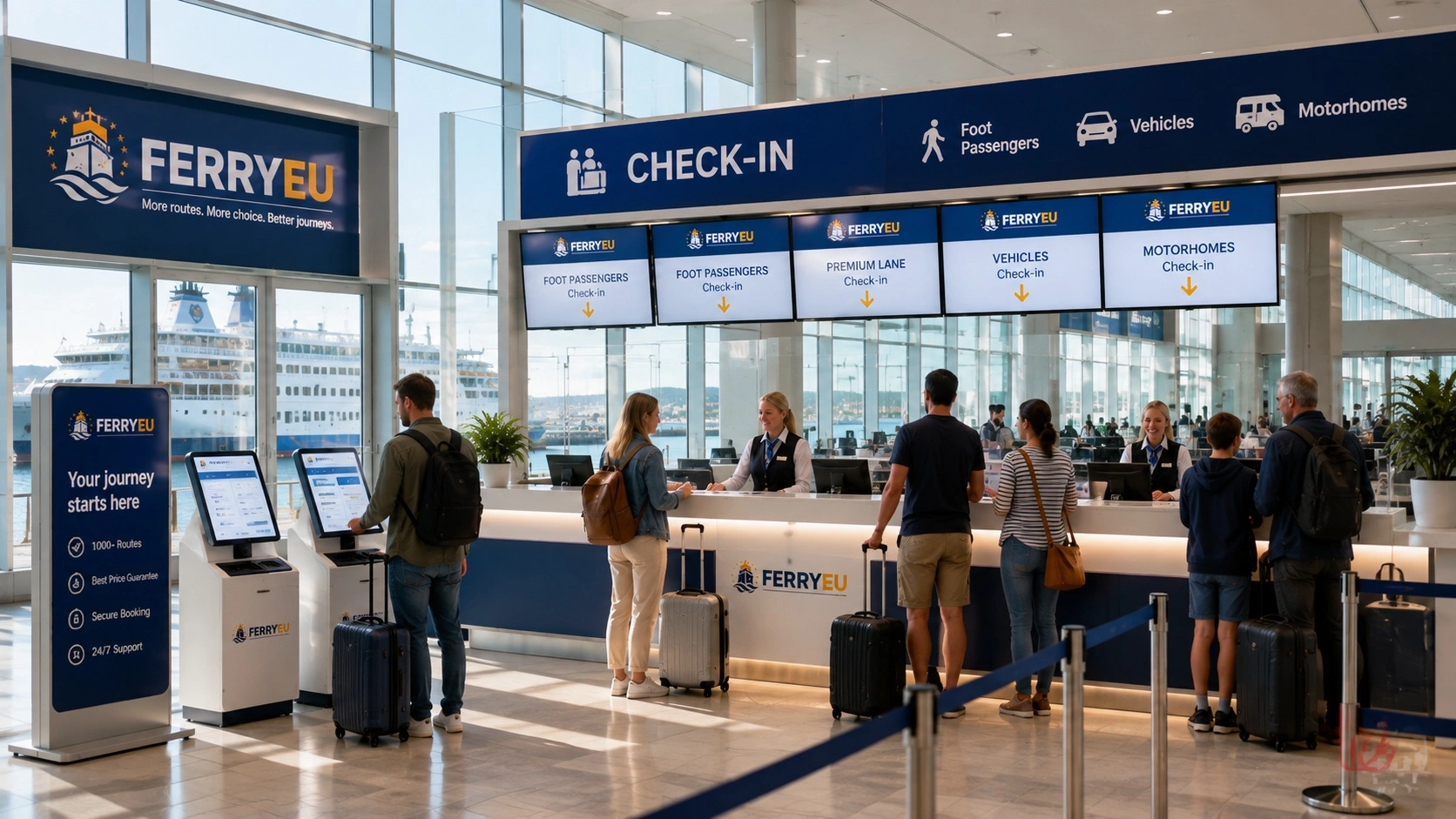
The Seaways routes covered here have different terminals and check-in deadlines. Always use the deadline printed on the booking confirmation and allow extra time for border controls, pets, vehicles or accessibility assistance.

Recommended travel sequence

  1. When booking
    Book the current DFDS route

    Treat “DFDS Seaways” as a familiar brand/search term, but use the current DFDS booking system and confirm the actual route, vessel and accommodation product.

  2. 48 hours before
    Confirm assistance requirements

    DFDS asks passengers requiring accessibility support to notify the operator by booking time or no later than 48 hours before departure.

  3. Before travel
    Check live sailing information

    Review terminal directions, local-time departure, check-in closing time and any travel updates. Baltic services can also involve partner-operated sailings.

  4. Route-specific deadline
    Arrive before check-in closes

    Longer North Sea and Baltic routes commonly close check-in well before departure. Use the exact deadline shown for your sailing rather than assuming one network-wide time.

  5. During boarding
    Keep documents accessible

    Passports, booking reference, pet documents and correct vehicle information should be ready for terminal, security and border checks.

Is a Seaways-style crossing right for you?

When a longer DFDS ferry can make sense

Longer DFDS routes are attractive when the ferry itself replaces a substantial driving detour or an extra hotel night. Newcastle–Amsterdam bridges northern Britain and continental Europe overnight, while Baltic crossings remove the need to drive around the sea.

Compare the full journey rather than the base ticket price: driving distance to the port, cabin requirement, meals, road tolls, fuel, onward motorway access and the time you save after arrival can materially change the value.

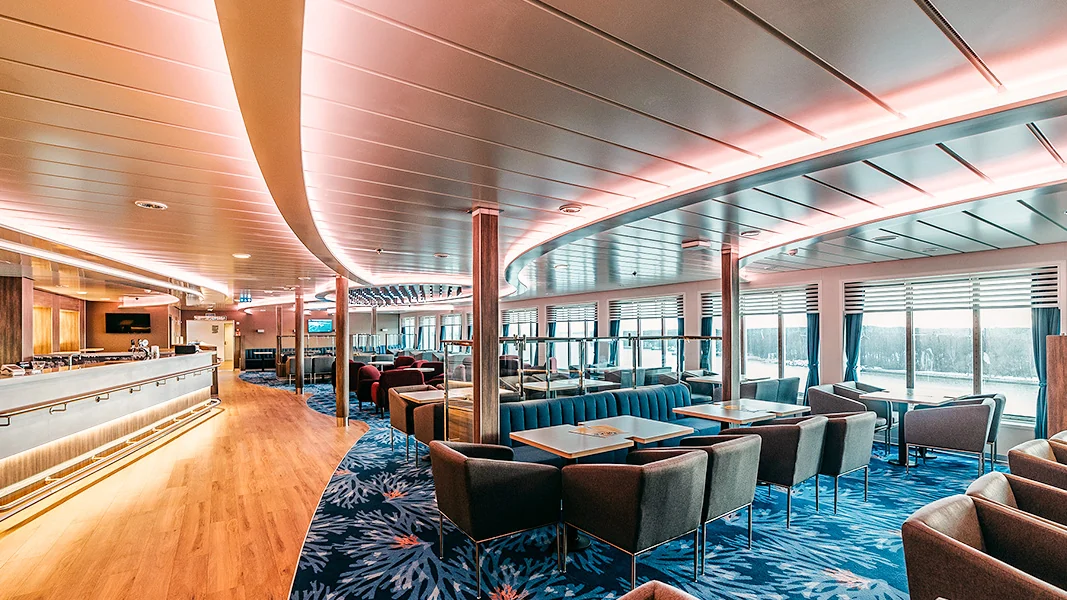
For travellers who remember the DFDS Seaways name, the current passenger experience still feels familiar on these routes: overnight cabins, vehicle decks, restaurants, bars, shops and long stretches of open sea remain central to the product.

Common Seaways questions

DFDS Seaways FAQs

Is DFDS Seaways still a separate ferry company?

DFDS Seaways is best understood as a historic DFDS passenger-ferry brand. DFDS introduced the Seaways name in 2010, while current passenger booking and route information are generally presented simply under the DFDS brand.

Why do so many DFDS ships still use the Seaways name?

The Seaways identity remains visible in vessel names such as King Seaways, Princess Seaways, Aura Seaways and other ships, so travellers continue to search for DFDS Seaways even though the current customer-facing brand is DFDS.

Which current routes best represent DFDS Seaways?

Longer current routes associated with the classic Seaways passenger experience include Newcastle-Amsterdam, Kiel-Klaipeda, Karlshamn-Klaipeda, Paldiski-Kapellskar, Trelleborg-Klaipeda and Rosslare-Dunkirk.

How long is Newcastle to Amsterdam?

DFDS currently publishes a journey time of about 16 hours 45 minutes on the daily Newcastle-Amsterdam overnight route.

How long is Karlshamn to Klaipeda?

The Karlshamn-Klaipeda route takes about 13 hours. Some departures are operated under a capacity-sharing arrangement with TT-Line.

Can foot passengers travel on DFDS Seaways routes?

Foot-passenger acceptance depends on the route. Newcastle-Amsterdam, Karlshamn-Klaipeda, Kiel-Klaipeda and Trelleborg-Klaipeda accept passengers without a car, while Paldiski-Kapellskar requires a vehicle.

Are cabins available on these routes?

Yes. Private cabins are central to most overnight North Sea and Baltic crossings, with standard, sea-view, premium, accessible and pet-friendly categories available according to ship and route.

Can pets travel on DFDS Seaways services?

Pets are accepted on many current DFDS routes, but the arrangement varies by crossing and can include pet-friendly cabins, kennels or another approved option. International pet documents must be correct.

Can I take a car, campervan or bicycle?

Yes on the main routes covered here. Vehicle dimensions must be entered accurately, and bicycles are accepted on many passenger services. Electric vehicles can travel but cannot be charged onboard.

How early should I arrive?

Check-in deadlines differ by route and terminal. Use the time shown on the booking confirmation and allow additional time for border formalities, vehicles, pets and accessibility assistance.

Ready to cross?

Compare current DFDS Seaways-style sailings

Search today’s DFDS routes, dates, cabins and vehicle availability across the North Sea, Baltic Sea and Ireland–France network.

Search DFDS Tickets