Travel across one of Europe's broadest ferry networks, linking Britain and Ireland with Holland
while connecting Scandinavia, Germany, Poland, Latvia and Finland.
Extensive European network Cars & touring vehicles Day & overnight routes
Stena Line withdrew its Rosslare–Cherbourg service in September 2025. Brittany Ferries continues to serve the crossing; compare its dated sailings, passenger eligibility and vessel facilities. Stena Line discontinued the Grenaa–Halmstad ferry route on 30 April 2026. It is no longer an operating Stena Line passenger crossing. For a Denmark–Sweden ferry alternative, compare Frederikshavn–Gothenburg and allow for the different road journey at each end.
The booking form is pre-filtered to this ferry company where supported. Choose the route, date, passengers and vehicle details to compare available sailings. Click Here to view all other ferry operator routes and destinations.
Check the selected route, passengers, vehicle details and travel date before completing the reservation.
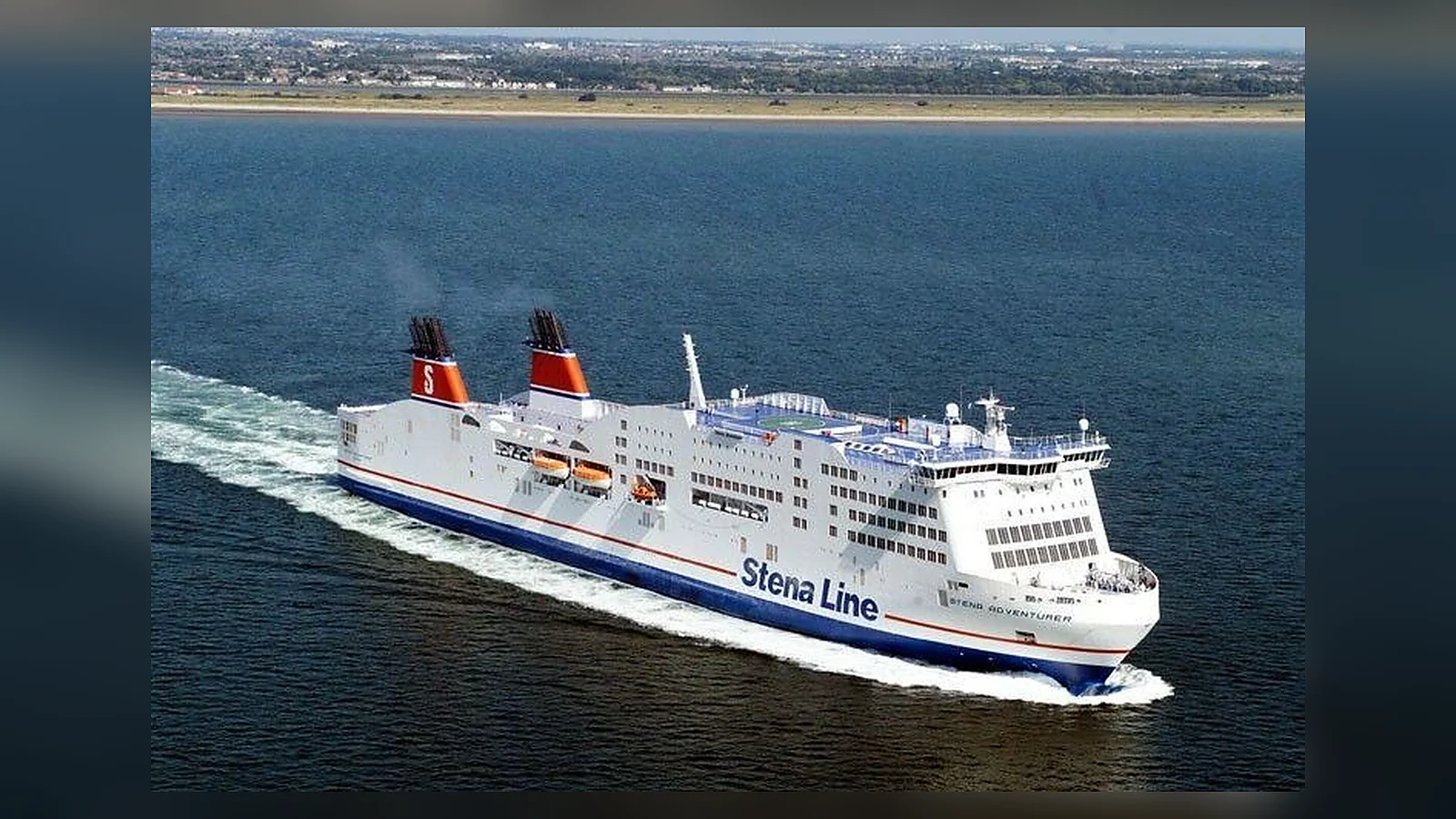
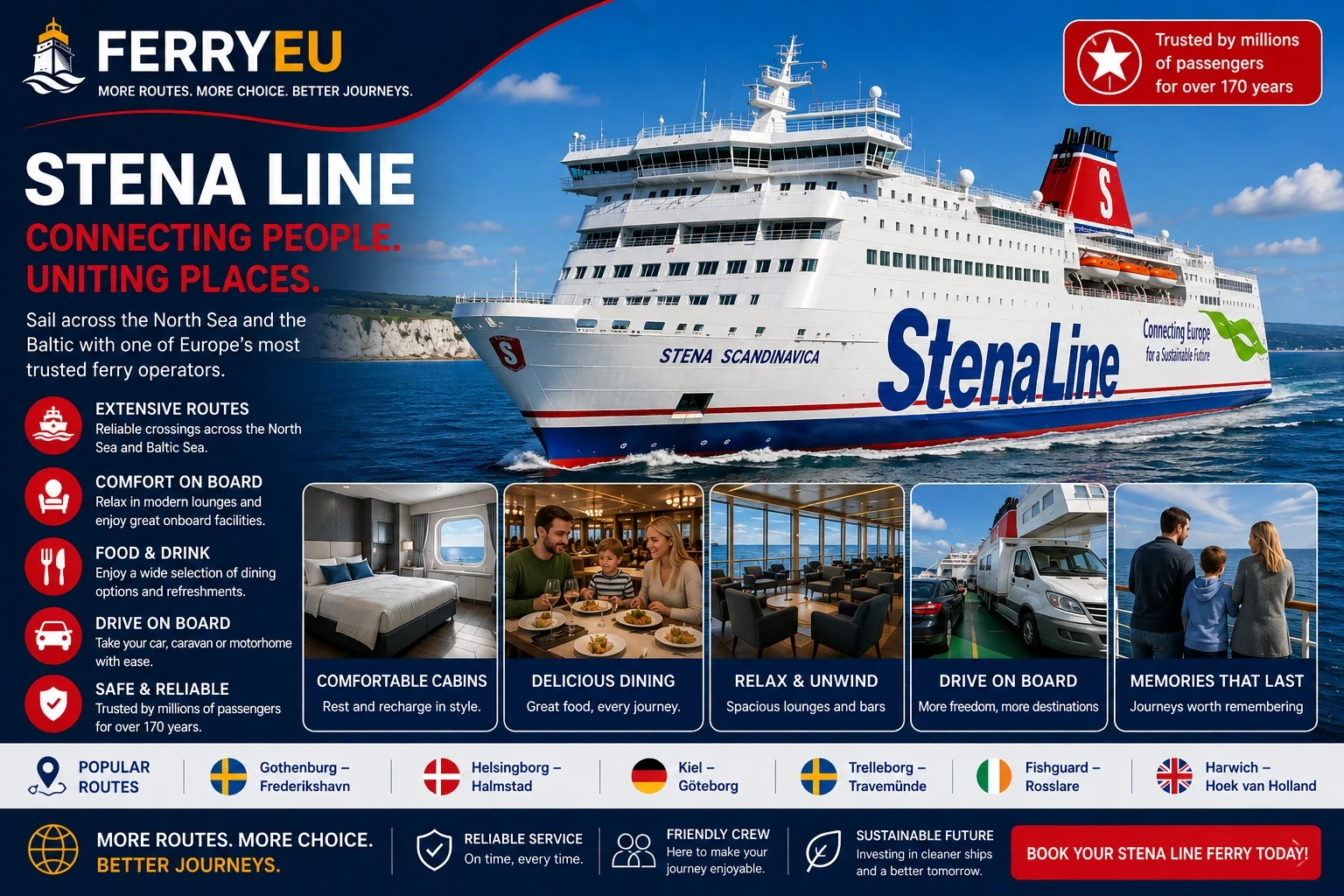
Stena Line passenger and vehicle ferry
About the operator
One operator, many very different European ferry journeys
Stena Line operates one of Europe's largest ferry networks. Its current corporate route map spans 20
routes across 11 countries, covering the Irish Sea, North Sea, Scandinavia, the Baltic and
Mediterranean corridors.
For passenger travellers, familiar services include Cairnryan–Belfast, Liverpool–Belfast,
Holyhead–Dublin, Fishguard–Rosslare, Harwich–Hook of Holland, Gothenburg–Frederikshavn,
Gothenburg–Kiel, Trelleborg–Rostock, Karlskrona–Gdynia, Travemünde–Liepāja and Nynäshamn–Ventspils.
Stena Line also completed its acquisition of Wasaline in March 2026, taking over the Umeå–Vaasa
route while retaining the Wasaline brand. The wider group network also contains freight-focused
corridors and Mediterranean services, so not every Stena route offers the same passenger product.
FerryEU planning note: route-specific information matters more with Stena Line than with a small regional operator. Always check the exact ferry, check-in time, pet option and cabin product for the route you book.
Representative routes across three Stena regions
Stena Line routes
Stena's network is too large to reduce to three routes, so these cards represent three very
different passenger journeys: Britain–Holland, Britain–Ireland and Scandinavia–Germany.
From 6h 30mNorth Sea
England
Harwich
Netherlands
Hook of Holland
The Harwich–Hook of Holland Superferry route offers daytime and overnight sailings from about 6
hours 30 minutes, with private en-suite cabins, restaurants and Stena Plus.
Direct route from southern England to Holland and Germany
A European network rather than a single ferry corridor
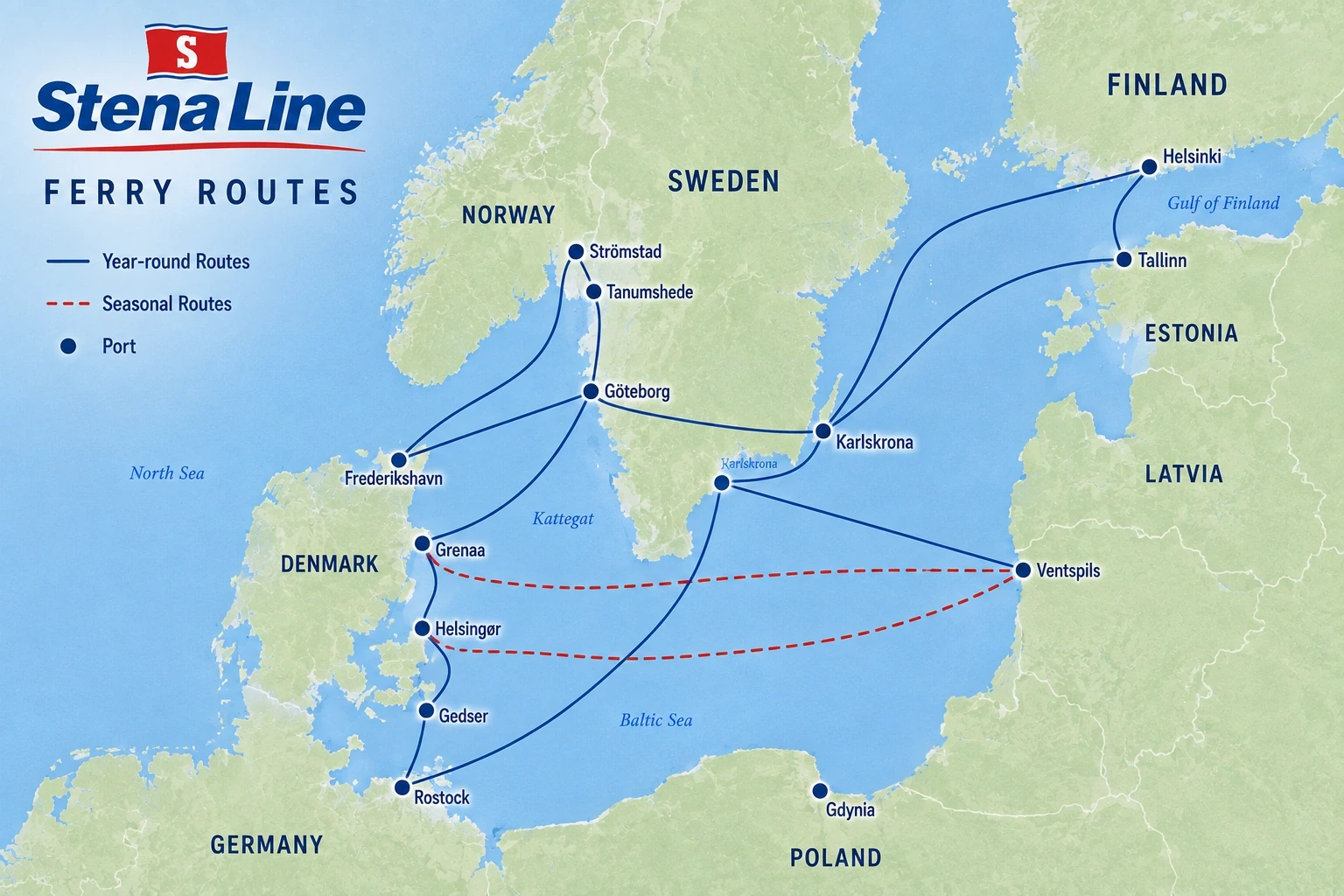
The FerryEU map illustrates Stena Line's broad passenger network across the Irish Sea, North Sea,
Scandinavia and Baltic. The current Stena group network also includes Umeå–Vaasa under the Wasaline
brand and Mediterranean operations.
Use the map for orientation only. Some corporate Stena Line routes are freight-focused, and
passenger facilities vary considerably by corridor and vessel.
After choosing the most practical route, compare the live Stena Line sailing for departure time,
calling pattern, passenger requirements and the facilities or accommodation shown for that service.
The complete itinerary and arrival location can matter more than a small difference in the headline
fare.
When comparing Stena routes, identify the specific passenger route first; do not assume a route
appearing on the corporate network map accepts ordinary tourist bookings.
Illustrative Stena Line route map — verify the live passenger timetable for your selected route.
Three gateways from a much wider network
Dublin, Gothenburg and Kiel
These destinations represent Stena Line's Irish Sea and Scandinavian sides while using known FerryEU
destination imagery.
Irish Sea gateway
Dublin
Dublin is one of Stena's most important passenger destinations from Britain, with Holyhead offering
a direct road and foot-passenger connection into Ireland's capital.
Gothenburg links Stena Line services towards Kiel and Frederikshavn and provides immediate access to
western Sweden and onward Scandinavian road routes.
Stena Line's best route often depends on the motorway distance after disembarkation. Compare the
entire road-and-sea journey rather than only the crossing time.
Short crossings, day sailings and full overnight journeys
Passenger seating and cabins
Stena Line accommodation varies widely by route, from ordinary lounges on shorter crossings to
extensive cabin choices on Superferries and overnight Baltic services.
Private cabins are valuable on Harwich–Hook of Holland, Gothenburg–Kiel and other overnight routes. General and premium lounges provide flexible seating on shorter and daytime journeys.
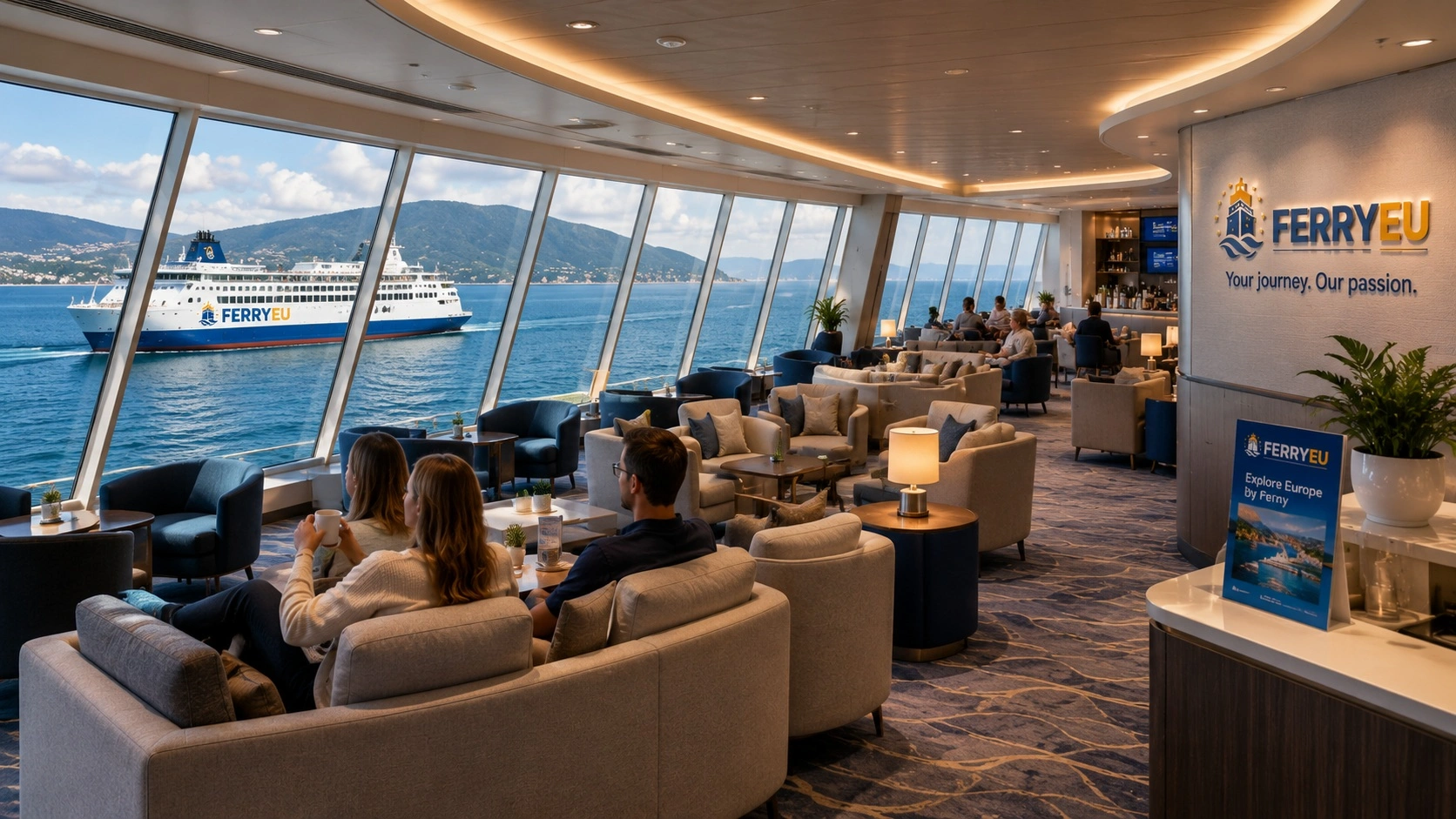
General lounges
Public passenger lounges provide the standard accommodation on short and medium routes.
Best considered forDaytime and shorter crossings
Stena Plus
Stena Plus is the operator's premium lounge product on selected routes, offering a quieter setting
and additional refreshments or benefits.
Best considered forPassengers wanting a premium lounge rather than a cabin
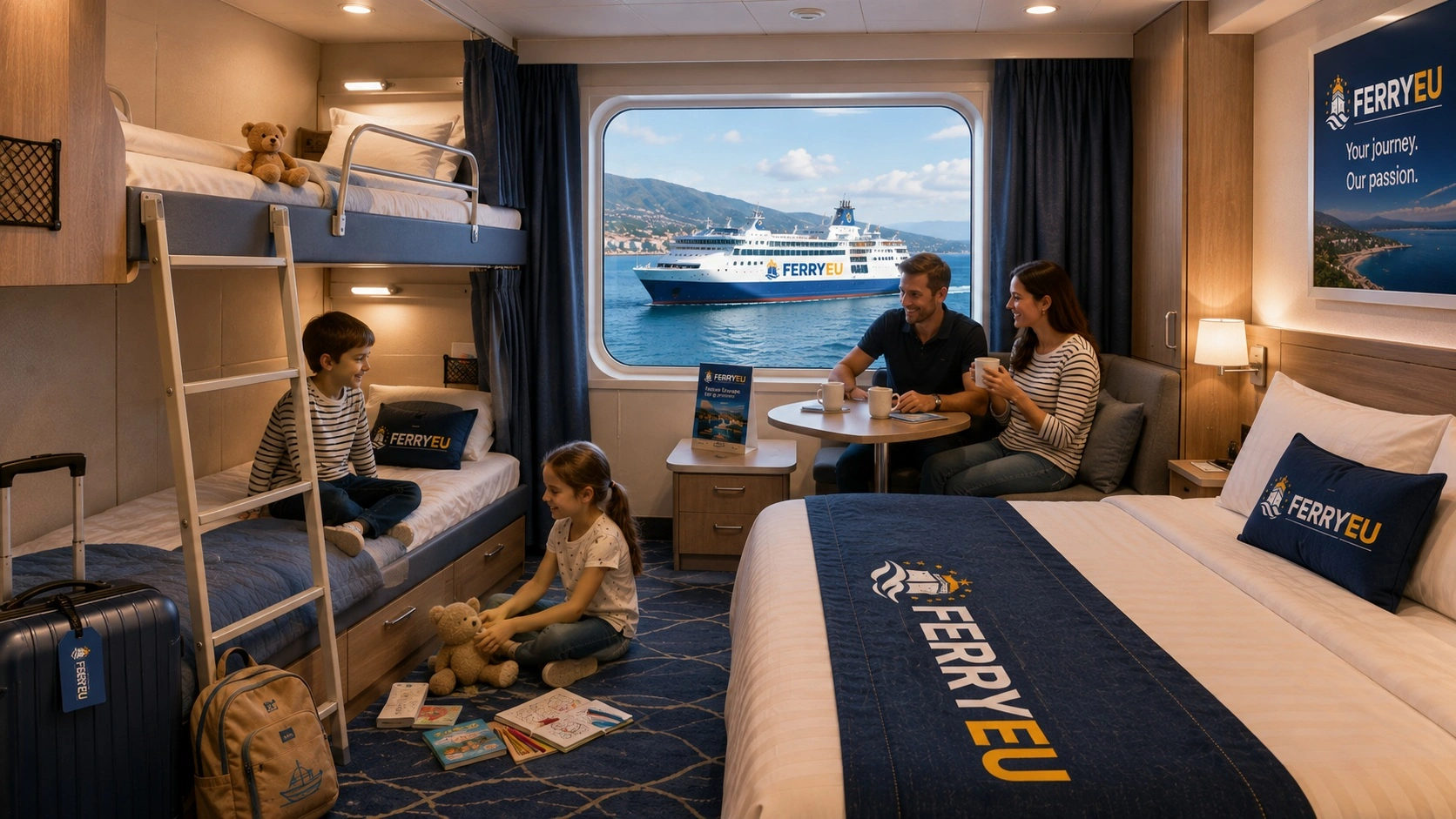
Standard cabins
Private en-suite cabins are widely available on longer Stena routes and are particularly useful on
overnight sailings.
Best considered forOvernight North Sea and Baltic travel
Premium and family cabins
Higher-category and family cabin choices vary by vessel, adding more space or additional beds for
longer journeys.
Best considered forFamilies and passengers wanting more comfort
Pet-friendly cabins
Selected ferries provide dedicated cabins where up to two pets can remain with their owners, subject
to the route and booking rules.
Best considered forLonger journeys with pets
Accessible cabins
Accessible accommodation is available on suitable ferries and should be booked with the required
assistance details in advance.
Best considered forPassengers requiring adapted overnight accommodation
Cabin tip
Check whether a cabin is compulsory or simply recommended on your route. Overnight crossings are far
more comfortable when sleeping arrangements are booked in advance.
Facilities vary by ship and region
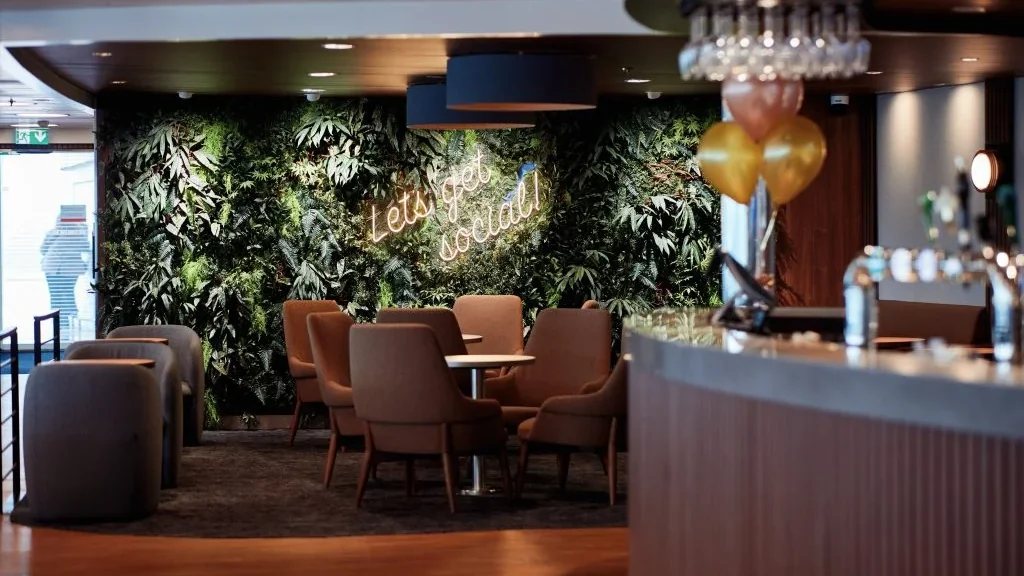
Restaurants, lounges, shopping and family facilities
Stena Line's larger ferries can provide a broad onboard experience, while shorter routes keep things
simpler. Always check the assigned ship if a specific facility matters.
Restaurants, cafés and bars vary by route and vessel. Large lounges and premium Stena Plus areas are available on selected ships. Shopping is a major feature on UK and Irish Sea routes and is also available on many continental services. Family Hub and children's areas appear on selected Stena ferries.
Restaurants and cafés
Stena Line ships offer route-specific dining ranging from cafés and casual food to full restaurants
on longer ferries.
Stena Plus
Selected ferries offer a premium lounge for passengers wanting a quieter journey with enhanced comfort.
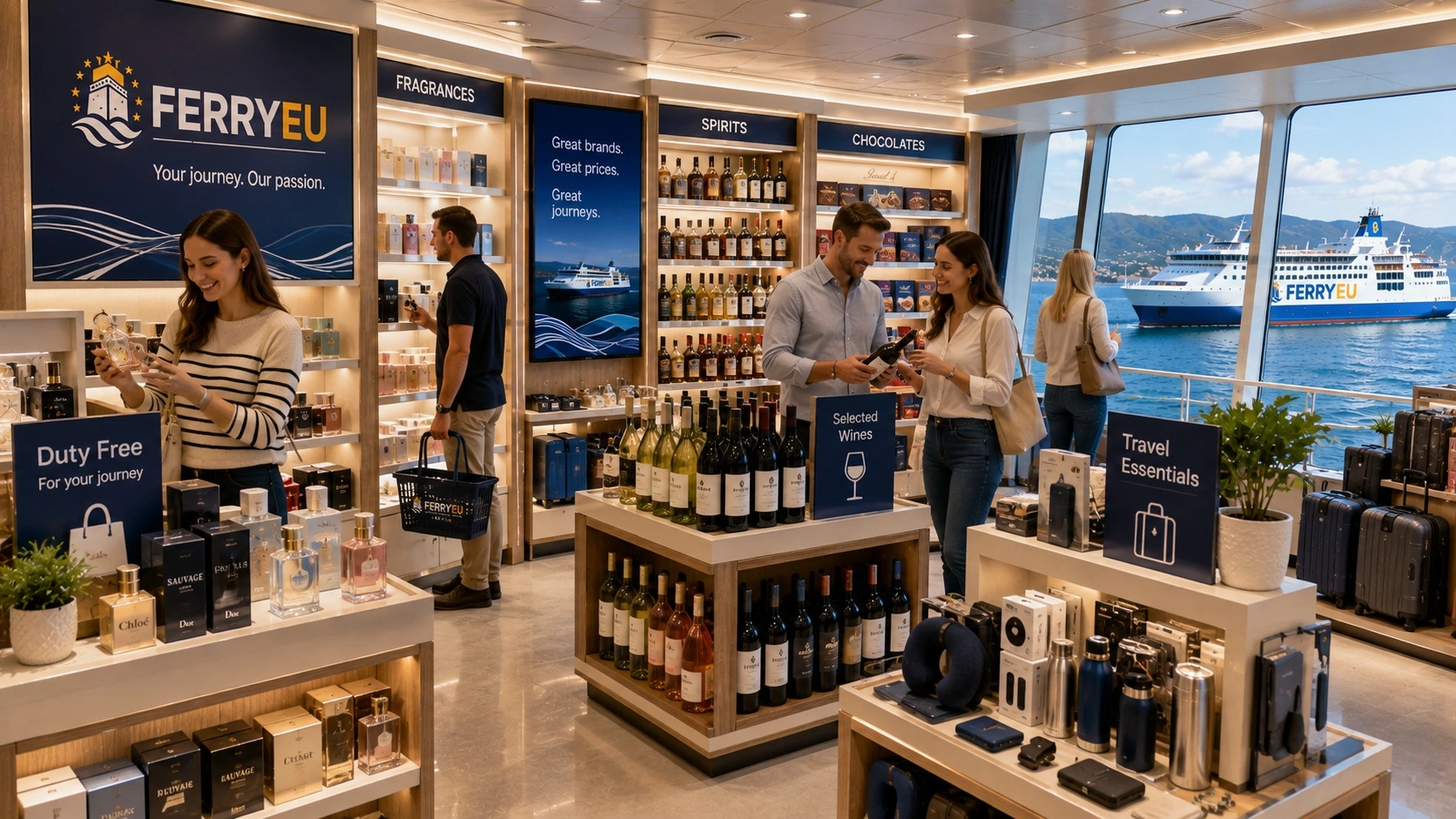
Onboard shopping
Duty Free and retail shopping are prominent on Irish Sea and UK–Holland routes, with other shops
available across the wider network.
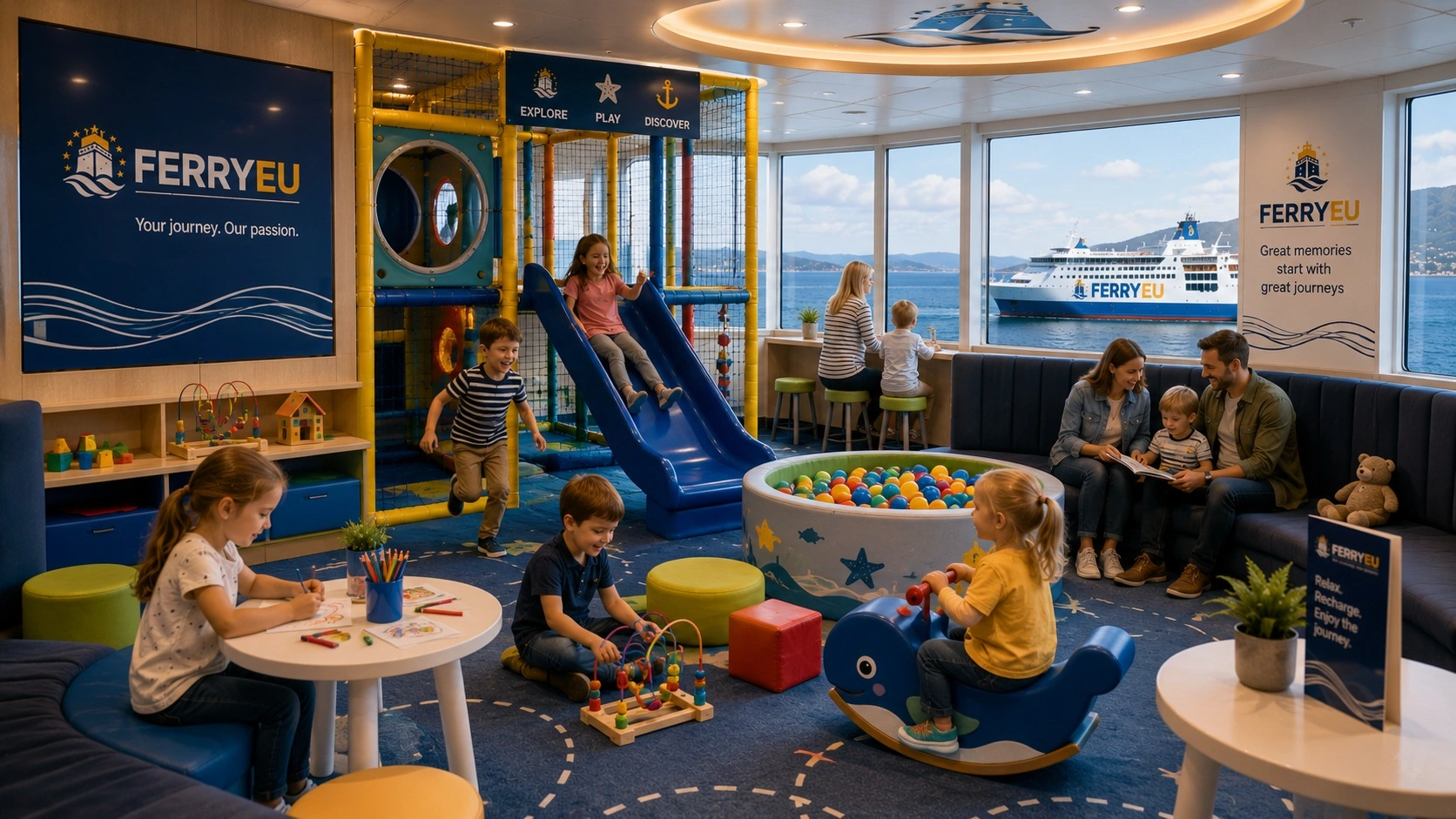
Family facilities
Happy World, Family Hub, games and movie areas appear on selected ferries and can make a longer
crossing easier for children.
Connectivity
Wi-Fi is available on many Stena Line ferries, but availability, pricing and performance depend on
route and ship.
Route-specific extras
Some ferries add cinemas, spa facilities, outdoor decks or other amenities that are not universal
across the network.
This section combines genuine Stena Line imagery with selected images from FerryEU's general
ferry-travel library. Photo source: Stena Line.
Car, motorhome, bicycle, pet or assistance
Vehicles, pets and accessibility
Stena Line supports many different travel types, but the exact arrangement depends on the passenger
route and ferry.
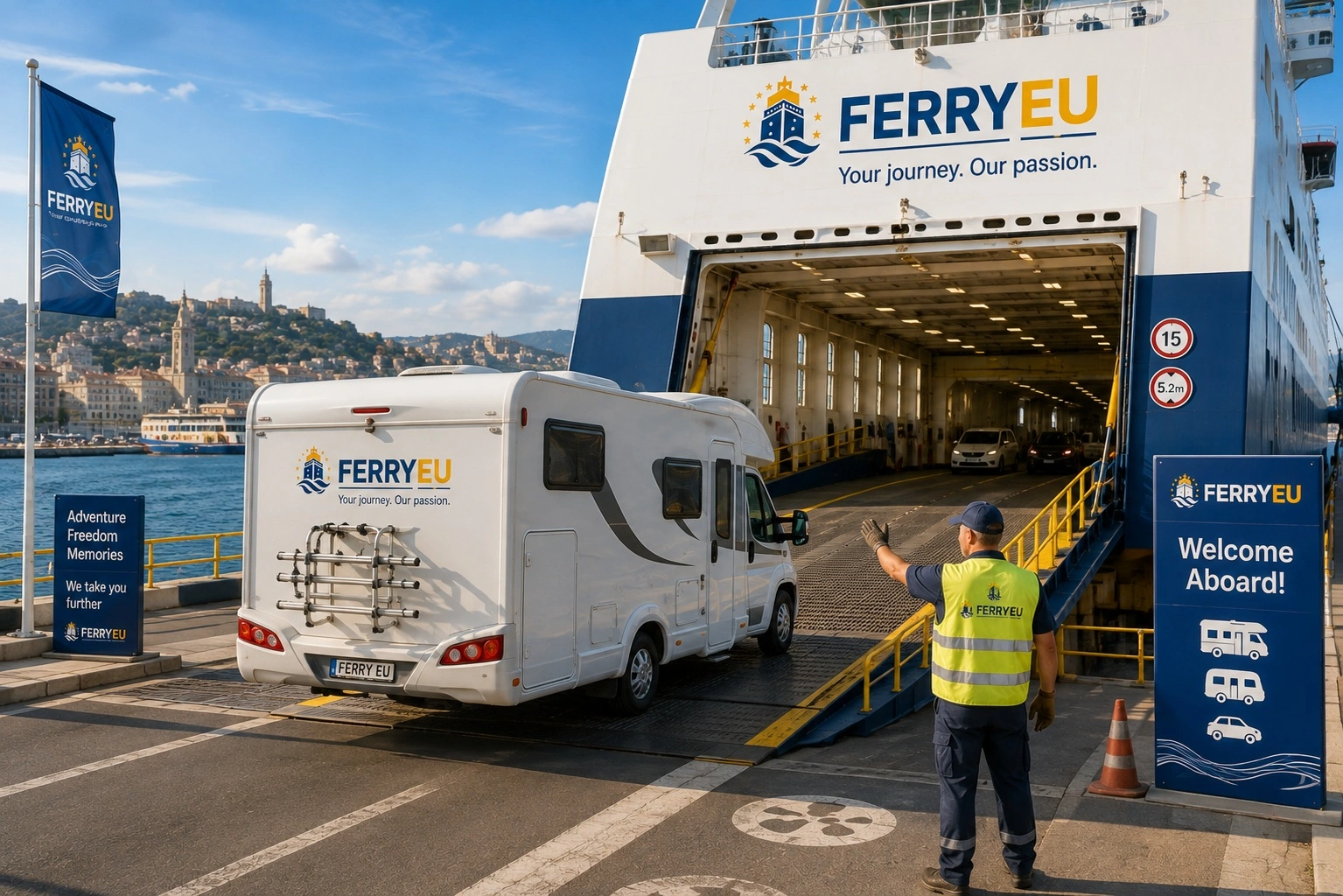
Motorhomes and caravans are accepted on suitable Stena passenger sailings. Vehicle category and dimensions should match the booking. Pet options include cabins, kennels, lounges and vehicle travel depending on route.
Cars and motorcycles
Passenger ferries carry cars and motorcycles subject to route capacity and correct booking details.
Enter the correct vehicle registration and dimensions
Follow route-specific terminal lanes
Take voyage essentials out of the vehicle after boarding
Motorhomes, caravans and bicycles
Touring vehicles and bicycles are accepted on relevant passenger routes, with dimensions and cyclist
boarding rules varying by port.
Include trailers, racks and roof loads in dimensions
Check bicycle acceptance before booking
Allow extra port time for unusual vehicles
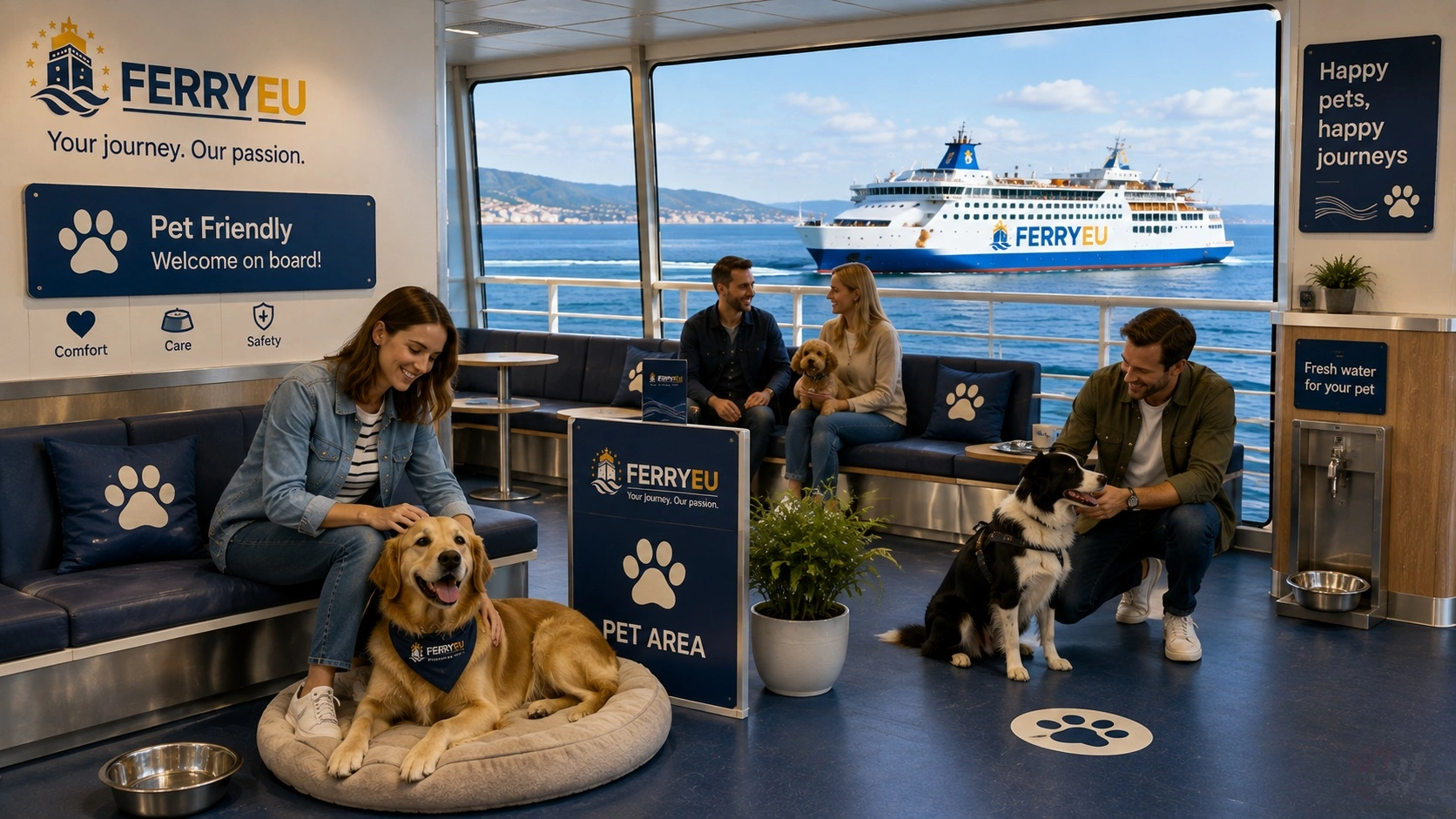
Travelling with pets
Stena offers pet-friendly cabins, kennels, pet lounges or in-vehicle travel depending on route and ferry.
Book the pet before travel
Check destination health documentation
Use only the pet option permitted for the route
Reduced mobility and assistance
Stena Line recommends providing accessibility and assistance requirements at least 48 hours before departure.
Declare mobility aids during booking
Book adapted accommodation where needed
Notify Stena of assistance animals in advance
There is no single Stena check-in time
Check-in, documents and boarding
Stena Line publishes route-specific check-in times. Always use the deadline for the exact port and
sailing rather than applying a rule from another route.
International routes can involve passport, customs and vehicle-document checks. Busy ports and longer routes justify arriving before the published closing time.
Examples of current route-specific check-in
Harwich daytime
Current 09:00 sailing closes at 08:15
This gives a 45-minute cut-off for vehicles and foot passengers on the current daytime Hook of
Holland departure.
Harwich overnight
Current 23:00 sailing closes at 22:15
The overnight Superferry also uses a 45-minute cut-off on the current timetable.
Holyhead–Dublin
Current vehicle check-in closes about 30 minutes before sailing
Foot-passenger cut-offs can be slightly earlier than vehicle check-in on current departures.
Gothenburg–Kiel
Check-in closes 30 minutes before departure
The overnight Scandinavian route currently uses a 30-minute closing time.
All routes
Use the booking confirmation as the final authority
Seasonal, border and operational changes can alter port opening and check-in arrangements.
Use the size of the network to your advantage
When Stena Line can be the practical choice
Stena Line is particularly useful when the ferry route can replace a large amount of motorway
driving. Harwich–Hook of Holland gives southern England direct access to the Netherlands and
Germany, while Gothenburg–Kiel connects Scandinavia with continental Europe overnight.
Across the Irish Sea, several gateways allow travellers to choose the crossing that best matches
their starting point: Cairnryan for Belfast, Holyhead for Dublin, Fishguard for Rosslare and
Liverpool for Belfast.
The broad network means comparison should be route-led rather than brand-led. First choose the best
corridor, then compare the sailing time, cabin or lounge, pet arrangements, vehicle fare and onward
driving distance.
Common planning questions
Stena Line FAQs
Which passenger routes does Stena Line operate?
Stena Line operates a broad passenger network across the Irish Sea, North Sea, Scandinavia and
Baltic Sea, including Cairnryan–Belfast, Liverpool–Belfast, Holyhead–Dublin, Fishguard–Rosslare,
Harwich–Hook of Holland, Gothenburg–Frederikshavn, Gothenburg–Kiel, Trelleborg–Rostock,
Karlskrona–Gdynia, Travemünde–Liepāja and Nynäshamn–Ventspils. The wider Stena Line corporate
network also includes Umeå–Vaasa under the Wasaline brand and Mediterranean routes.
How long is Harwich to Hook of Holland?
Stena Line publishes a crossing time from about 6 hours 30 minutes between Harwich and Hook of
Holland, with both daytime and overnight departures.
How long is Holyhead to Dublin?
The Holyhead–Dublin crossing takes about 3 hours 15 minutes on current Stena Line passenger services.
How long is Gothenburg to Kiel?
The Gothenburg–Kiel crossing takes about 14 hours and operates as an overnight service.
Can I take a car or motorhome on Stena Line?
Yes. Cars, motorcycles, motorhomes, caravans, trailers and other suitable vehicles are accepted on
passenger routes subject to the booked vehicle category, dimensions and route conditions.
Can I travel as a foot passenger?
Yes on Stena Line passenger routes that accept foot traffic. Availability and check-in arrangements
vary by route, and some freight-focused Stena Line corridors are not ordinary passenger services.
Can I take a pet on Stena Line?
Yes. Pet arrangements vary by route and ferry and can include pet-friendly cabins, kennels,
dedicated pet lounges or leaving the pet in the vehicle where permitted. The exact route rules
should always be checked before booking.
Are cabins available on Stena Line?
Cabins are available on longer and overnight routes such as Harwich–Hook of Holland, Gothenburg–Kiel
and Liverpool–Belfast. Cabin types vary by ferry and can include Standard, Comfort, Premium, family,
accessible and pet-friendly options.
How early should I arrive for Stena Line?
Check-in times vary by route and sailing. Current examples include a 45-minute cut-off for Harwich
departures, around 30 minutes for vehicles on Holyhead–Dublin and a 30-minute cut-off on
Gothenburg–Kiel. Always follow the time shown for the specific booking.
Does Stena Line provide accessibility assistance?
Yes. Stena Line asks passengers requiring assistance to provide details at least 48 hours before
travel where possible so the correct boarding and onboard support can be arranged.



 Extensive European network
 Cars & touring vehicles
 Day & overnight routes