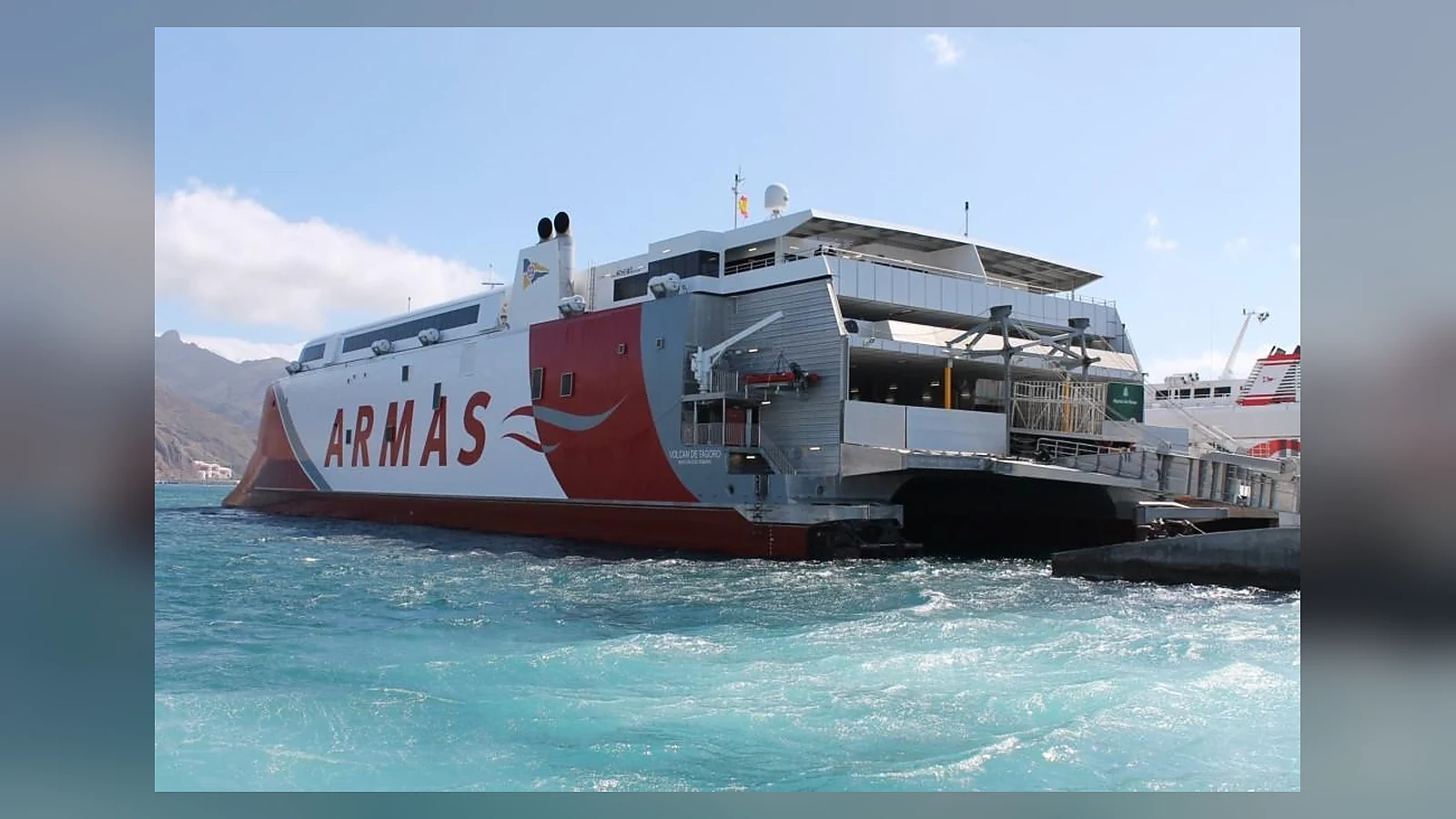
Understand the historic Armas ferry network, compare routes and travel options, and see how the 2026
integration into Baleària and Baleària Canarias affects current bookings.
Canary Islands Vehicle ferries Spain & North Africa
The booking form is pre-filtered to this ferry company where supported. Choose the route, date, passengers and vehicle details to compare available sailings. Click Here to view all other ferry operator routes and destinations.
Check the selected route, passengers, vehicle details and travel date before completing the reservation.
A historic Spanish passenger and vehicle ferry brand
About the operator
A major ferry name now moving into a new chapter
Armas Trasmediterránea brought together two long-established Spanish ferry traditions: Naviera
Armas, strongly associated with the Canary Islands, and Trasmediterránea, one of the country’s
historic mainland and island shipping names. The combined network became particularly important for
inter-island travel in the Canaries, links between Cádiz and the archipelago, and routes connecting
southern Spain with Ceuta, Melilla, Morocco and Algeria.
That structure changed substantially in 2026. Baleària took effective control of the Canary Islands assets in May, including inter-island services and connections between the mainland and the archipelago. The new Baleària Canarias brand was introduced for the islands, with a transitional period in which Armas Trasmediterránea branding could continue to appear alongside it.
The next stage followed in July 2026, when Baleària completed the acquisition of Armas
Trasmediterránea assets in the Strait of Gibraltar and Alborán areas after the relevant competition
approvals. For travellers, the practical result is that an itinerary historically associated with
Armas may now be sold and operated within the Baleària group or, for parts of the Strait market, by
another operator following the wider restructuring.
FerryEU editorial approach: this page preserves Armas Trasmediterránea as a useful operator reference because travellers still search for the brand, while clearly distinguishing the historic network from the operator structure in place after the 2026 acquisitions.
A wide Atlantic and western Mediterranean network
Routes associated with Armas Trasmediterránea
The live Armas site still displays a broad route catalogue, but the ownership and operating
structure changed in 2026. Treat the examples below as a guide to the network historically and
transitionally associated with the brand, then confirm the current operator in live search results.
Inter-islandCanary Islands
Gran Canaria
Las Palmas
Tenerife
Santa Cruz
Gran Canaria–Tenerife has been one of the network’s best-known Canary links. Armas also connected
Tenerife with La Gomera, La Palma and El Hierro, while eastern-island services linked Gran Canaria
with Fuerteventura and Lanzarote.
Frequent island-hopping was central to the Armas network
Fast ferries and conventional ferries were both used
Vehicle carriage makes multi-island road trips practical
Longer sailings from Cádiz connect the mainland with the Canary Islands and are particularly
valuable for passengers travelling with a car, motorhome, substantial luggage or pets. These
crossings can involve more than one island call.
Cabin accommodation is important on the long Atlantic crossing
Armas Trasmediterránea was strongly associated with crossings from Almería and Motril towards
Melilla and Morocco. The 2026 Baleària acquisition specifically incorporated Alborán assets and
vessels connected with this part of the network.
International routes require the correct identity and entry documents
Cabins and premium seating may be available on conventional ferries
Halal catering is offered on relevant North Africa services
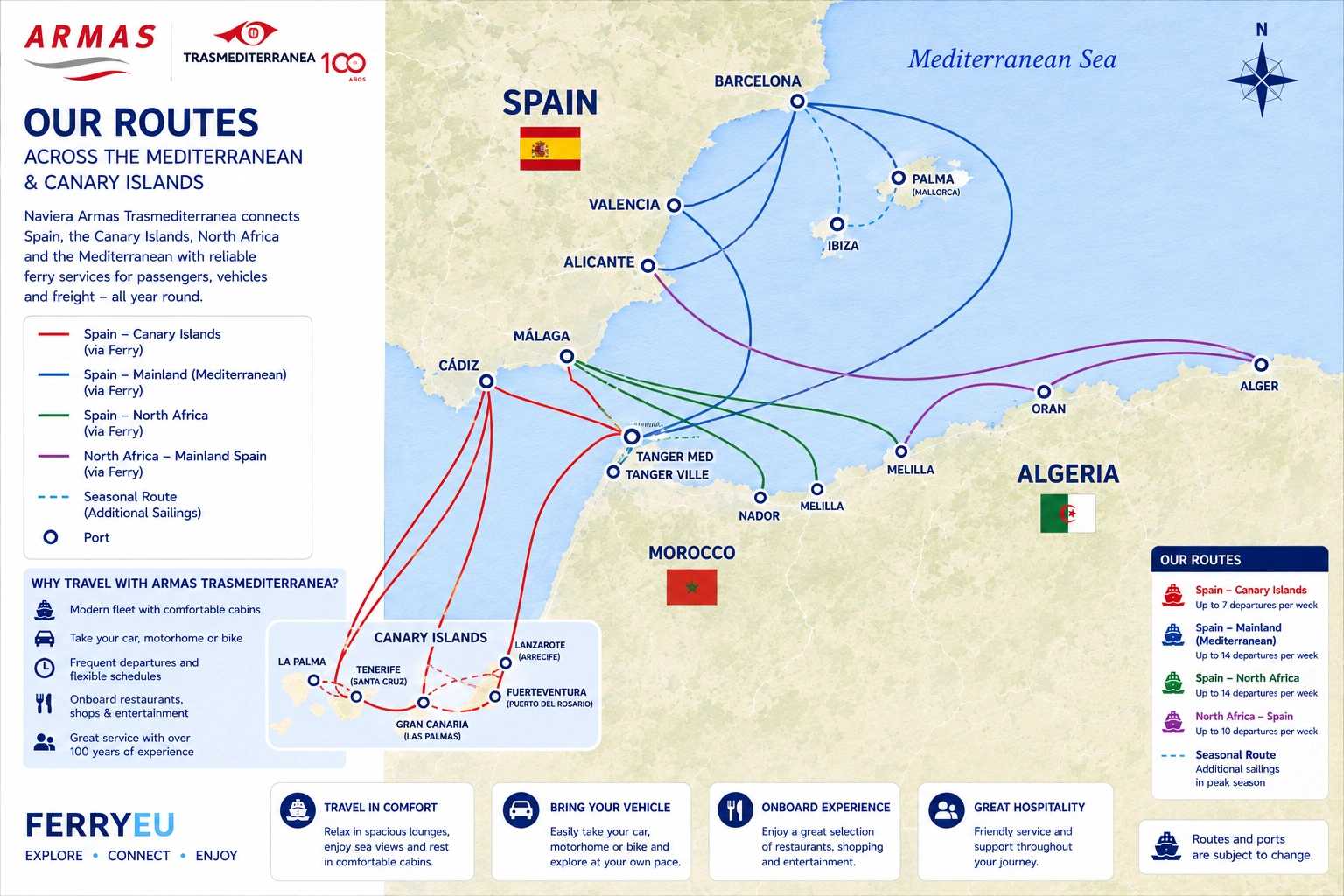
This schematic summarises the three representative current route groups described above. It is not a
complete network map or timetable; the live operator booking result is definitive.
For planning with Armas Trasmediterránea, use the map to compare the representative route groups
above, including Las Palmas–Santa Cruz, Cádiz–Islands, Almería–Melilla / Nador. It is most useful
for judging which departure or arrival point best fits the rest of the journey rather than as a
substitute for the live timetable.
After choosing the most practical route, compare the live Armas Trasmediterránea sailing for
departure time, calling pattern, passenger requirements and the facilities or accommodation shown
for that service. The complete itinerary and arrival location can matter more than a small
difference in the headline fare.
Use the map for orientation only. Routes, branding and operators changed during 2026 and may
continue to be rationalised.
Illustrative Armas Trasmediterránea route map. Routes and operating patterns can change; check the live timetable for your date.
Ports and places
From Atlantic islands to North African gateways
The attraction of this network is its range: short island crossings, long mainland–Canaries sailings
and international routes linking Europe and North Africa. These FerryEU destination images help show
the character of several important ports.
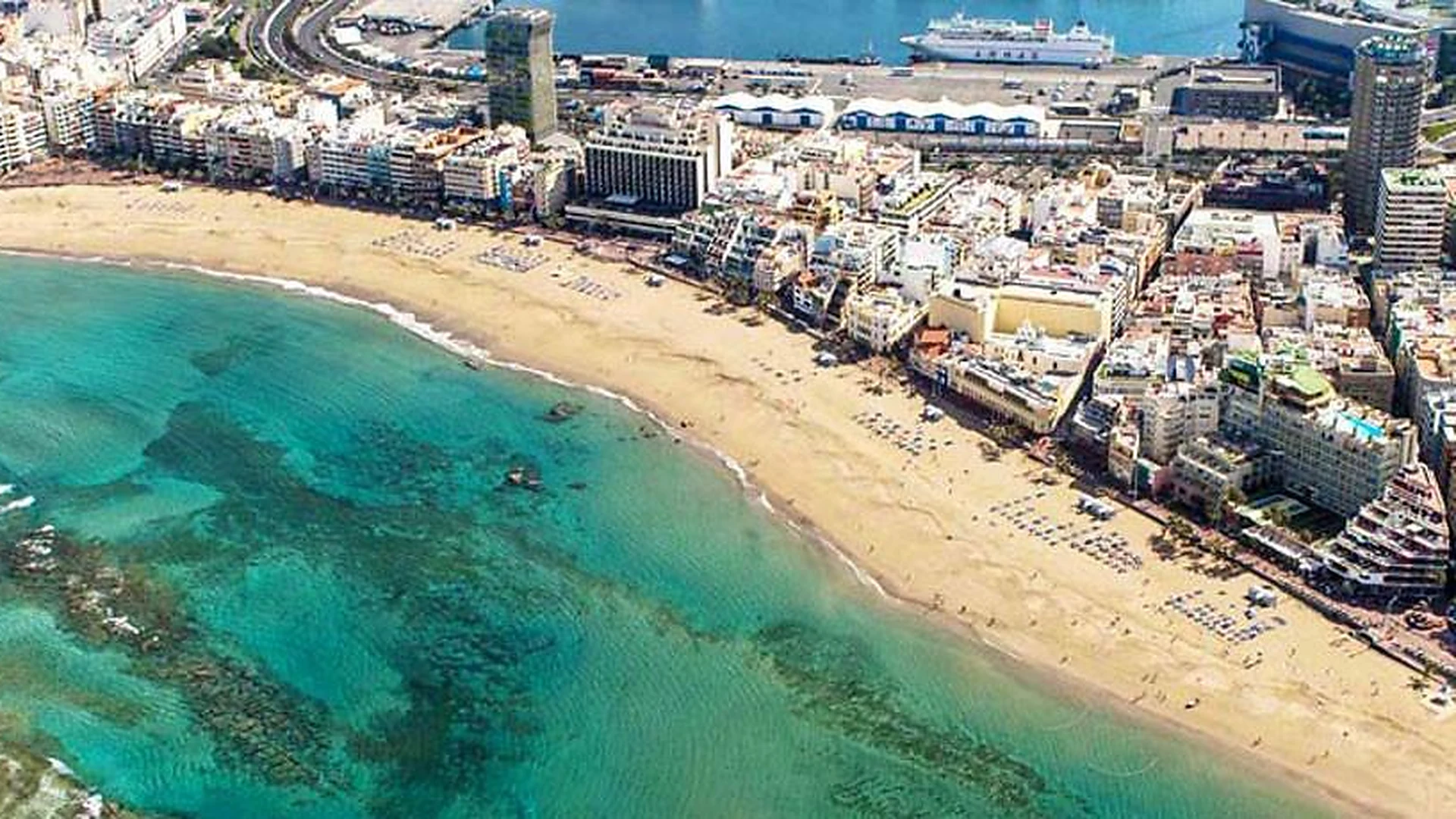
Gran Canaria
Las Palmas
A major hub for inter-island services and long-distance connections between the Canaries and mainland Spain.
Compare the complete journey rather than the sea crossing alone. Check the live timetable for your
date, confirm the exact departure and arrival ports, and allow enough time for check-in and onward
travel.
Choose how you travel
Seats, Premium Class and cabins
Accommodation depends heavily on vessel type. A 35-minute fast-ferry island hop is very different
from an overnight or multi-day mainland–Canaries crossing, so compare the assigned ship as carefully
as the fare.
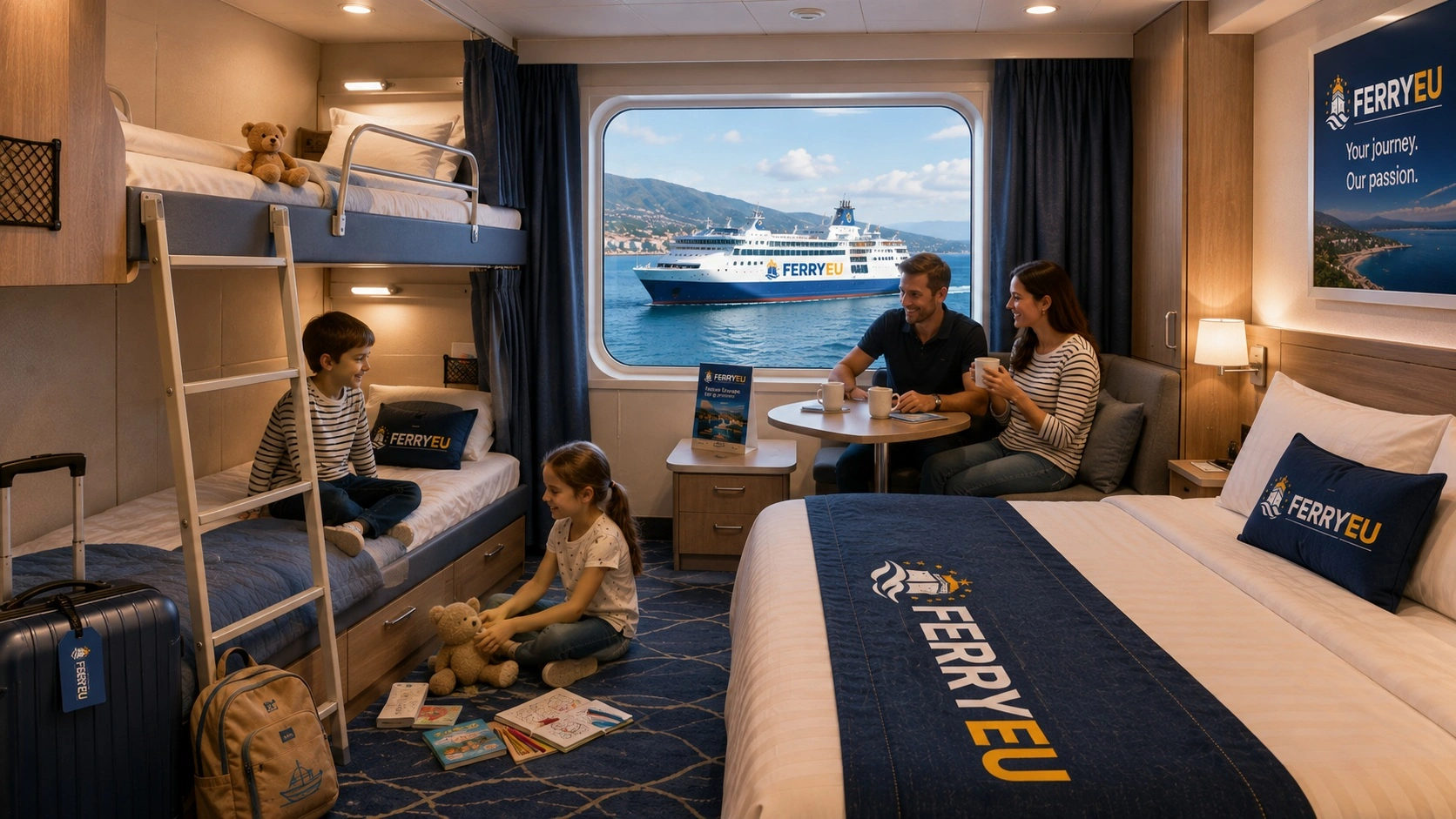
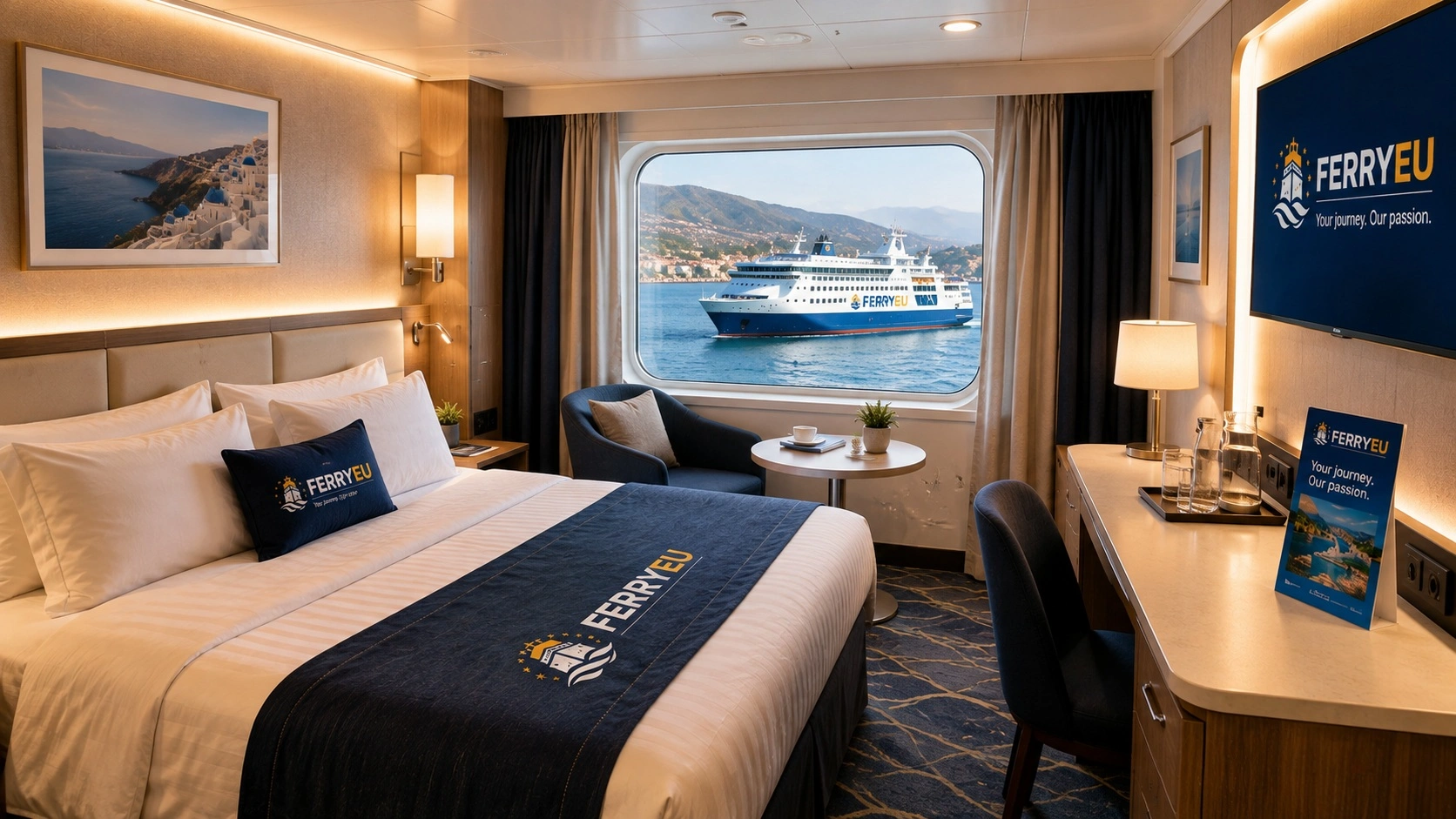
Cabins can transform a long Atlantic crossing, especially for families or overnight travel. Superior cabin or suite categories may be available on selected conventional ferries.
Tourist seating
Standard lounge seating suits many shorter crossings and keeps the fare lower when you do not need
private accommodation.
Best considered forDaytime and shorter inter-island journeys
Premium Class
Published Premium Class benefits can include a private lounge, more comfortable seating, priority
boarding and disembarkation, and meal service depending on the ship.
Best considered forOnly on vessels and routes offering the category
Double cabins
Private two-person cabins are useful for couples or solo travellers who value rest and privacy on
longer crossings.
Best considered forPrivate bathroom and individual beds on relevant ships
Quadruple cabins
Four-berth cabins can suit families and groups and may make a long mainland–island crossing more
comfortable than lounge seating.
Best considered forFamily-friendly categories can be limited in peak periods
Pet cabins
Selected routes and ships offer cabins prepared for dogs or cats, subject to weight, number and
booking conditions.
Best considered forUp to two pets per eligible cabin, subject to current rules
Accessible accommodation
Relevant ships provide adapted seating or cabins for passengers with reduced mobility. Declare
assistance needs during booking rather than waiting until embarkation.
Best considered forAccessible spaces are finite and ship-specific
FerryEU tip
On a very long crossing, compare the total fare with a cabin rather than evaluating only the
cheapest seat. Arriving rested can be worth more than the initial saving.
Onboard experience
Facilities vary from fast ferries to full-service ships
The broader Armas fleet combined quick inter-island craft with conventional ferries designed for
long crossings. Always check the facilities shown for the actual ship.
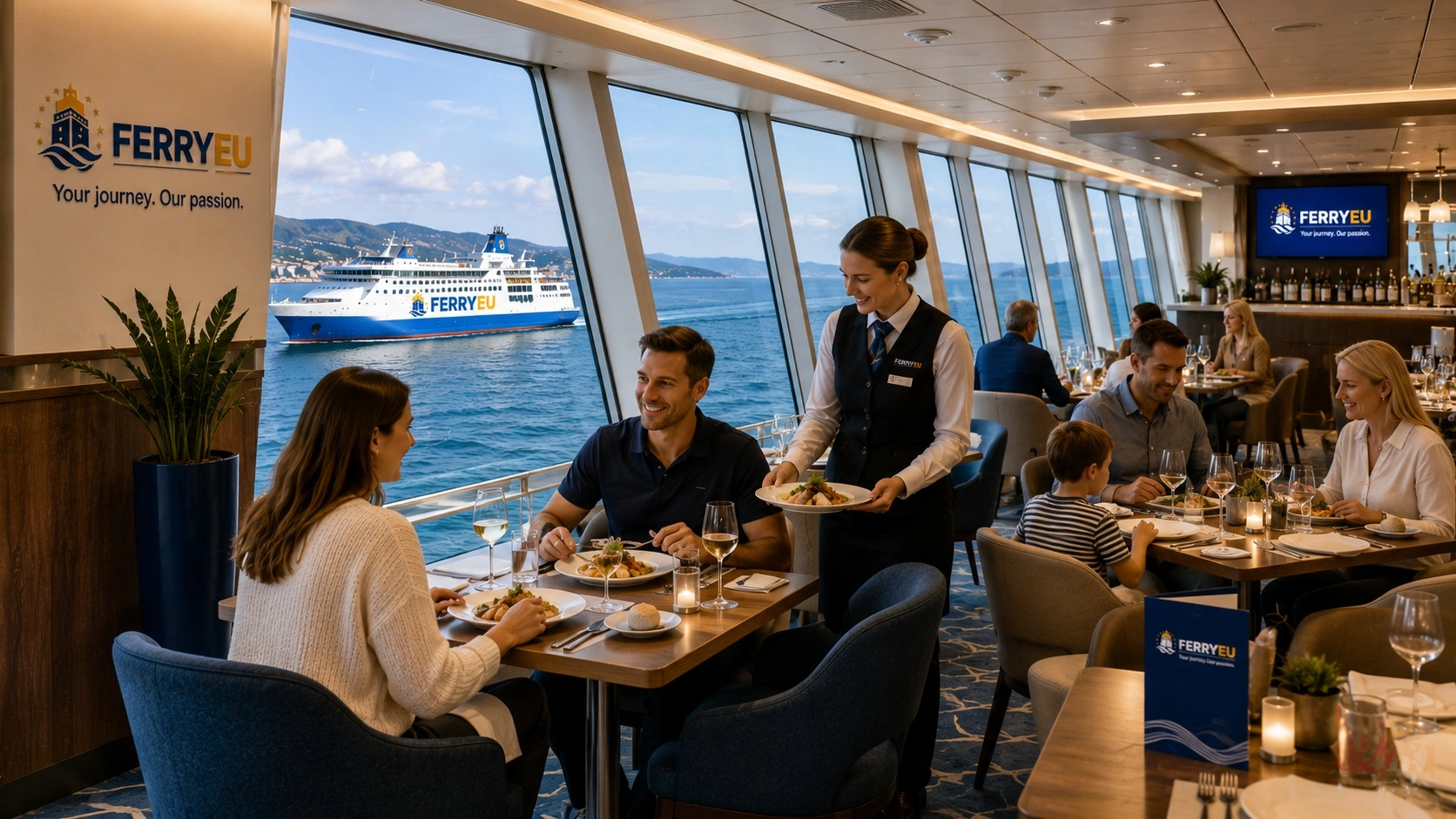
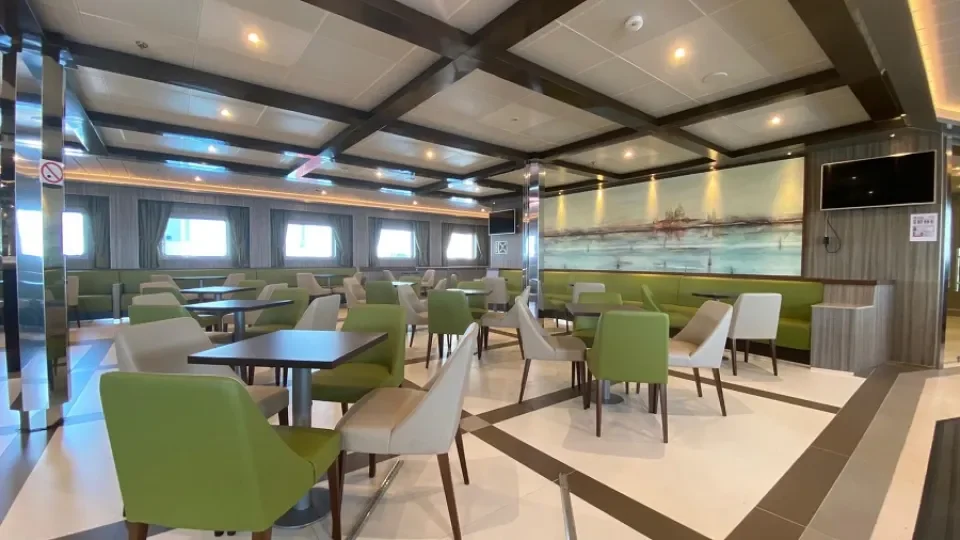
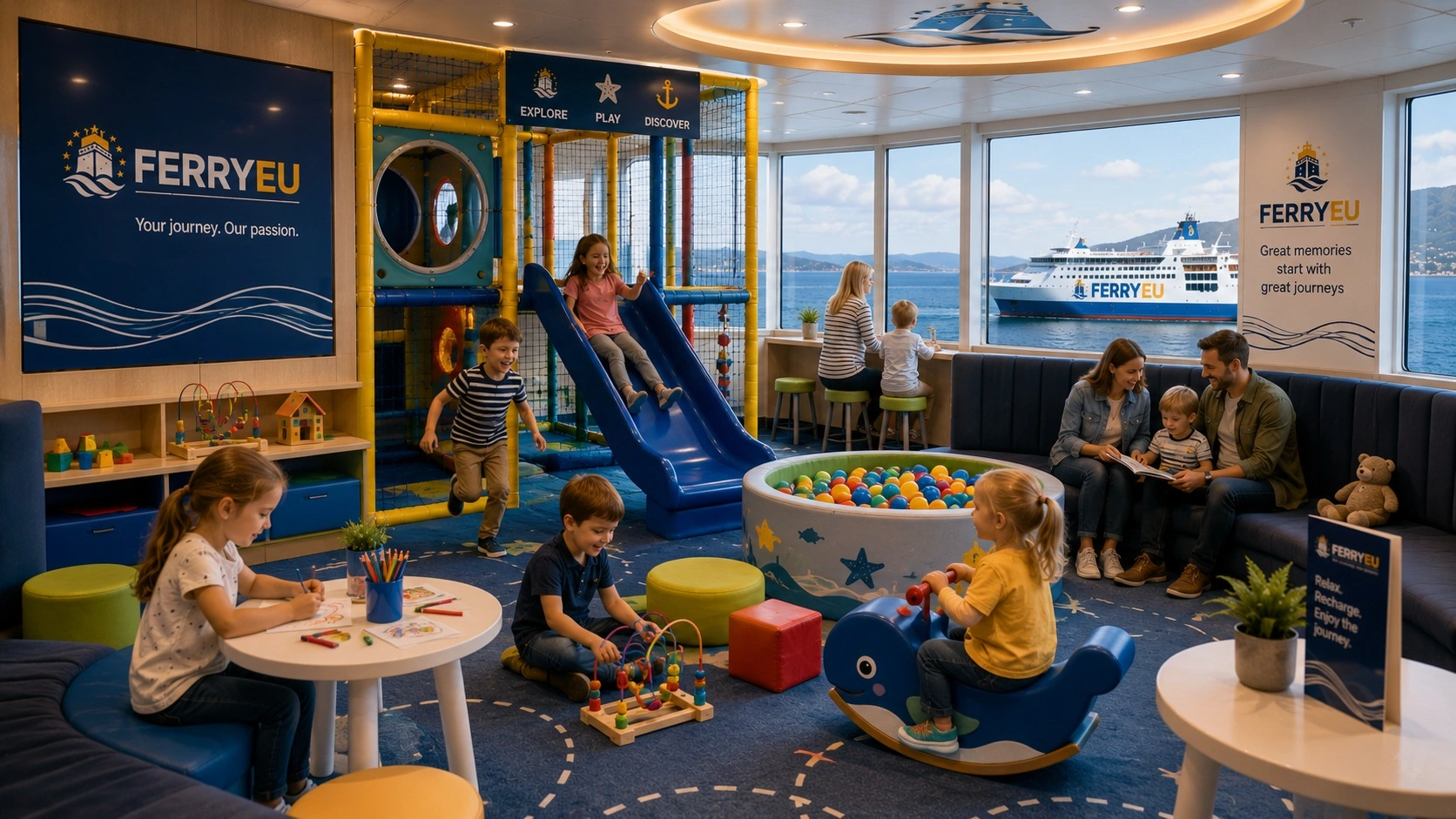
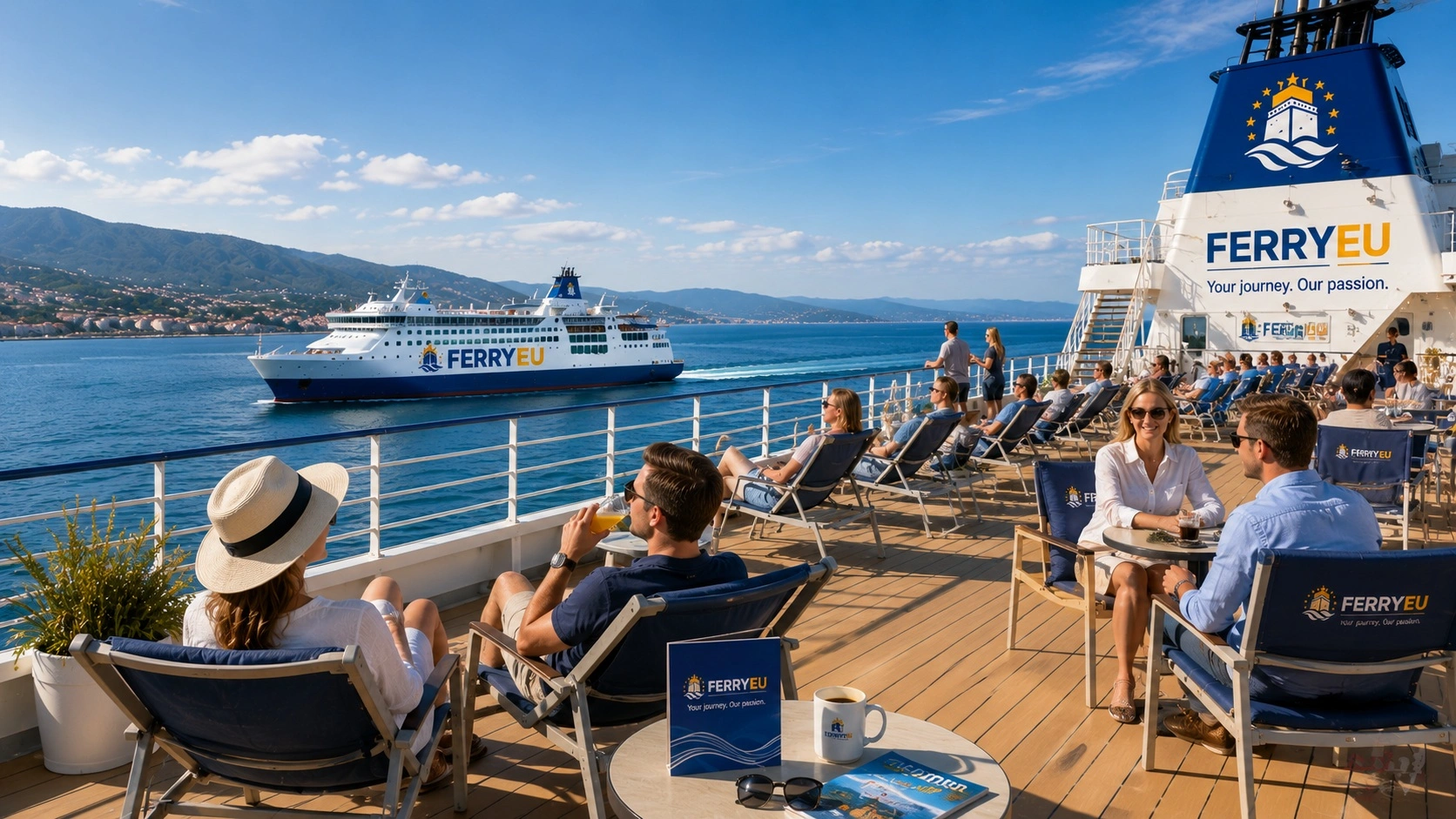
Restaurants and self-service dining are important on longer sailings. Café-bars and lounges provide places to relax outside your seat or cabin. Selected ships include children’s areas and family-oriented facilities. Exterior decks and terraces are a major part of the ferry experience.
Food and drink
Café-bars, self-service restaurants and route-specific menus are available on many conventional
ferries. North Africa services may include halal options.
Wi-Fi
The operator states that most vessels offer Wi-Fi. Price and coverage can vary, and mobile networks
at sea may connect to international operators.
Onboard shopping
Selected routes have shops, with duty-free products published for Cádiz–Canaries, Ceuta and some
North Africa services.
Family facilities
Children’s areas, board games and family-friendly menus are listed on selected vessels, particularly
longer conventional sailings.
Premium areas
Premium Class can add priority treatment, exclusive lounge access and upgraded seating where the
selected ship offers it.
Reduced mobility
Adapted seats, cabins and passenger spaces are published on relevant ferries. Assistance should be
requested when booking.
This section combines genuine operator imagery with selected images from FerryEU's general
ferry-travel library. Facilities and layouts vary by ship and sailing.
Bring more with you
Vehicles, motorhomes, pets and freight
Roll-on/roll-off capability is one of the network’s biggest advantages. Accurate vehicle and pet
details matter because deck space and specialist accommodation are limited.
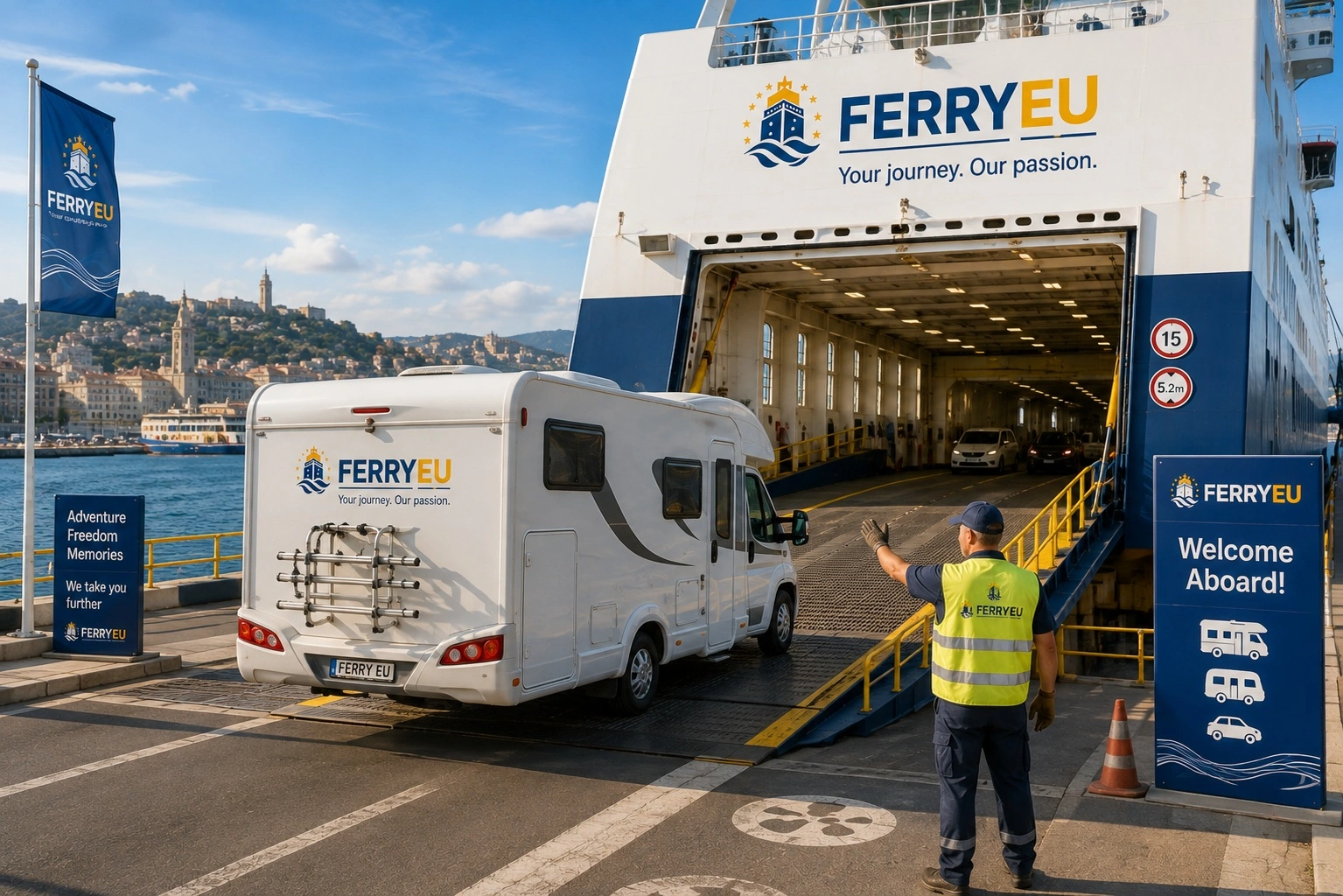
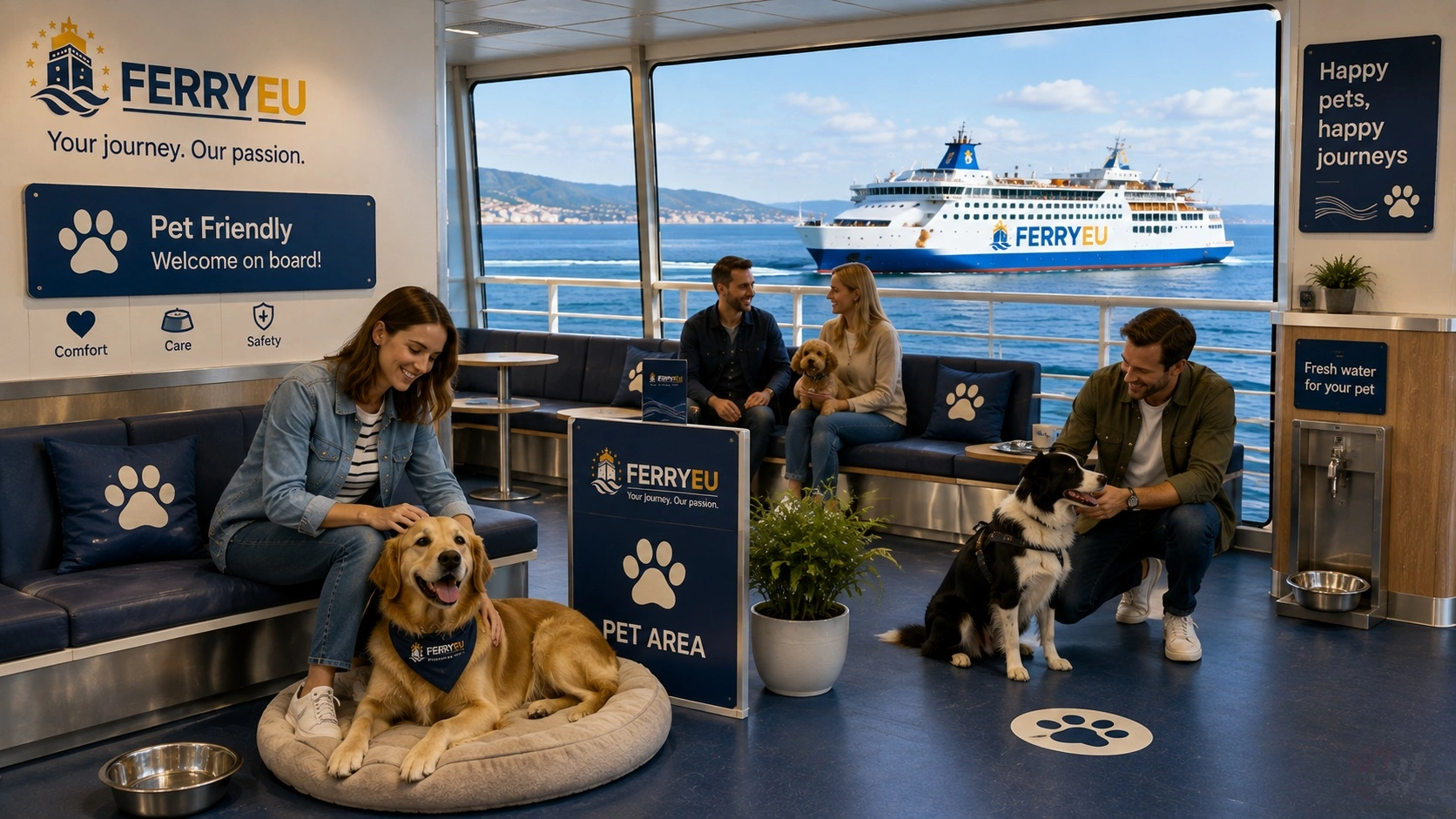
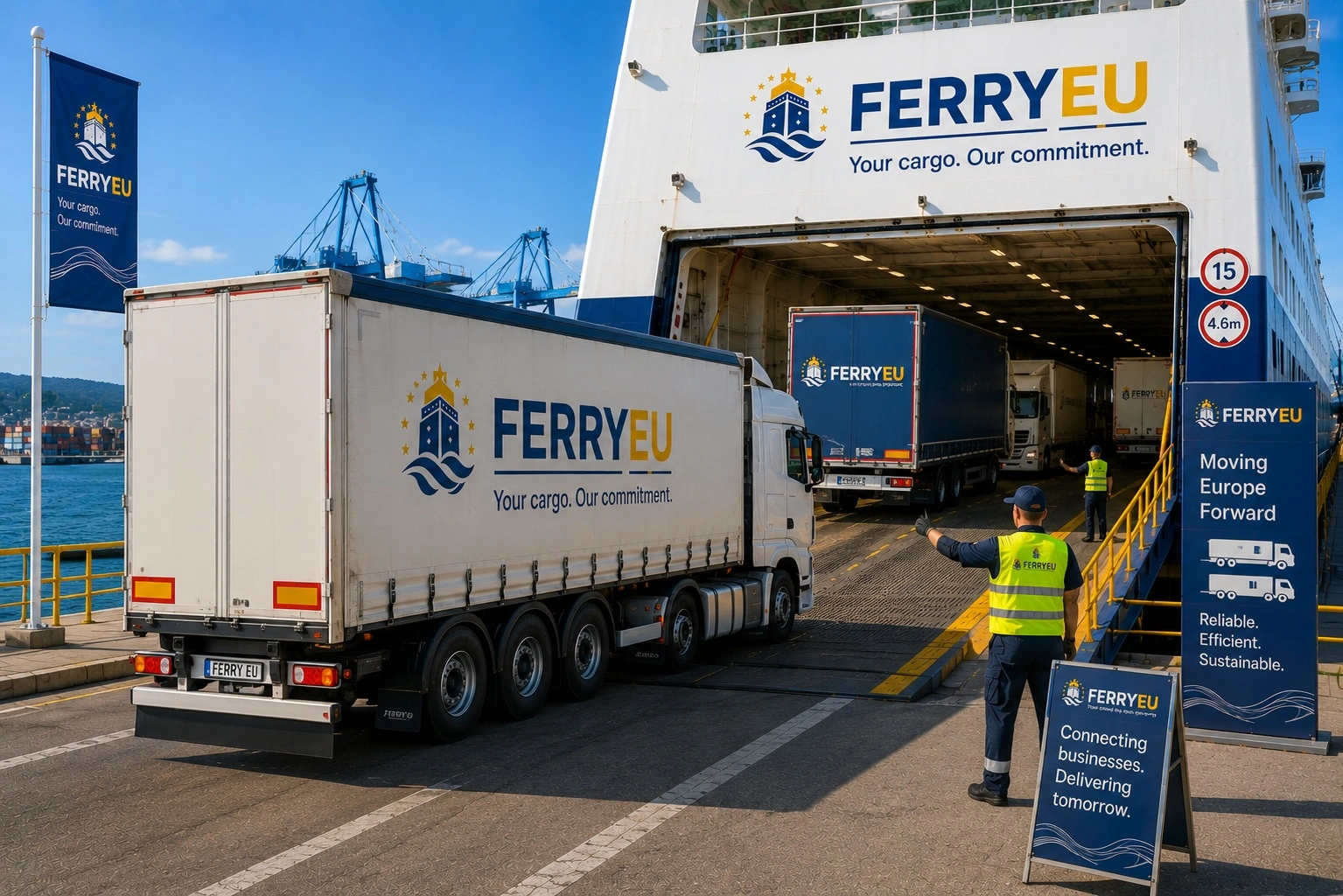
Motorhomes and larger leisure vehicles need accurate dimensions at booking. Pets need their own booking and the correct carrier, kennel or cabin arrangement. Freight and commercial traffic have long been important to island and North Africa connectivity.
Cars and motorcycles
Cars and motorcycles are accepted on suitable vehicle ferries. The vehicle on the ticket should
match the one presented at the port.
Enter registration and category correctly
Allow for roof boxes and rear carriers
Follow crew instructions on the vehicle deck
Motorhomes and caravans
Longer Canary and international routes are useful for self-drive holidays, but tall or long vehicles
use more deck space and should be booked accurately.
Measure total height and length
Include trailers or caravan dimensions
Book early for popular holiday dates
Travelling with pets
Small pets up to the published carrier limit may be permitted inside designated passenger areas;
larger animals normally use kennels or eligible pet accommodation.
Carrier limit published as 50×40×25 cm and 10 kg combined
Pet cabins on selected routes and ships
Carry required health and border documents
Assistance and accessibility
Passengers with reduced mobility can identify their needs while booking. Suitable seating, cabins
and assistance vary by ship and port.
Declare assistance requirements early
Check accessible cabin availability
Allow extra time at unfamiliar terminals
Before you reach the port
Check-in, documents, baggage and boarding
Armas routes range from short domestic crossings to international journeys with border controls. The
safest approach is to work backwards from the acceptance deadline printed on the current ticket.
Allow extra time when documents, vehicle details or international border formalities must be checked. Boarding deadlines differ by conventional ferry, fast ferry and port.
A sensible planning timeline
When booking
Use the exact current operator and itinerary
Confirm the departure and arrival ports, brand/operator, vehicle category, passenger names, pet
details and accommodation shown in the live result.
Before travel
Check identity and border documents
Domestic Spanish routes and international routes have different requirements. Morocco and Algeria
journeys can require passports, visas or vehicle paperwork beyond a normal island crossing.
Arrival time
Follow the deadline on your ticket
Published legacy conditions include 60 minutes for vehicles and 30 minutes for foot passengers on
conventional ferries, shorter deadlines on fast ferries, and two-hour limits for Cádiz/Huelva and
Tangier Med situations. Current ticket conditions take priority.
At the port
Keep documents and booking confirmation accessible
Vehicle passengers may need registration details and should stay attentive to lane instructions.
International passengers should expect document controls before embarkation.
On board
Take essentials from the vehicle
Access to vehicle decks is normally restricted during the crossing. Bring medication, valuables,
children’s items, pet necessities and anything required before arrival.
Is this network relevant to your trip?
When an Armas-era ferry route still makes sense
The routes historically associated with Armas remain highly relevant even though the corporate
branding has changed. Ferries are often the most practical option for taking a car between Canary
Islands, moving a motorhome between mainland Spain and the archipelago, or travelling with more
luggage than would be convenient by air.
For North Africa, the ferry can also solve a different problem: it carries passengers and vehicles
across a short or medium sea sector while keeping the onward road journey intact. That can be
valuable for family travel, long stays and travellers carrying equipment or substantial personal
belongings.
The comparison now needs one extra step. Look beyond the historic operator name and compare the current company, sailing time, ship, accommodation and port. A route that was once automatically associated with Armas may now be part of Baleària, Baleària Canarias or another operator’s timetable.
Common planning questions
Armas Trasmediterránea FAQs
Is Armas Trasmediterránea still operating in 2026?
The name remains visible during the transition, but the operating structure has changed
substantially. Baleària took effective control of the Canary assets in May 2026 and completed the
Strait and Alborán acquisitions in July 2026. In the Canaries, Baleària Canarias is being developed
as the operating brand while Armas branding may coexist during the transition.
Why does FerryEU keep an Armas Trasmediterránea page?
Millions of travellers know the routes by the Armas name, and the official Armas website and search
results continue to surface the brand. Keeping this page helps users understand the historic network
and, crucially, directs them to check the current operator rather than relying on obsolete
assumptions.
Which Canary Islands routes were associated with Armas?
The network included major inter-island links involving Tenerife, Gran Canaria, Fuerteventura,
Lanzarote, La Palma, La Gomera and El Hierro, as well as mainland connections from Cádiz. The live
route finder should be used for the 2026–27 operator and timetable.
Can I take my car between Canary Islands?
Yes on suitable vehicle ferries. Car travel is one of the major advantages of inter-island ferry
transport because it allows you to keep the same vehicle through the trip. Book the actual car
category and dimensions, and confirm the vessel accepts vehicles.
Are cabins available on short island crossings?
Often not necessary. Short fast-ferry services are generally centred on seating, while conventional
ferries on longer routes may offer double or quadruple cabins, superior categories and pet cabins.
The assigned ship determines the actual choice.
How do pet rules work?
The legacy Armas guidance allows small pets inside the vessel when the animal and carrier together
are no more than 10 kg and the carrier is within 50×40×25 cm. Larger animals generally use kennels
or other designated accommodation. Selected routes offer pet cabins, with published limits on number
and weight. Recheck the current operator’s rules before travel.
How early should I arrive at the ferry terminal?
There is no single safe answer for this network. Published conditions set different acceptance
deadlines for conventional ferries, fast ferries, Cádiz/Huelva services and Tangier Med.
International routes also involve border procedures. Use the deadline on the current ticket and
arrive earlier if travelling with a vehicle, pet or unfamiliar documents.
How much luggage can I take?
Armas Trasmediterránea’s published transport conditions state personal baggage up to 60 kg or four
packages, with an extra charge above that level up to the stated maximum. Because operating control
has changed, confirm the baggage allowance attached to the current booking before relying on this
historic condition.
What happened to the Armas fleet?
The fleet was divided and integrated as part of the restructuring. Baleària acquired the Canary
assets and later the Strait and Alborán assets, while other Strait assets were acquired separately
by DFDS. Baleària’s July 2026 announcement specifically named JJ Sister, Almariya, Volcán de
Timanfaya and Ciudad de Málaga among the vessels incorporated in the final phase.
Should I search for Armas or Baleària Canarias?
Search the route rather than relying on a brand name. Enter your ports and travel date in FerryEU
and compare the live results. That approach automatically makes the current operator, sailing time
and available accommodation more important than the historic branding.



 Canary Islands
 Vehicle ferries
 Spain & North Africa