


Las Canteras
Spend time on one of Europe’s best urban beaches, with swimming, a long promenade and easy access to restaurants.
Combine Las Canteras and historic Vegueta with one of the Canary Islands’ busiest passenger ports for inter-island and mainland Spain ferries.
The search is pre-filtered to the most relevant destination country or region where supported. Select the exact ports and travel date before booking. Click Here to view other available ferry destinations.
Click Here to view all other available ferry routes and destinations
Beach-city energy, historic quarters and a major Canary Islands ferry hub
Las Palmas de Gran Canaria is both the island capital and one of the most complete city-break destinations in the Canary Islands. It combines a long urban beach, historic districts, museums, restaurants and a major Atlantic port.
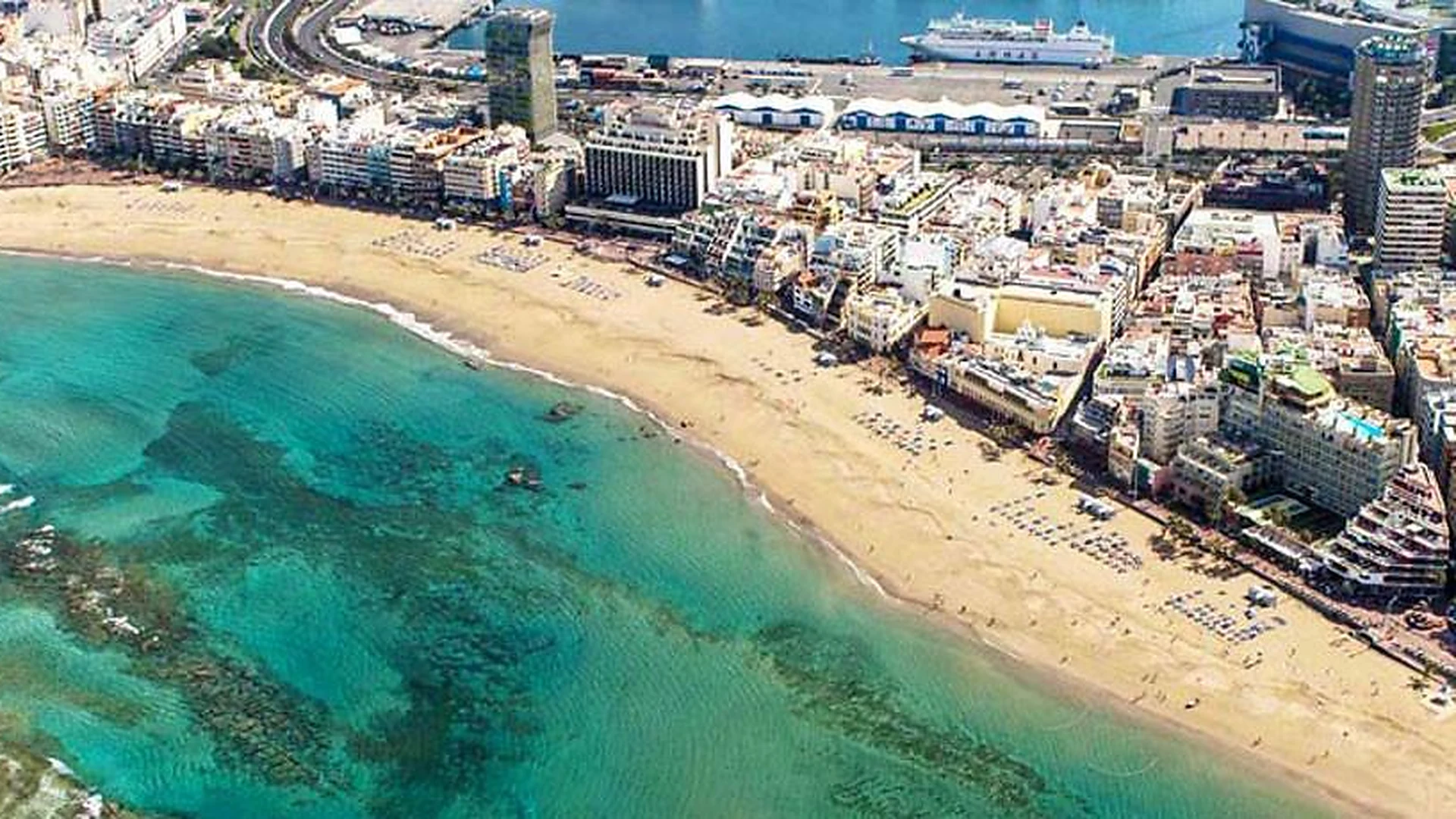
Las Canteras is the city’s everyday waterfront: a broad sandy beach protected in places by a natural reef, with a promenade lined by cafés, restaurants and accommodation.
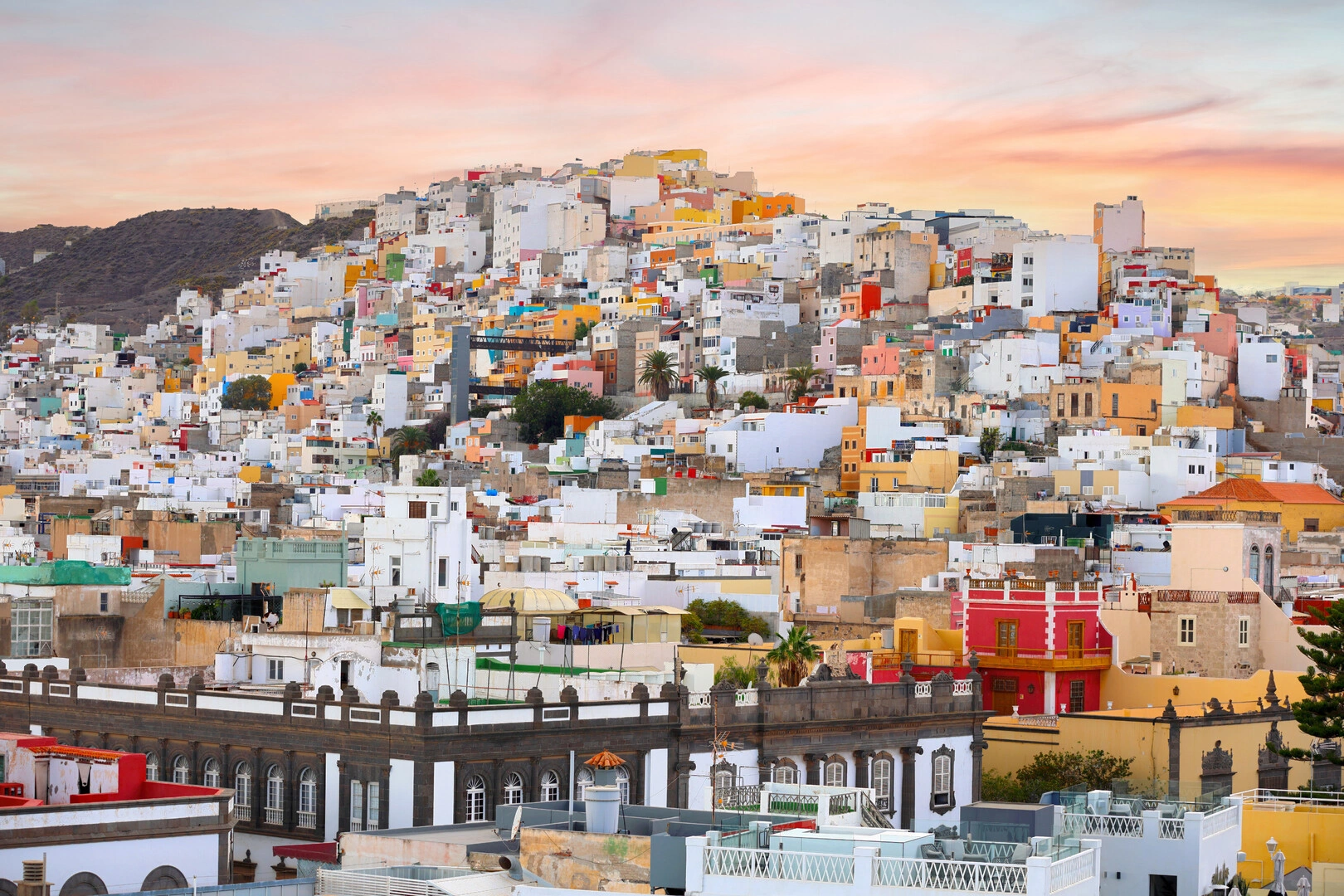
Across the city, Vegueta preserves the historic core around Santa Ana Cathedral, Casa de Colón and atmospheric streets that date back to the earliest period of European settlement on Gran Canaria.
Other strong attractions include the Triana shopping district, Poema del Mar aquarium, Mercado del Puerto and viewpoints around La Isleta. The city also works well as a base for exploring the island’s mountains and north coast.
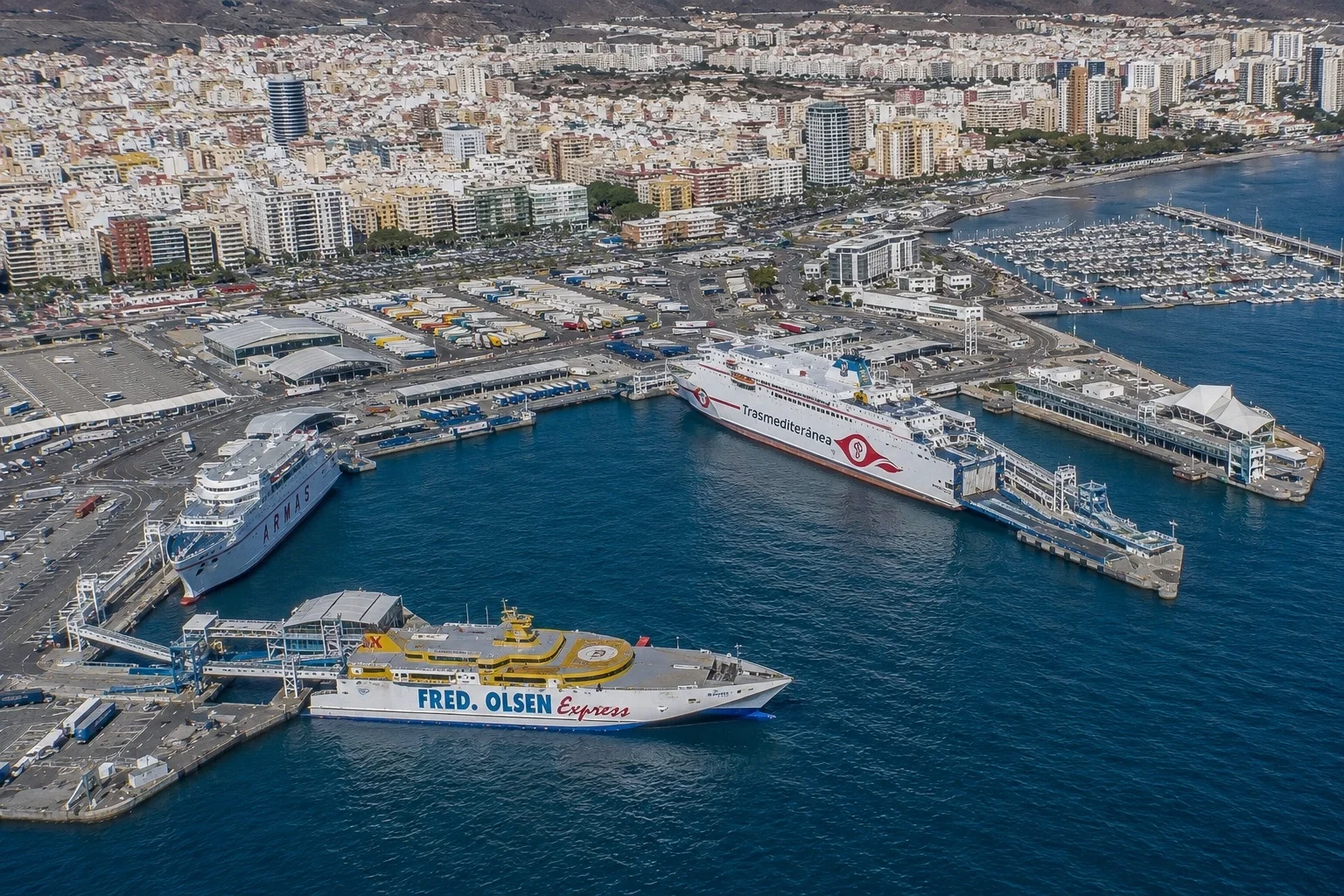
The Port of Las Palmas is a major passenger gateway. In 2026 Fred. Olsen Express operates Las Palmas–Morro Jable and the Las Palmas–Santa Cruz de Tenerife–Huelva mainland corridor, while Baleària also markets a Cádiz–Las Palmas connection. Exact inter-island combinations and quays vary by operator, so travellers should follow the terminal information on their booking.
Las Palmas has enough culture and beach life for several days, while its ferry network makes it a natural base for a wider Canary Islands itinerary.
Spend time on one of Europe’s best urban beaches, with swimming, a long promenade and easy access to restaurants.
Walk the historic quarter around cobbled streets, traditional buildings and Santa Ana Cathedral.
Visit the museum complex exploring Columbus, Atlantic navigation and the Canary Islands’ role in transatlantic history.
See a major modern aquarium close to the port and Santa Catalina area.
Explore one of the city’s liveliest shopping and dining districts beside the historic centre.
Head north of Las Canteras for volcanic scenery, viewpoints, surf and a more rugged stretch of coast.
Browse Gran Canaria city tours, island excursions, food experiences, boat trips and day tours departing from Las Palmas.
Tours and activities displayed in this section are supplied through Viator. Availability, descriptions and prices are provided by the activity supplier and can change.
Vehicle travel is a major advantage of the longer mainland services, while inter-island ferries are useful for building a multi-island itinerary. Always use the terminal and check-in instructions on the ticket because different operators may use different areas of the port.
Fred. Olsen Express currently connects Las Palmas with Morro Jable in Fuerteventura and operates a mainland corridor linking Las Palmas and Santa Cruz de Tenerife with Huelva. Baleària also markets a Cádiz–Gran Canaria route arriving in Las Palmas.
Passenger ferries use the Port of Las Palmas, also known as Puerto de La Luz, on the north-east side of Gran Canaria. It is a large multi-terminal port, so the exact check-in area depends on the operator and route.
Las Palmas has an extensive bus network and walkable neighbourhood clusters; there is no passenger railway on Gran Canaria.
The beach, promenade, port-side attractions and Santa Catalina district are easy to combine on foot.
Frequent buses connect Las Canteras, Vegueta, the port, airport and towns across Gran Canaria.
A car gives the most flexibility for mountain villages, viewpoints and beaches outside the capital.
Las Canteras suits beach-focused stays, Santa Catalina is convenient for the port, and Vegueta offers the strongest historic atmosphere.
Passenger ferries use the Port of Las Palmas, also known as Puerto de La Luz. The exact check-in area depends on the route and operator.
Current routes include Morro Jable in Fuerteventura and mainland Spain connections involving Huelva and Cádiz, with other Canary Islands combinations depending on timetable.
Yes. In 2026 Fred. Olsen Express operates a corridor connecting Las Palmas and Santa Cruz de Tenerife with Huelva, and Baleària markets a Cádiz–Gran Canaria service.
Yes on vehicle-carrying services. Long-distance mainland ferries are particularly useful for travellers bringing a car, motorcycle or motorhome.
Las Canteras, Vegueta, Casa de Colón, Santa Ana Cathedral, Poema del Mar and Triana are major city highlights.
Yes. Its large passenger port and connections across the archipelago make it a useful base for multi-island travel.
No. Gran Canaria does not currently have a passenger railway, so local buses, taxis and road transport are used instead.
Two or three days covers the main city highlights; add more time if you want beach days or excursions around Gran Canaria.
Check live sailing options, passenger fares, vehicle prices and onboard accommodation for your travel dates.


