


Alcazaba of Almería
Explore the vast Moorish citadel, gardens and walls for the city’s most important historic site and elevated views.
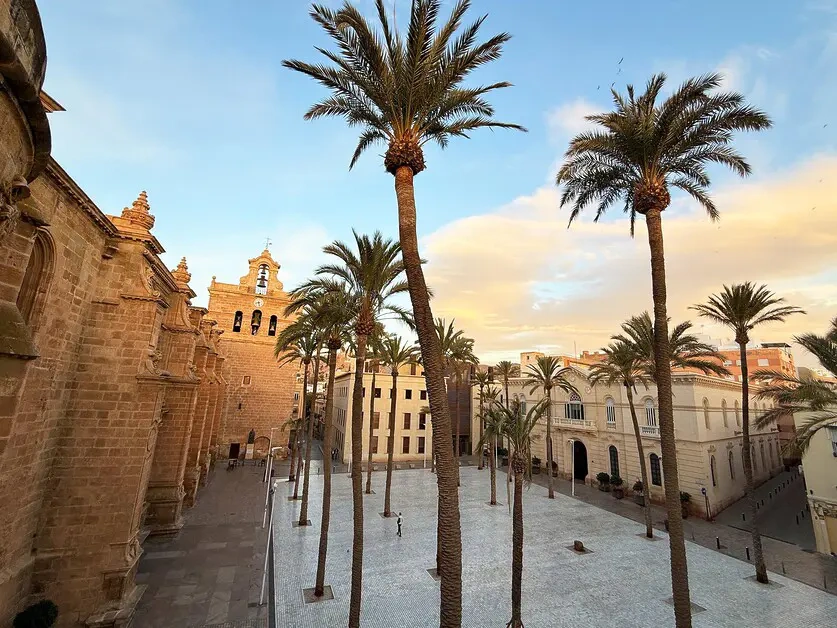
Explore the Alcazaba, cathedral, beaches and distinctive desert-edge landscapes, then plan ferry connections from Almería to North Africa.
The search is pre-filtered to the most relevant destination country or region where supported. Select the exact ports and travel date before booking. Click Here to view other available ferry destinations.
Click Here to view all other available ferry routes and destinations
Moorish heritage, Mediterranean light and a major North Africa ferry gateway
Almería sits on Spain’s south-eastern Mediterranean coast, where a compact historic centre meets a working port and some of the driest landscapes in Europe. The city feels different from the greener parts of Andalusia, with intense light, palm-lined streets and a strong North African connection.
The Alcazaba dominates the city from its hilltop position and is the essential first stop for understanding Almería’s history. Below it, the cathedral, old streets and plazas create an easy walking circuit through the centre.
The waterfront adds another layer. The restored Cable Inglés recalls the city’s industrial maritime history, while urban beaches and the port keep the Mediterranean visible throughout a stay.
Almería is also one of Spain’s important passenger ferry gateways to North Africa. Regular ro-pax routes connect the port with Melilla, Nador in Morocco, and Oran and Ghazaouet in Algeria, with several operators serving the network.
Beyond the city, Cabo de Gata-Níjar Natural Park and the Tabernas Desert make Almería especially rewarding for travellers with a car or an extra day. That combination of ferry gateway, historic city and unusual landscape makes it more than a transit stop.
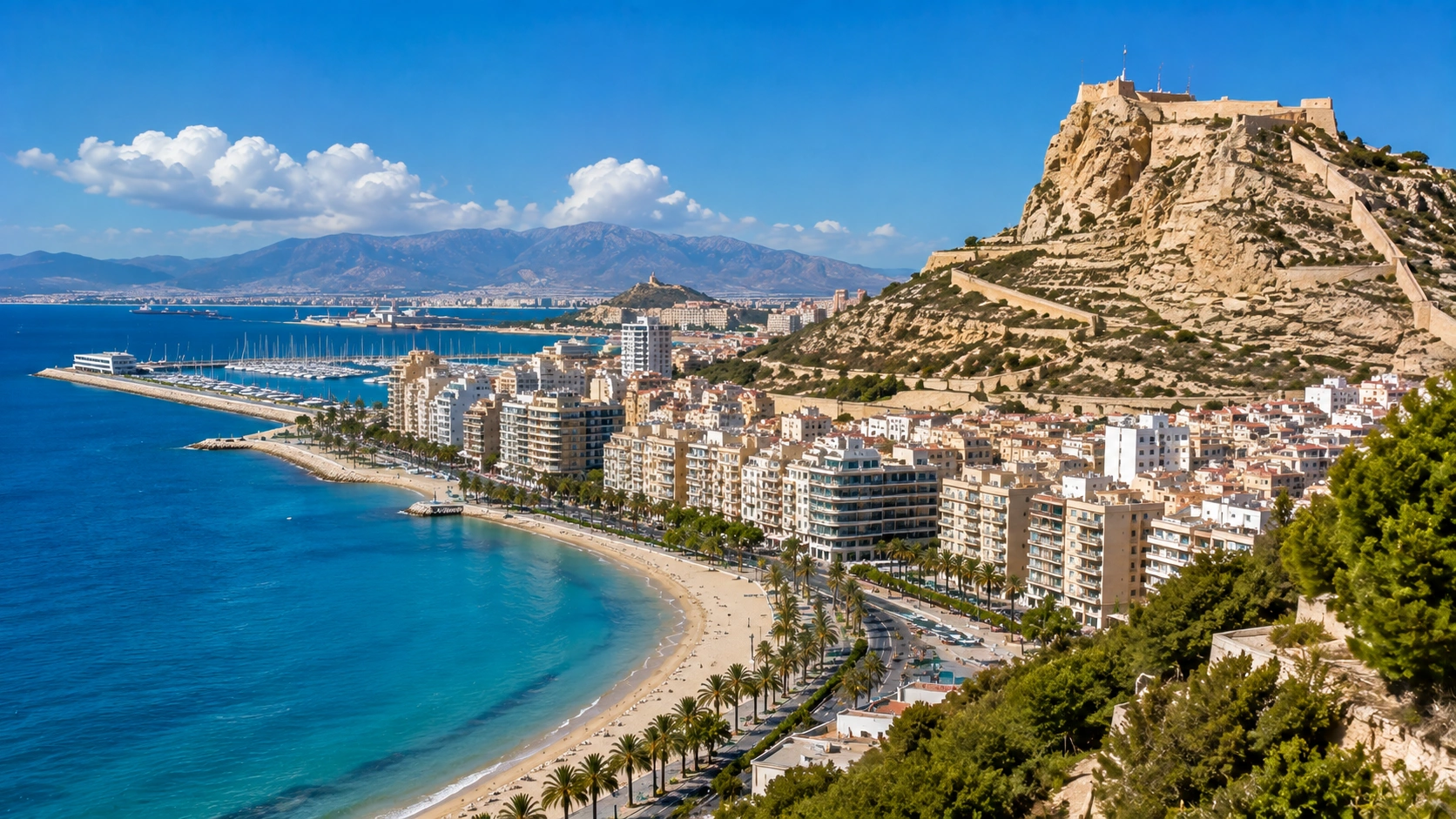
Almería’s historic centre is compact, while the Alcazaba, waterfront and nearby landscapes give the city much more variety than its role as a ferry port suggests.
Explore the vast Moorish citadel, gardens and walls for the city’s most important historic site and elevated views.
See the unusual fortress-like cathedral, built with defensive features as well as religious architecture.
Walk around the restored mineral loading pier, an industrial landmark beside the modern waterfront.
Combine historic streets, plazas, cafés and the main central promenade into an easy city-centre walk.
Use the seafront for a swim or promenade before or after exploring the historic centre.
Make a longer excursion east to volcanic scenery, coves and some of Andalusia’s most distinctive protected coastline.
Browse tours, activities and experiences available in Almería, Cabo de Gata and the surrounding province.
Tours and activities displayed in this section are supplied through Viator. Availability, descriptions and prices are provided by the activity supplier and can change.
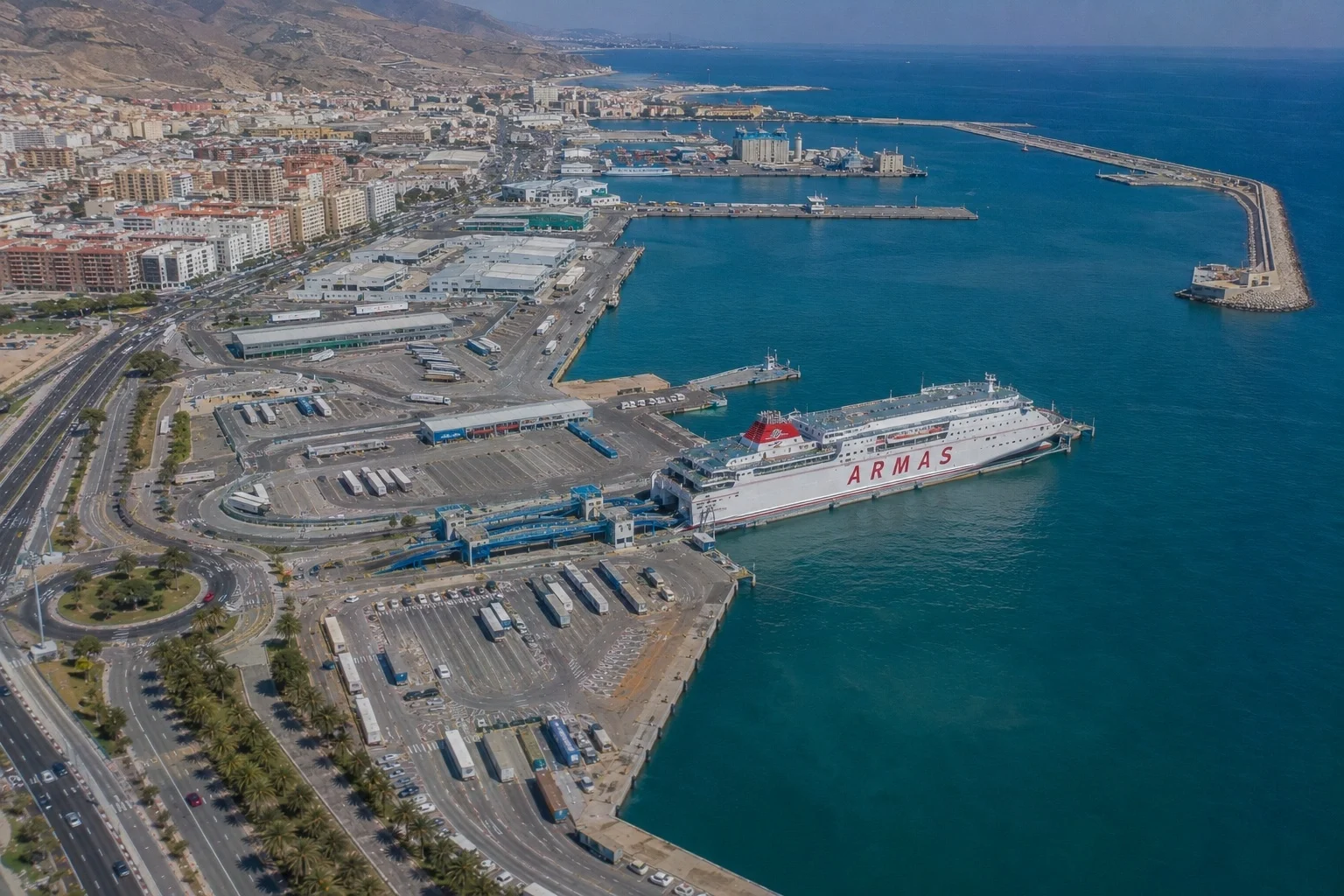
The Port of Almería passenger terminal serves a substantial international ferry network from Muelle de la Ribera. The port is close to the city centre, but international departures still require enough time for operator check-in, document controls and vehicle marshalling.
Regular passenger and vehicle routes connect Almería with Melilla, Nador in Morocco, and Oran and Ghazaouet in Algeria. Baleària, Armas-Trasmediterránea and GNV are among the operators represented at the port. Individual routes and frequencies vary by season and date, particularly during peak summer travel.
Passengers travelling to North Africa should check passport, visa, customs and vehicle requirements well before departure. During high-volume periods, arriving earlier than the minimum check-in deadline can make the terminal process much easier.
Most central Almería sights are walkable, while the intermodal station and road network make it straightforward to continue around Andalusia or into the province.
The cathedral, central plazas, Paseo de Almería and lower approach to the Alcazaba fit into a compact walking area.
Almería’s intermodal station combines rail and long-distance buses for onward travel across Andalusia and Spain.
Find Almería rail tickets here...A car is the most flexible way to reach protected beaches, desert landscapes and smaller inland or coastal communities.
Staying near the centre keeps the Alcazaba, cathedral, waterfront and port within easy reach. An extra night is particularly useful around international ferry check-in or if you want to add Cabo de Gata.
Passenger ferries use the Port of Almería terminal area around Muelle de la Ribera, close to the city centre.
Regular passenger routes connect Almería with Melilla, Nador, Oran and Ghazaouet, although exact frequencies vary by season and operator.
The port lists Baleària, Armas-Trasmediterránea and Grandi Navi Veloci among the passenger operators serving its regular network.
The Alcazaba, cathedral, Cable Inglés, historic centre and waterfront are the key city sights, with Cabo de Gata an excellent longer excursion.
Yes. The port is adjacent to central Almería, though international passenger procedures mean you should still allow plenty of time before departure.
Yes on relevant ro-pax services. Book the vehicle correctly and check customs, insurance and documentation requirements for your destination.
International routes require the appropriate passport and any visa, customs and vehicle documents that apply to your nationality and destination.
One or two days covers the main city sights. Add more time if you want to explore Cabo de Gata, the Tabernas Desert or nearby beaches.
Check live sailing options, passenger fares, vehicle prices and onboard accommodation for your travel dates.


