


Dover Castle
Explore medieval towers, wartime tunnels and commanding views over the Channel.
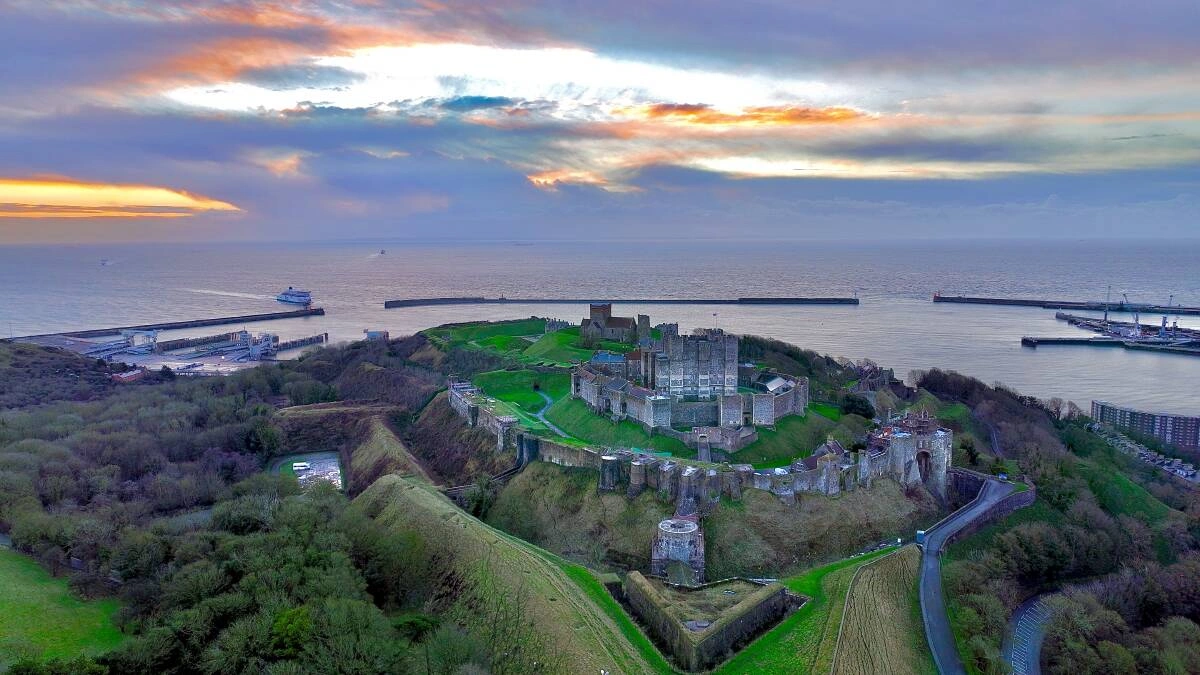
Explore Dover Castle and the famous White Cliffs, then use Britain’s busiest international ferry port for frequent vehicle crossings to Calais and Dunkirk.
The search is pre-filtered to the most relevant destination country or region where supported. Select the exact ports and travel date before booking. Click Here to view other available ferry destinations.
Click Here to view all other available ferry routes and destinations
Clifftop history, Channel views and Britain’s busiest short-sea gateway to continental Europe
Dover is defined by its geography. The White Cliffs rise directly above the Channel, and on clear days the French coast can feel remarkably close. That landscape has shaped the town’s military, maritime and transport history for centuries.
Dover Castle dominates the eastern heights and is one of England’s most impressive fortress complexes. Medieval structures sit above wartime tunnels, making it a destination that can easily fill several hours.
The White Cliffs walking routes provide the classic Dover experience, with viewpoints over the harbour and Channel. South Foreland Lighthouse and coastal paths extend the visit beyond the immediate town.
The waterfront and marina have become more visitor-friendly, while the Western Heights add another layer of fortifications for travellers interested in military history.
For ferry passengers, Dover’s role is exceptional. P&O Ferries, DFDS and Irish Ferries operate high-frequency services to northern France, with Calais and Dunkirk providing direct road access into continental Europe.
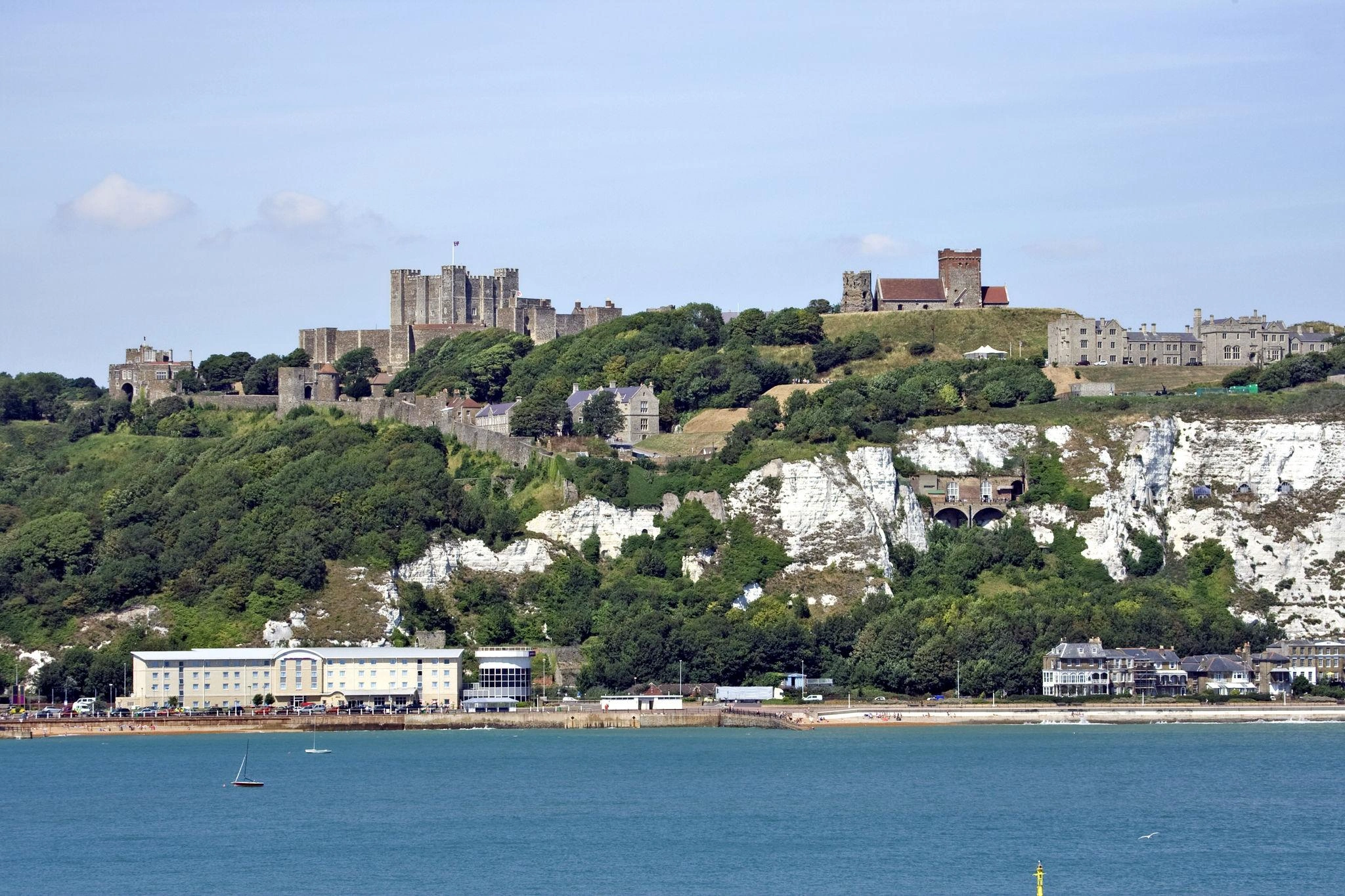
Dover combines globally recognisable coastal scenery with one of Britain’s strongest concentrations of military history.
Explore medieval towers, wartime tunnels and commanding views over the Channel.
Walk the clifftop paths for the town’s defining landscape and views towards France in clear weather.
Continue along the cliffs to a historic lighthouse and quieter coastal scenery.
Discover a vast network of fortifications overlooking the town and harbour.
Walk the marina and seafront before or after a ferry crossing.
Use Dover as a base for Deal, Sandwich, Folkestone and other nearby coastal towns.
Browse castle visits, White Cliffs excursions and private tours around Dover and the Kent coast.
Tours and activities displayed in this section are supplied through Viator. Availability, descriptions and prices are provided by the activity supplier and can change.
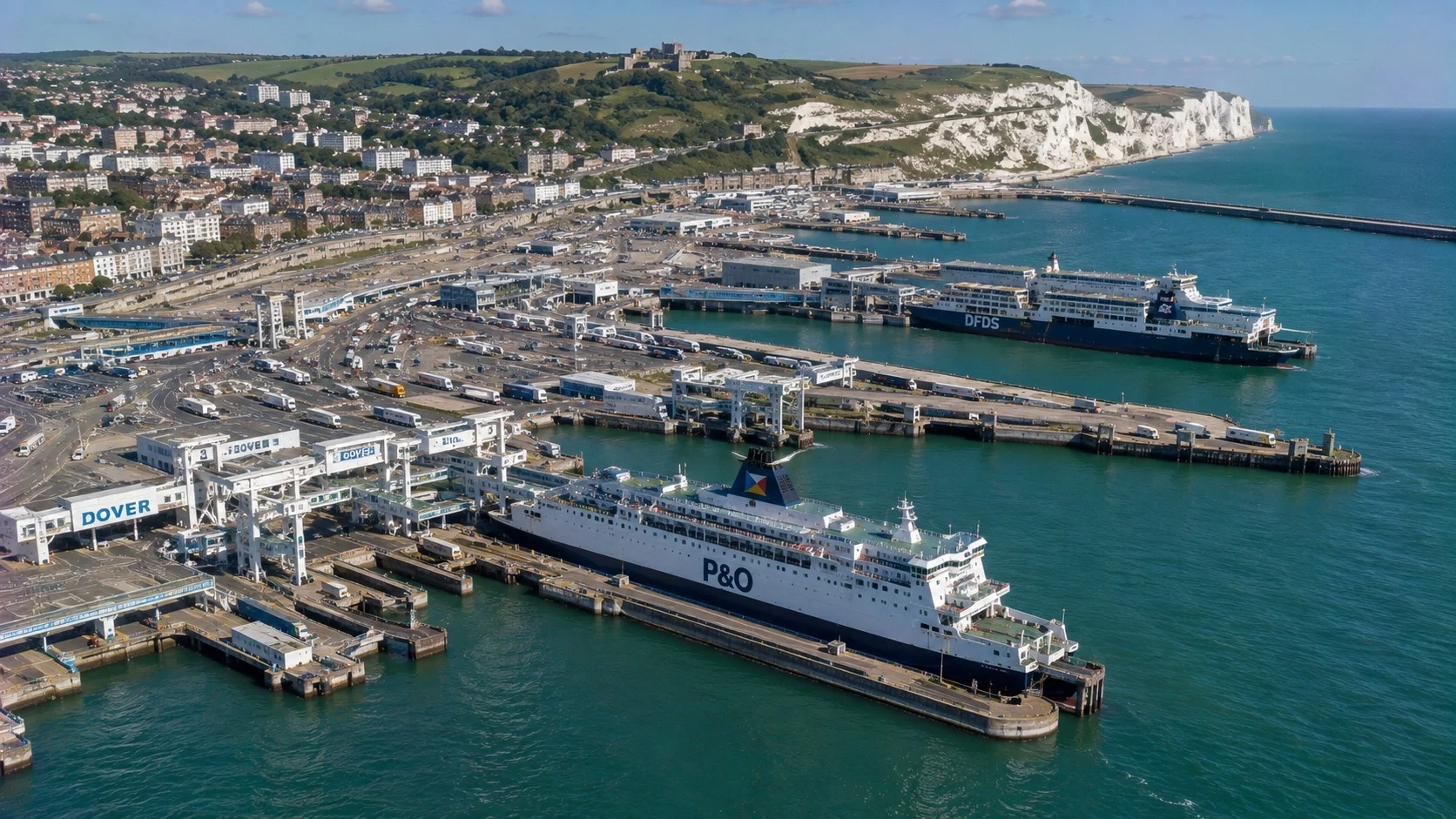
Vehicle passengers have the widest choice. Foot-passenger availability is more restricted and differs by operator, so travellers without a vehicle must confirm that their selected sailing accepts them before booking onward transport.
The Eastern Docks are a large vehicle-oriented terminal complex with separate operator check-in lanes. Allow plenty of time for passport, security and border processing, especially during peak holiday periods.
The Port of Dover operates one of Europe’s highest-frequency passenger ferry corridors. P&O Ferries and Irish Ferries sail to Calais, while DFDS operates to both Calais and Dunkirk.
Dover’s main attractions are spread between the town, castle and cliffs, with rail connections making London and the wider Kent coast easy to reach.
Central Dover and the marina are walkable, although the castle and cliffs involve steeper routes.
Direct and connecting rail services link Dover with London and other Kent destinations.
Find Dover rail tickets here...A car is ideal for combining the ferry with Deal, Canterbury, Folkestone or a wider south-east England road trip.
Waterfront stays suit ferry travellers, while accommodation around the centre and station is convenient for rail arrivals and visits to the castle.
Passenger ferries use the Port of Dover Eastern Docks, east of the town centre below the White Cliffs.
P&O Ferries, DFDS and Irish Ferries operate from Dover. P&O and Irish Ferries serve Calais, while DFDS serves Calais and Dunkirk.
Foot-passenger options are limited and operator-specific, so confirm acceptance on the exact sailing before booking.
Typical Dover–Calais crossings are around 90 to 100 minutes, depending on operator and sailing.
Dover Castle, the White Cliffs, South Foreland Lighthouse, the Western Heights and waterfront are the main highlights.
Yes. Dover is one of Europe’s major vehicle-ferry ports and carries cars, motorcycles, motorhomes and other booked vehicles.
Yes. Dover Priory has rail connections to London and other destinations across Kent.
Follow the operator check-in deadline and allow extra time for border processing and peak-period traffic.
Check live sailing options, passenger fares, vehicle prices and onboard accommodation for your travel dates.


