Scotland’s west-coast island network
A ferry system that is part transport network, part island lifeline
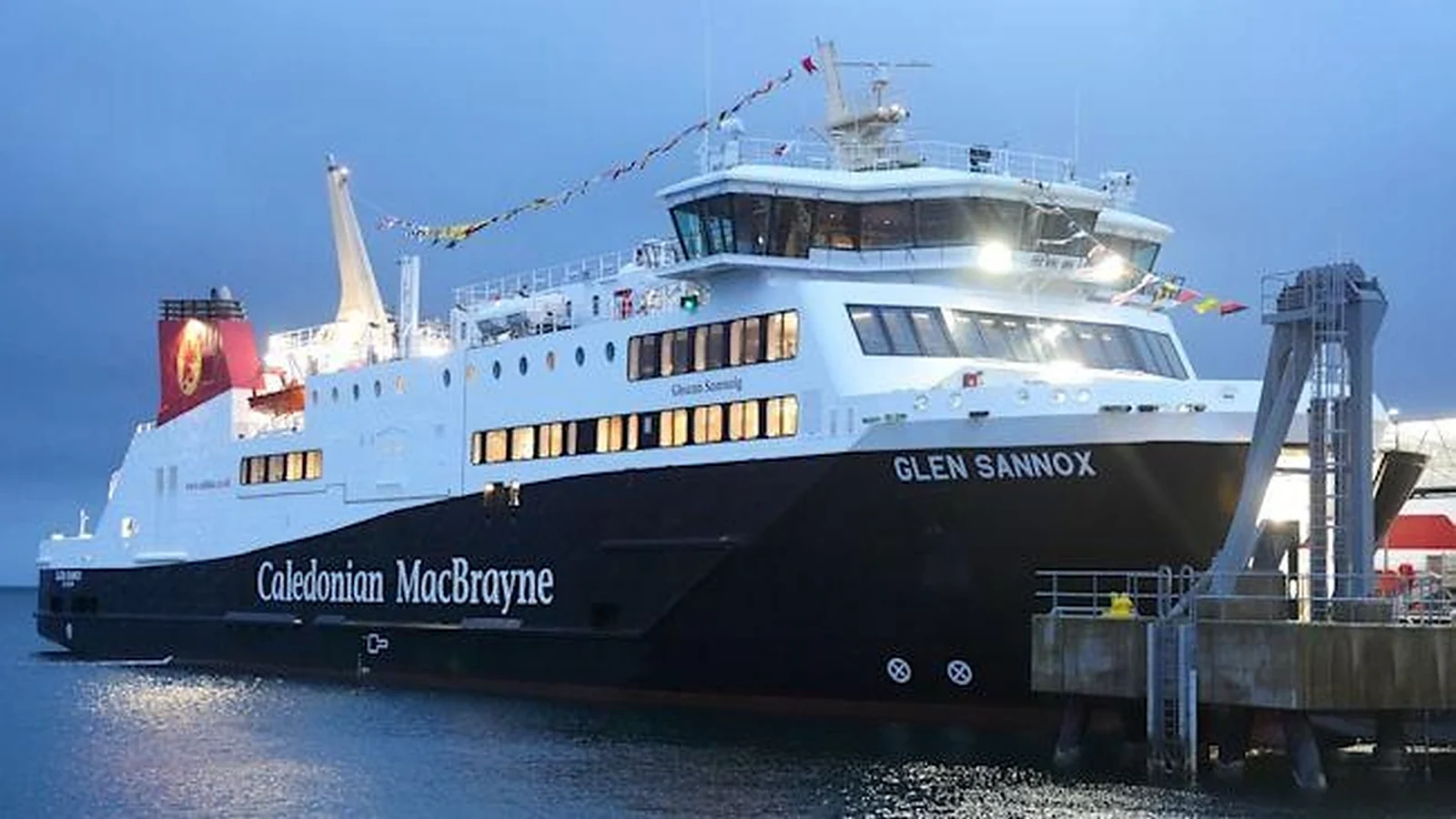
Caledonian MacBrayne — almost universally known as CalMac — is not a single long-distance ferry
route but a dense network of mainland-to-island and island-to-island services. The operator
describes itself as the largest ferry company in the United Kingdom, with 35 vessels serving more
than 50 destinations across around 200 miles of Scotland’s west coast. For visitors, that means
routes to famous islands such as Arran, Mull, Islay, Skye, Harris, Lewis, Barra and the Uists. For
island communities, the same ferries carry commuters, schoolchildren, freight, food, tradespeople,
medical travellers and the everyday traffic that keeps remote communities connected.
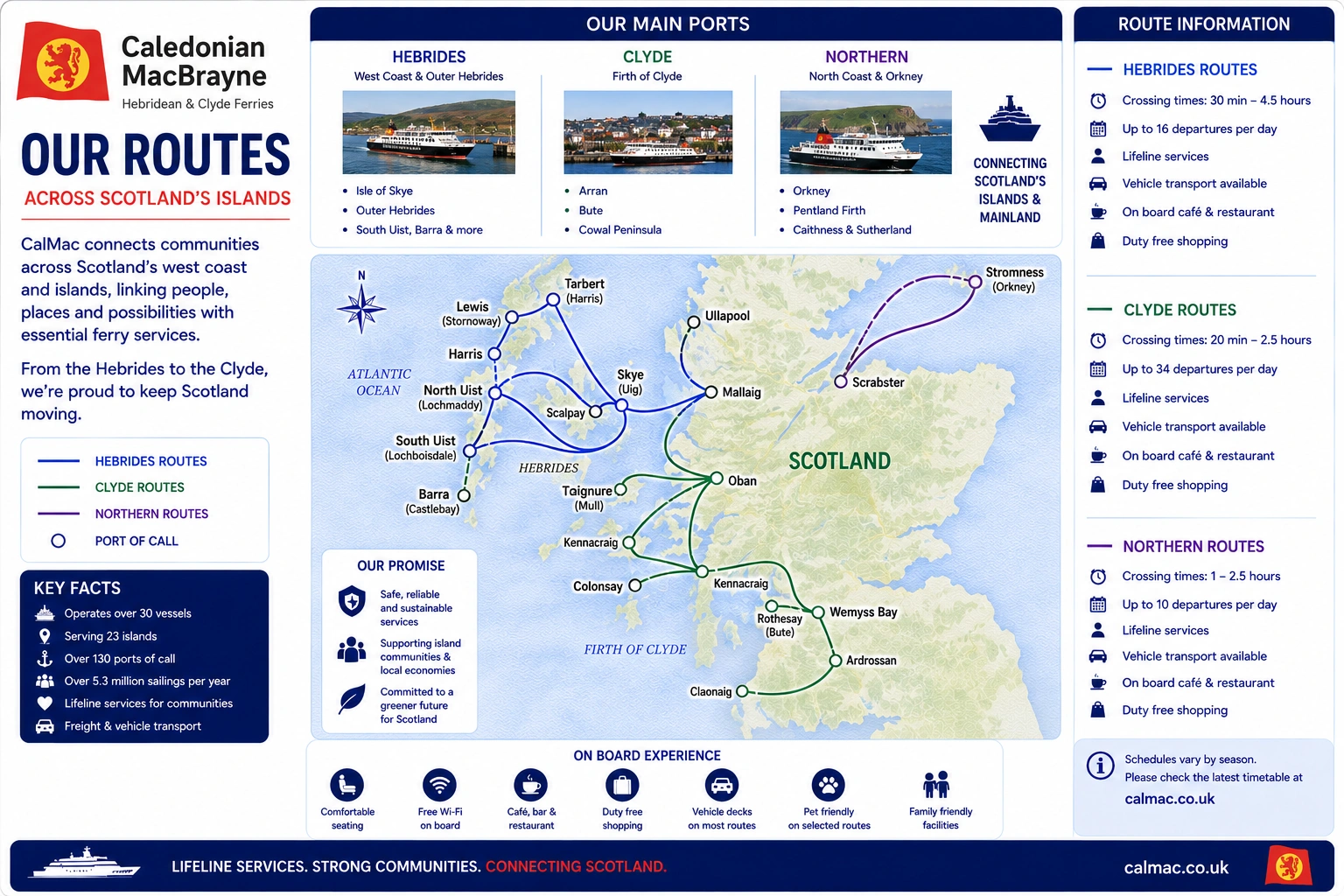
The network is best understood by region. The Firth of Clyde includes Arran, Bute, Cumbrae, Cowal
and Kintyre. The Southern Hebrides add Islay, Gigha and Colonsay. Oban is the key hub for much of
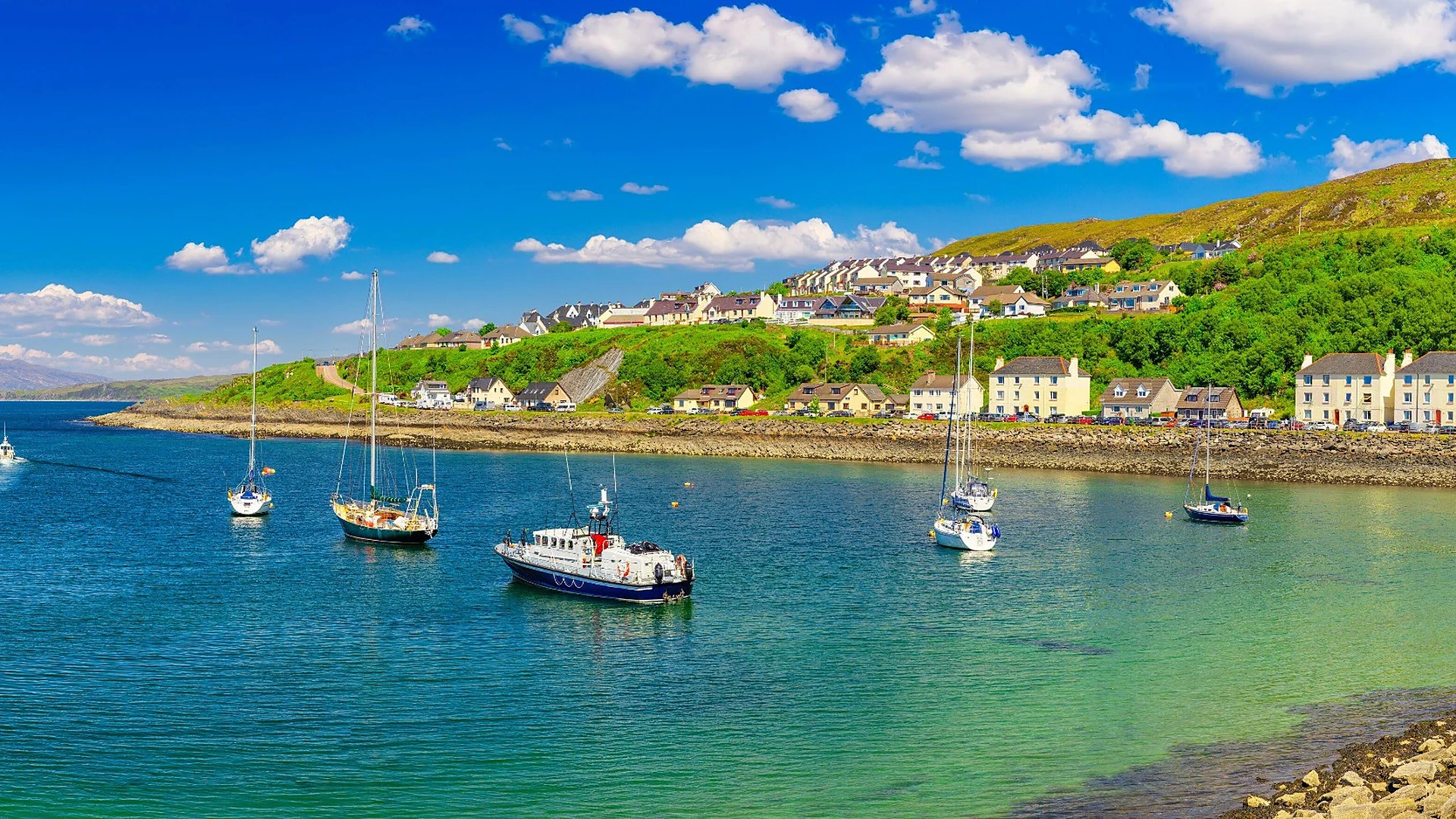
the Inner Hebrides, including Mull, Coll, Tiree, Lismore and Colonsay, while Mallaig links the
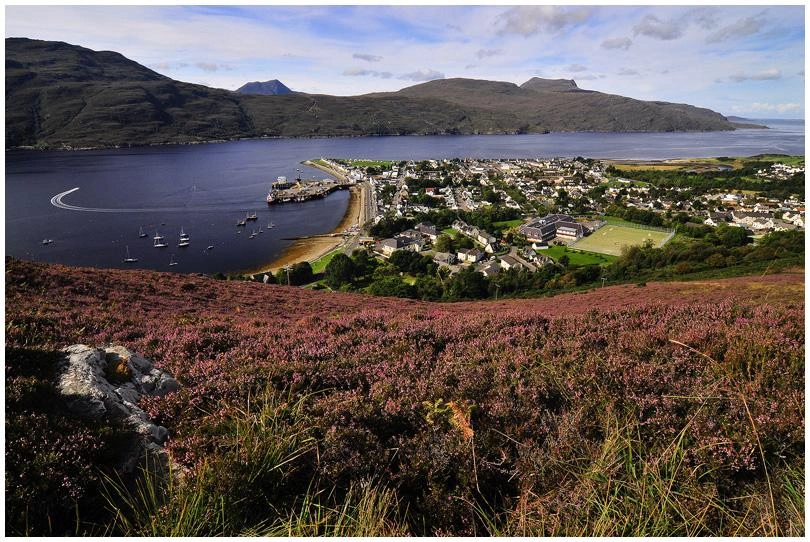
mainland with Skye, South Uist and the Small Isles. Farther north and west, Ullapool and Uig provide
major gateways into the Outer Hebrides.
CalMac uses two different ticketing concepts. On Bookable routes, buying in advance reserves space on a specific sailing. On Turn Up and Go routes, the advance ticket is open within the relevant timetable season rather than reserving one exact departure. That distinction matters: a five-minute local crossing to Bute or Kerrera is planned differently from a major vehicle sailing to Lewis, Harris, North Uist, Barra or Islay. Vehicle capacity is often the most important constraint. Cars, motorhomes, caravans, motorcycles and commercial traffic share finite deck space, so summer island journeys should be planned early. Foot passengers have more flexibility, but CalMac now strongly encourages advance purchase even when travelling without a vehicle. Bicycles are carried free, although they should still be declared on the booking so capacity can be managed. Weather and vessel availability are especially important on this network. Some routes cross exposed Atlantic or Minch waters, and vessel deployment can change during maintenance or disruption. A CalMac trip therefore benefits from one extra planning habit: check the live service status shortly before setting off for the port, even when you already hold a confirmed reservation.
Planning note: timetable patterns, vessel assignment and disruption can change. The sailing shown on your booking and CalMac’s live service-status information should always be treated as the final authority.



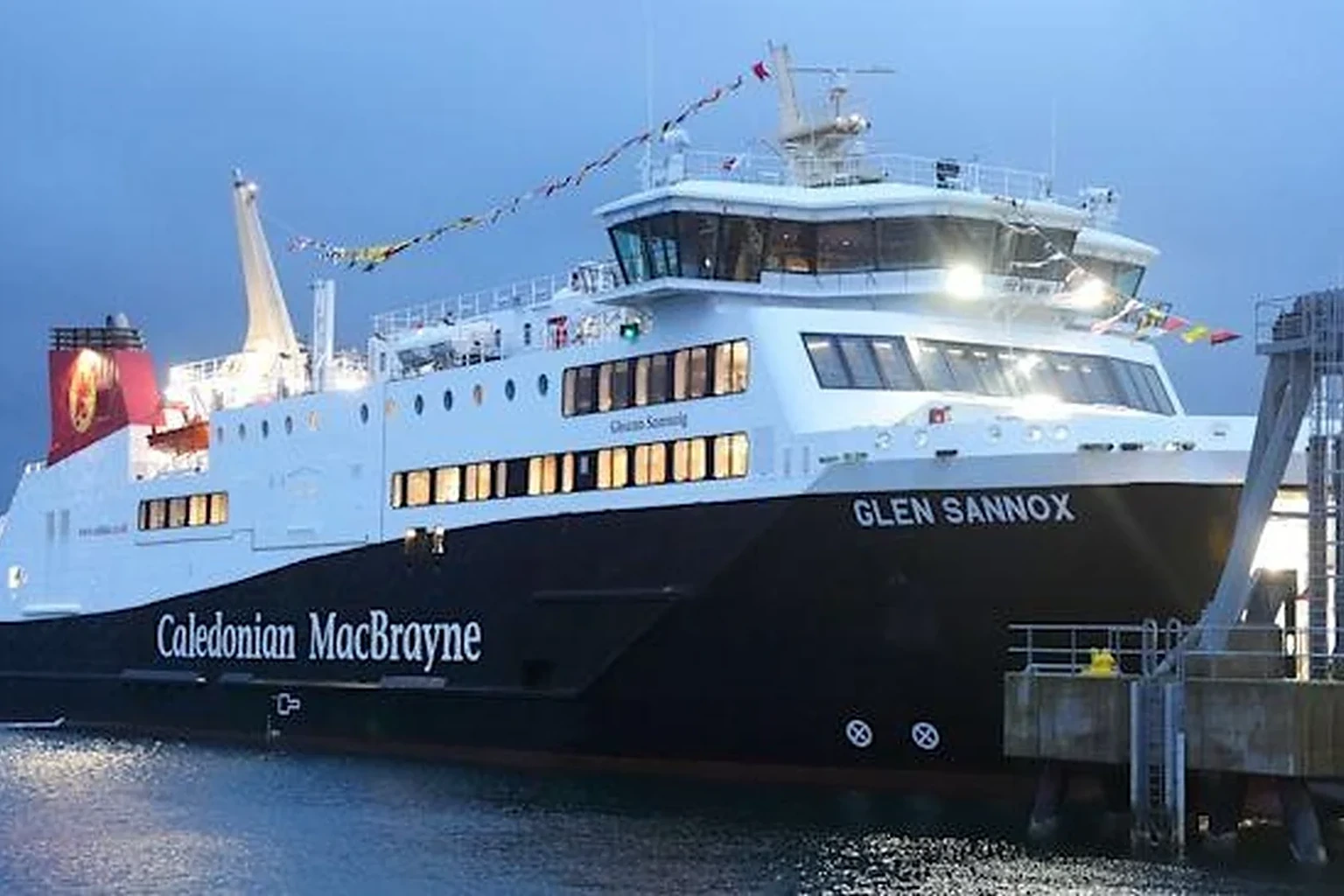
 50+ destinations
 35-vessel network
 Cars, bikes, motorhomes & pets