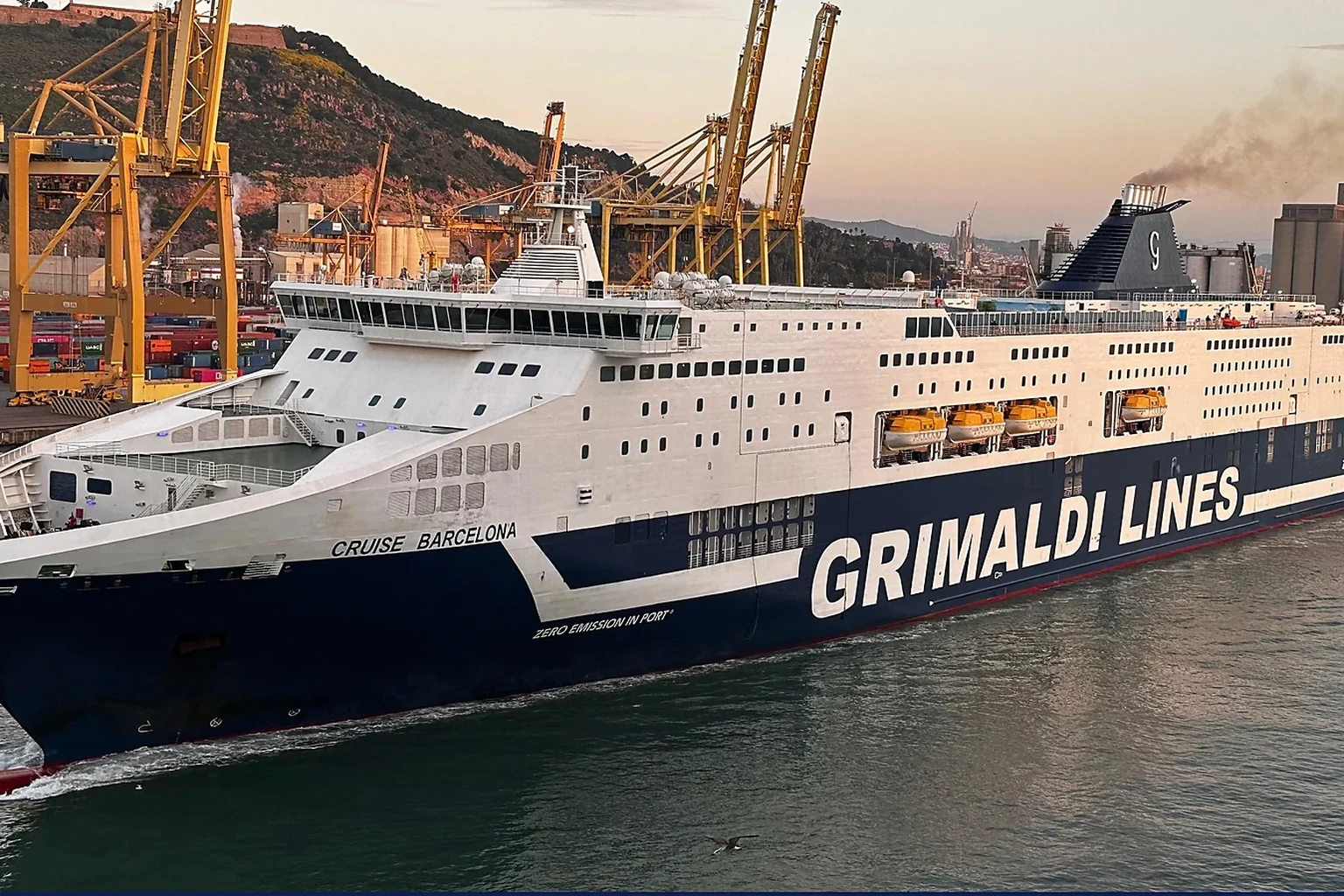
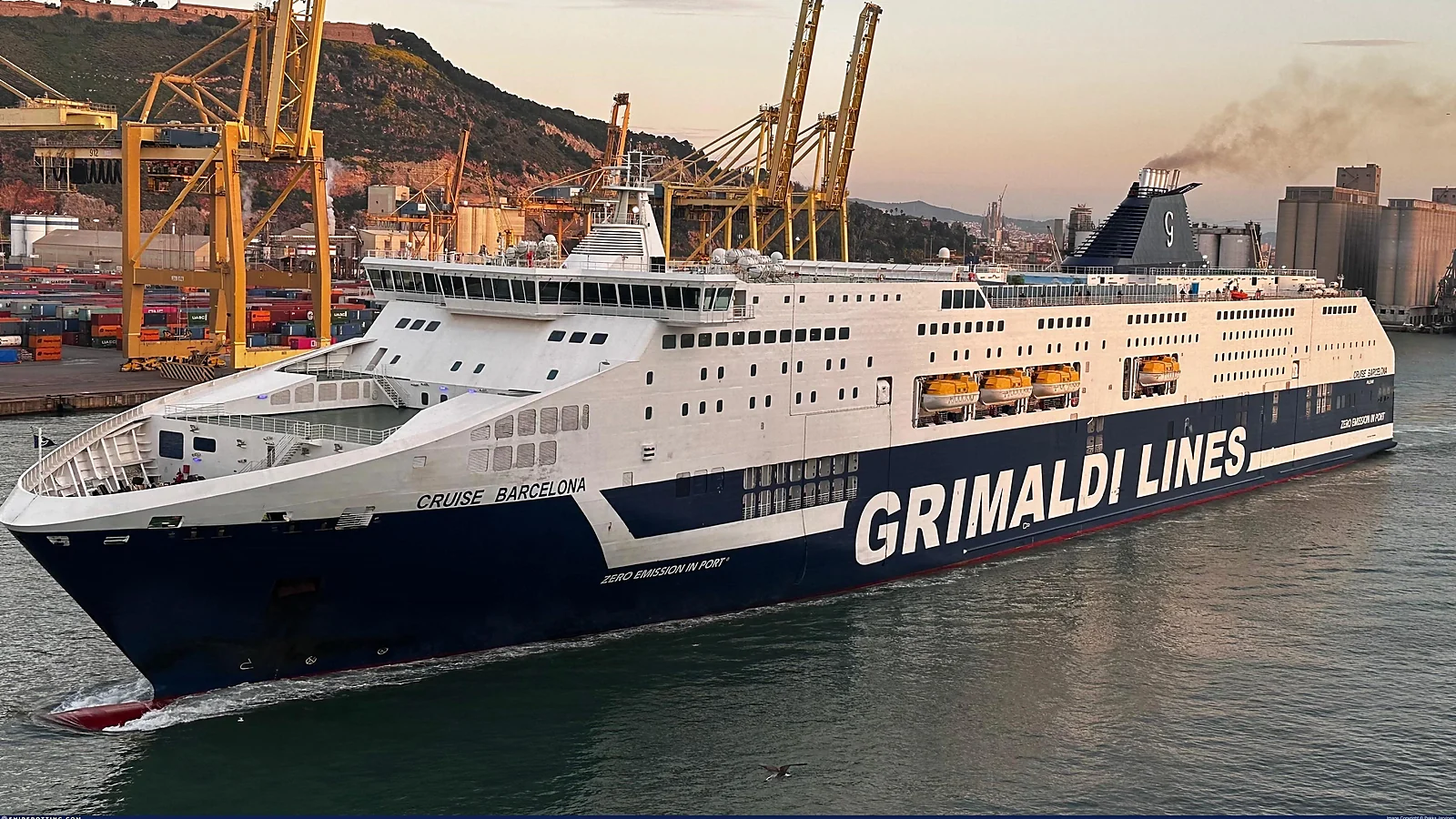
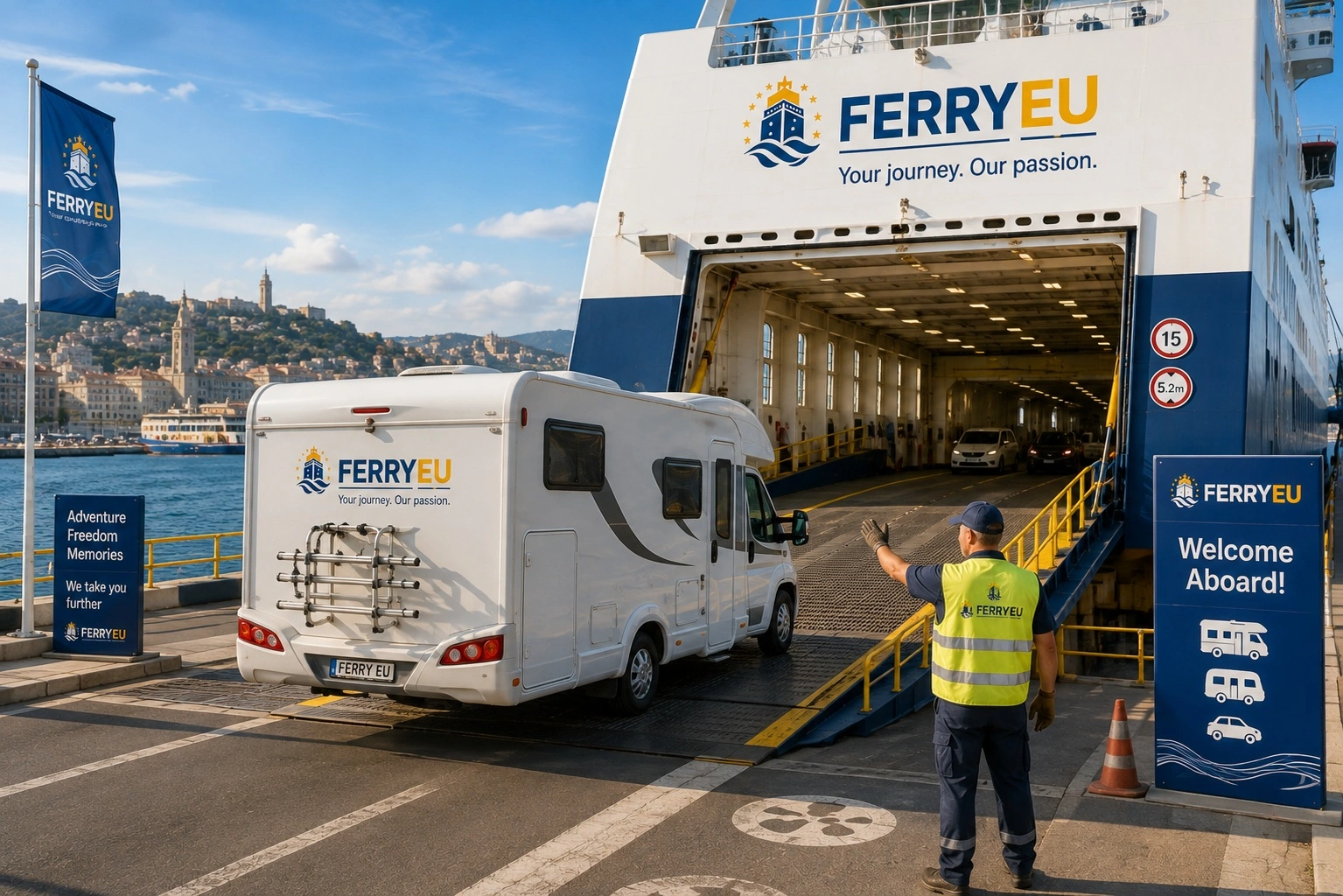
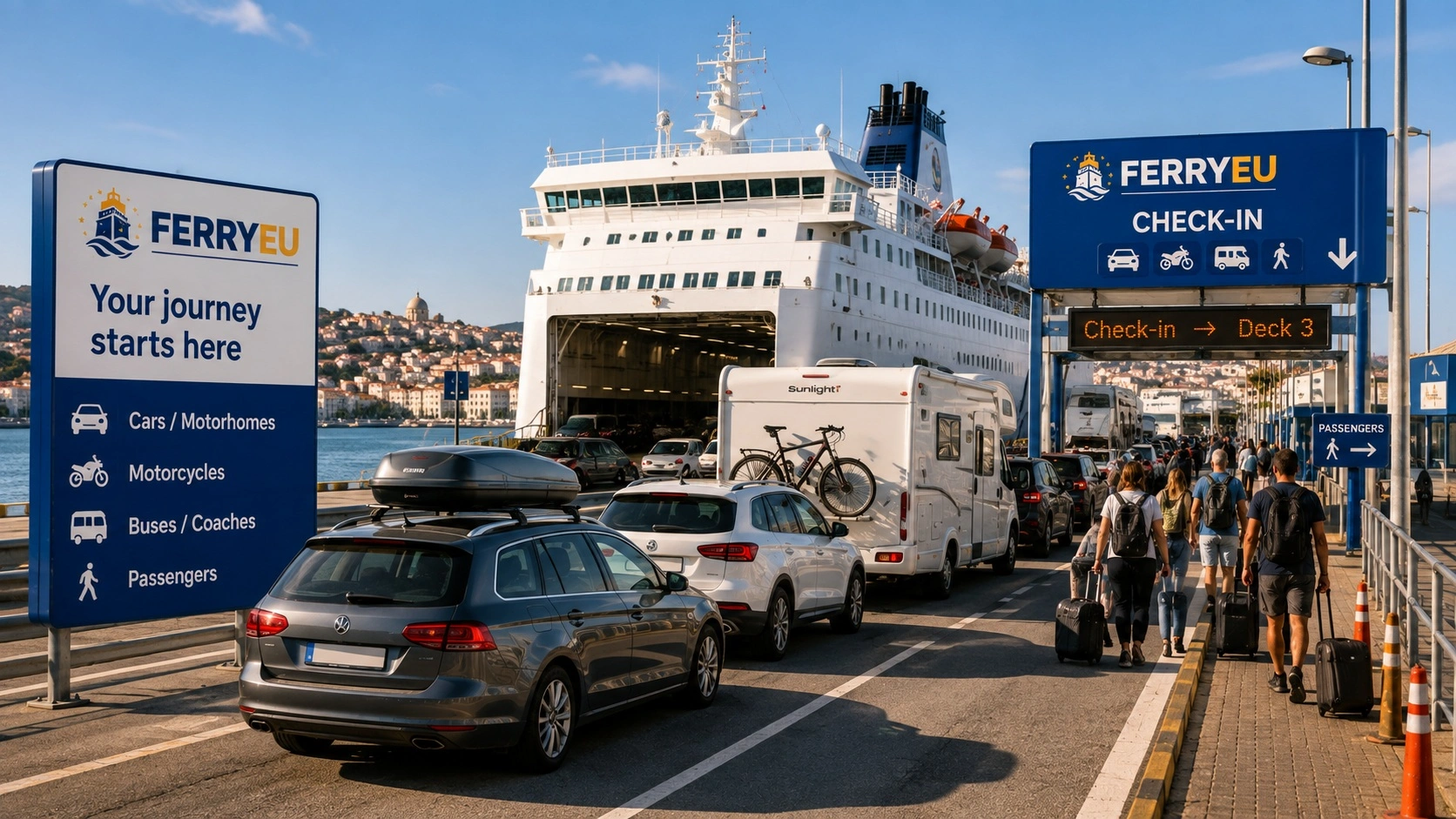
Grimaldi Lines passenger ferry crossing the Mediterranean
Mediterranean passenger and vehicle ferries

Grimaldi Lines

Travel between mainland Italy, Sardinia, Sicily, Spain, Greece and Tunisia on a wide Mediterranean network carrying foot passengers, cars, motorhomes and other vehicles.

Italy & islands International crossings Cabins & vehicles
Plan your Mediterranean crossing

Search Grimaldi Lines tickets

Choose the route, date, passengers, accommodation and vehicle details to compare currently available sailings.

Routes, sailing days, departure times and assigned ships vary by market and season. Confirm the complete itinerary and check-in requirement shown for your selected sailing.

Grimaldi Lines passenger and vehicle ferry
Mediterranean passenger and vehicle ferry service
About the operator

A wide Mediterranean network built around long-distance ferry travel

Grimaldi Lines is one of the major passenger-ferry brands of the Naples-based Grimaldi Group. Its passenger network is not limited to one island chain or one national market: it links mainland Italy with Sardinia and Sicily, reaches Barcelona in Spain, crosses the Adriatic to Greece and serves Tunis in North Africa.

That breadth makes the operator particularly useful for travellers planning a road trip. Cars, motorcycles, motorhomes and other correctly booked vehicles can cross with their occupants, removing the need to hire another vehicle on arrival. On longer routes, private cabins, reserved armchairs, restaurants and public lounges turn the ferry into part of the journey rather than simply a port-to-port transfer.

Route patterns differ considerably. A domestic Italian sailing may use fast check-in at the vehicle marshalling area, while Spain and Greece are international Schengen journeys with longer reporting times. Tunisia is a non-Schengen crossing and has a substantially earlier check-in requirement. Always plan around the rules for the specific route rather than applying one generic ferry routine to the whole network.

Network note: Grimaldi Group also owns or works alongside other ferry brands. This page is focused on passenger journeys sold as Grimaldi Lines services rather than treating every Grimaldi Group shipping activity as a passenger route.

Mediterranean and Adriatic connections

Grimaldi Lines routes

Grimaldi Lines operates a broad route network rather than one simple corridor. The six examples below show the main journey types; the live booking system and route map should be used to check every current departure and seasonal variation.

Italy–GreeceAdriatic crossing
ApuliaBrindisi
to
EpirusIgoumenitsa

Brindisi–Igoumenitsa is a practical Adriatic route for travellers driving between Italy and mainland Greece, with onward road access towards western and northern Greece.

  • International Schengen crossing
  • Vehicle space can be important in summer
  • Some seasonal itineraries may also involve Corfu
Compare Brindisi–Igoumenitsa sailings
Illustrative network

Selected current routes at a glance

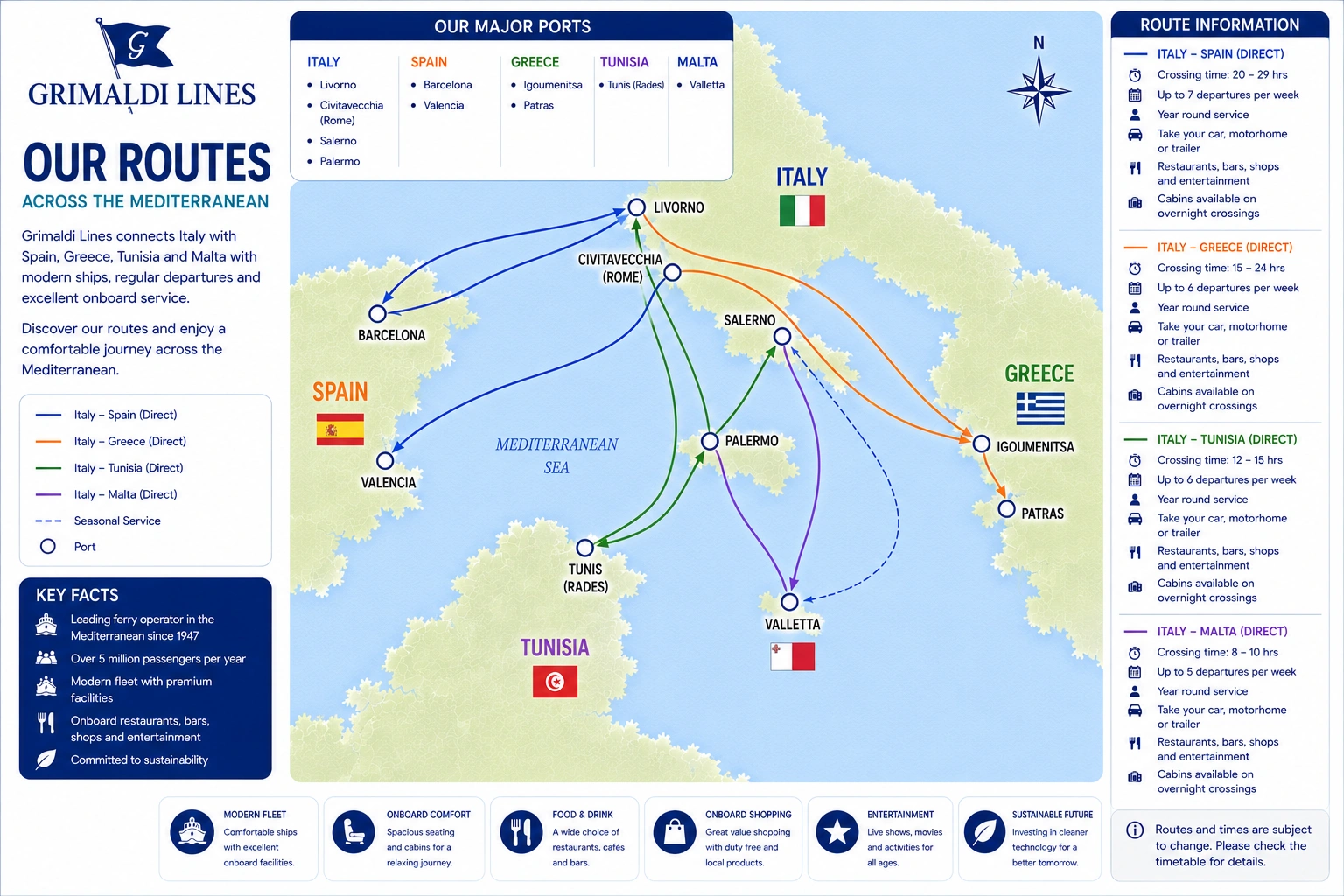
This schematic summarises the three representative current route groups described above. It is not a complete network map or timetable; the live operator booking result is definitive.

For planning with Grimaldi Lines, use the map to compare the representative route groups above, including Civitavecchia–Barcelona, Livorno–Olbia, Brindisi–Igoumenitsa. It is most useful for judging which departure or arrival point best fits the rest of the journey rather than as a substitute for the live timetable.

After choosing the most practical route, compare the live Grimaldi Lines sailing for departure time, calling pattern, passenger requirements and the facilities or accommodation shown for that service. The complete itinerary and arrival location can matter more than a small difference in the headline fare.

Always check the live sailing for your date before committing to a hotel, flight or long road connection. Port, departure time and ship assignment can change with the operating programme.

Grimaldi Lines route map
Illustrative Grimaldi Lines route map. Routes and operating patterns can change; check the live timetable for your date.
Ports worth planning around

Gateways for road trips, islands and city breaks

The departure and arrival port can shape the entire journey. These three gateways illustrate Grimaldi Lines’ mix of mainland, island and international travel.

Civitavecchia waterfront and ferry gateway near Rome
Rome’s ferry gateway

Civitavecchia

Civitavecchia is a strategic departure point for Barcelona and several Sardinian routes. Allow generous transfer time from Rome and confirm the precise terminal before setting out.

Explore Mediterranean destinations
Barcelona waterfront and Mediterranean city skyline
Spain connection

Barcelona

The Barcelona route opens the door to Catalonia and onward driving through Spain or France. Vehicle travellers should also check Barcelona’s current low-emission-zone requirements before arrival.

Explore Spain by ferry
Olbia waterfront in northern Sardinia
Northern Sardinia

Olbia

Olbia is one of the most useful vehicle-ferry gateways for Costa Smeralda, the north-east coast and road trips across Sardinia. Livorno offers one of the principal mainland connections.

Discover Sardinia travel ideas
Port-planning tip

On a multi-country road trip, compare the ferry with the road distance at both ends. A slightly longer sea crossing can still save substantial driving, fuel, tolls and an overnight hotel.

Sleep, sit or keep the fare simple

Cabins, armchairs and passenger accommodation

Grimaldi Lines serves everything from domestic island crossings to long international overnight journeys, so accommodation choice should be matched to the length and timing of the sailing.

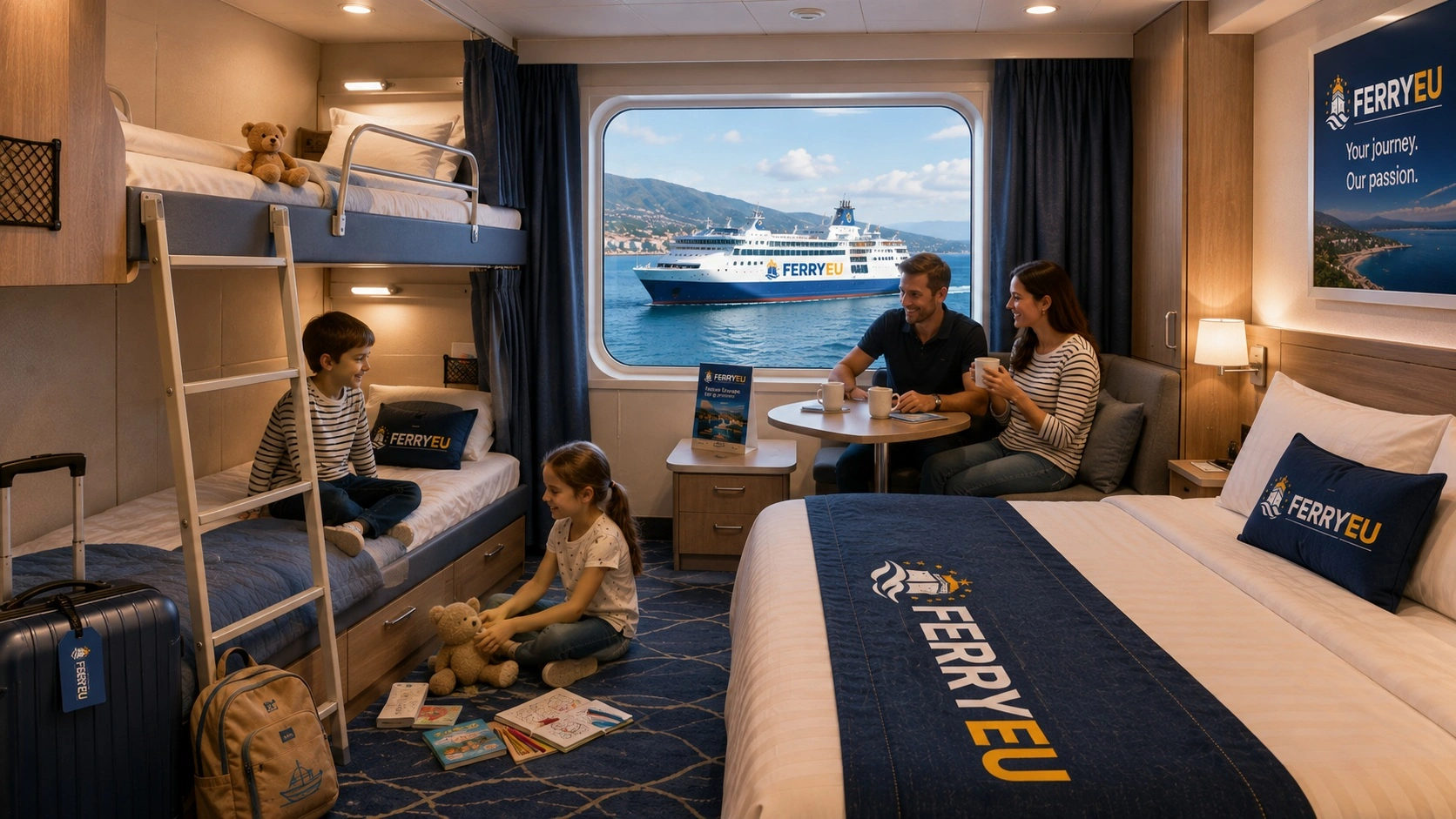
Family cabin with several berths on a ferry
Family cabins provide private sleeping space and can make a long overnight crossing far easier.
Premium outside ferry cabin with sea view
Outside and higher-category cabins are worth comparing on the longest Mediterranean journeys.

Economy or deck passage

The lowest-cost option gives access to public areas without a private cabin. It can work well on shorter daytime travel, but comfort expectations should reflect the length of the route.

Best considered forBudget-conscious daytime travel

Reserved armchairs

A numbered reclining armchair gives you an assigned place and more certainty than relying on general public seating, while remaining below the cost of a cabin.

Best considered forSolo travellers and medium-length crossings

Inside cabins

Inside cabins provide beds and private space without an external window. They are often the value choice when the real priority is sleep on an overnight sailing.

Best considered forOvernight rest at a lower cabin price

Outside and higher-category cabins

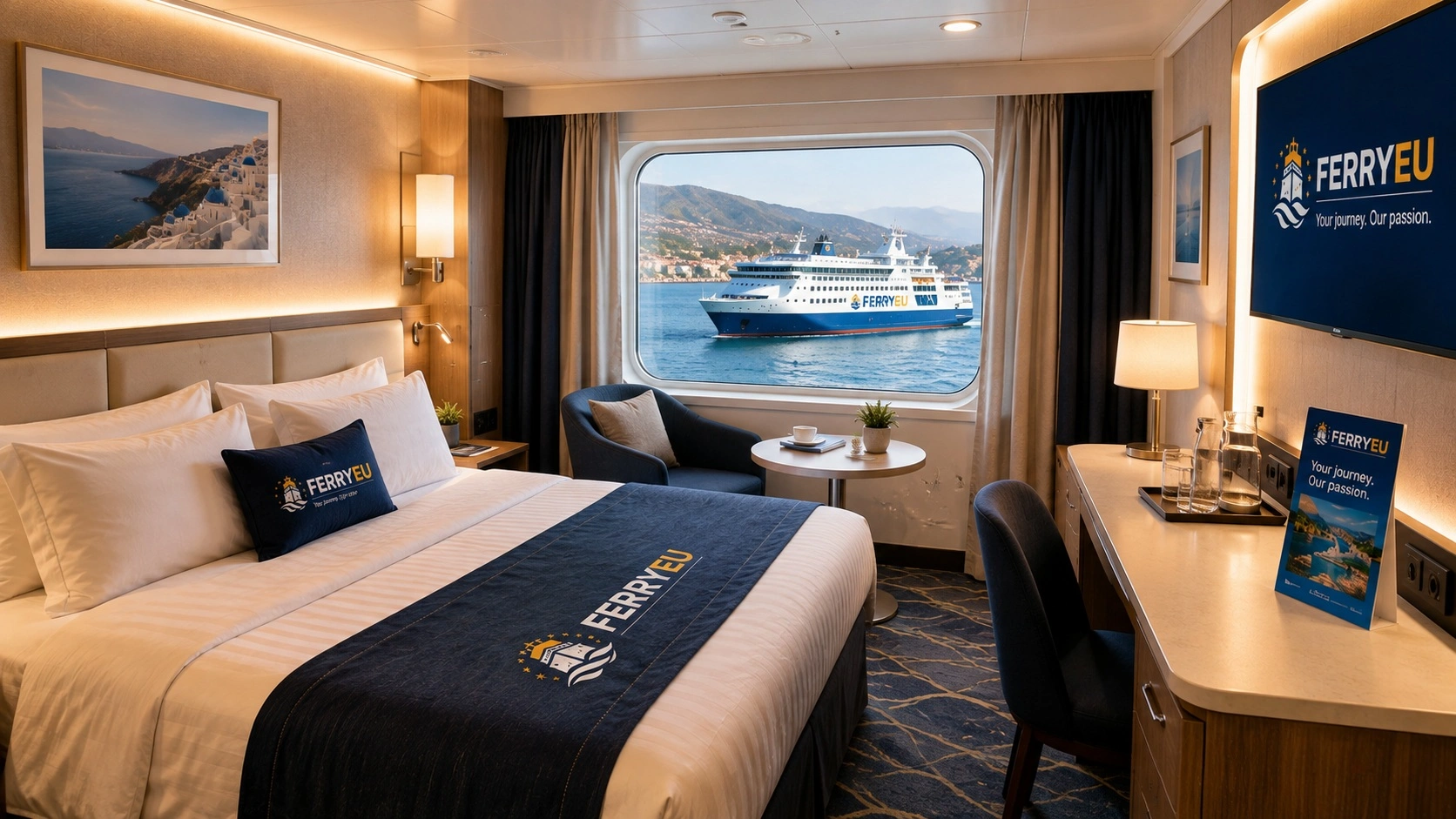
Outside cabins add natural light or a sea view, while selected ships also offer upgraded cabin categories. Exact inventory depends on vessel and route.

Best considered forCouples, families and long international crossings

Pet in Cabin

The Pet in Cabin service allows a booked pet to stay with its owner in an eligible cabin. The service includes specific preparation and end-of-trip cleaning and must be added to the booking.

Best considered forPassengers who want permitted cabin travel with a pet

Accessible cabins

Accessible cabins and adapted facilities are available on passenger vessels, but the exact number and arrangement vary. Reserve the appropriate accommodation and assistance well before travel.

Best considered forPassengers requiring an adapted room or mobility support
Cabin booking tip

On Spain, Greece and Tunisia journeys, compare a cabin early rather than assuming one will remain available close to departure. Vehicle space and cabin space can sell at different rates.

Take the road trip across the sea

Vehicles, pets and accessibility

One of the strongest reasons to use Grimaldi Lines is the ability to keep your own vehicle with you across the Mediterranean. Correct booking data, fuel type, pet arrangements and assistance requirements should all be settled before travel.

Motorhome boarding a passenger ferry
Motorhomes, caravans and trailers need the correct overall dimensions and category in the reservation.
Electric cars boarding a passenger ferry
Electric, hybrid, LPG and other alternative-fuel vehicles should be declared and follow the operator’s safety instructions.
Passengers waiting with dogs in a pet-friendly ferry area
Pets must be included in the booking and travel in accommodation permitted for the selected ship and route.

Cars, motorcycles and touring vehicles

Cars, motorcycles, vans, motorhomes, caravans and trailers can be carried subject to route and garage availability. Book the actual dimensions including racks, boxes or trailers.

  • Follow crew instructions when loading and parking
  • Take medicines and essentials because garage access is restricted during the crossing
  • Keep the vehicle registration and travel documents readily available

Alternative-fuel vehicles

Tell the operator about LPG, gas, electric or other alternative-fuel vehicles as required. LPG vehicles are parked in designated areas, and any safety instruction issued at the port takes priority.

  • Declare the fuel type accurately when booking or checking in
  • Report alarms, damage or abnormal battery/fuel-system conditions
  • Never assume onboard vehicle charging is available unless explicitly offered

Travelling with pets

Pets can use onboard kennels where available or stay in an eligible cabin when the Pet in Cabin service has been purchased. The animal must appear on the booking and the owner must carry the required documentation.

  • Pet in Cabin can accommodate up to three pets in the cabin
  • Rules are stricter on some international routes, including Tunisia
  • Assistance dogs travel under separate accessibility provisions

Reduced mobility and assistance

Accessible cabins, lifts, adapted toilets, tactile guides and reserved wheelchair spaces are available across the passenger fleet, although the exact features vary by ship.

  • State the required assistance and cabin needs before travel
  • Allow extra time at the port for organised boarding support
  • Confirm route-specific arrangements directly with Grimaldi Lines
Before you reach the ramp

Check-in, documents and boarding

Grimaldi Lines has different minimum reporting times for domestic Italian, Schengen international and non-Schengen routes. Use the category that applies to your specific sailing, not a generic ferry check-in rule.

Recommended travel sequence

  1. When booking
    Match every passenger, document and vehicle detail

    Passenger names, identification and vehicle information should match what will be presented at the port. Add accommodation, pets and special requirements before travel.

  2. Domestic Italy
    Foot passenger: no later than 1 hour before

    For journeys within Italy, the published minimum is one hour before departure for foot passengers. A passenger travelling with a vehicle must report no later than two hours before departure.

  3. Schengen international
    No later than 2 hours before

    For routes such as Italy–Spain or Italy–Greece, passengers with or without a vehicle should report for check-in no later than two hours before departure.

  4. Tunisia
    No later than 4 hours before

    For non-Schengen travel to or from Tunisia, passengers with or without a vehicle must report no later than four hours before departure to allow for the additional controls.

  5. During loading
    Follow the crew and empty the car of essentials

    The driver follows the assigned loading instructions. Once parked, take medicines, documents, valuables and overnight items because access to the garage is restricted.

Is this the right crossing?

When Grimaldi Lines can be a practical choice

Grimaldi Lines is particularly attractive when the journey is part of a wider road trip. Taking your own car or motorhome can remove airport baggage limits and car-hire logistics, while the overnight crossing can replace a long drive or a hotel night.

The best option depends on the entire door-to-door itinerary. Civitavecchia can work well for Rome and central Italy, Livorno for Tuscany and northern Italy, Naples for Campania, and Brindisi for an Adriatic journey towards Greece. On the island side, Olbia, Porto Torres, Cagliari and Palermo each lead naturally to different road networks.

For the longest journeys, compare the cabin price as part of the transport cost rather than an optional luxury. A good night’s sleep before a day of driving can be more valuable than choosing the lowest deck-passage fare.

Common planning questions

Grimaldi Lines FAQs

Where does Grimaldi Lines sail?

Grimaldi Lines operates a broad Mediterranean passenger network linking mainland Italy with Sardinia, Sicily, Spain, Greece and Tunisia. Individual routes and seasonal programmes can change, so the live booking result should be treated as definitive.

Can I take a car on Grimaldi Lines?

Yes. Cars, motorcycles, motorhomes, caravans and other correctly booked vehicles can travel on relevant Grimaldi Lines ferries. Enter the correct vehicle category and dimensions and follow the crew’s loading instructions.

How early should I arrive for Grimaldi Lines check-in?

For travel within Italy, foot passengers should normally check in no later than one hour before departure and vehicle passengers no later than two hours. For Schengen international routes, passengers should check in no later than two hours before departure. Tunisia services require arrival no later than four hours before departure.

Are cabins available on Grimaldi Lines ferries?

Yes. Depending on the route and assigned ship, accommodation can include deck passage, reserved armchairs, inside cabins, outside cabins and higher-category cabins. Long or overnight crossings are the journeys where a private cabin can make the greatest difference.

Can pets travel with Grimaldi Lines?

Yes. Pets can travel in the accommodation permitted for the selected sailing, including onboard kennels where available or a cabin when the Pet in Cabin service has been purchased. The pet must be included in the reservation and the required health documents must be carried.

Is Wi-Fi available on Grimaldi Lines?

Paid Seafy satellite Wi-Fi packages are available on many Grimaldi Lines ships, although availability varies by vessel and route. The service can be slower than land-based internet and is not available on every ship.

Does Grimaldi Lines carry passengers with reduced mobility?

Yes. Grimaldi Lines provides accessible cabins and assistance arrangements on its passenger ships, with facilities that can include lifts, adapted toilets, tactile guides and reserved wheelchair spaces. Requirements should be communicated to the operator before travel.

Can I travel from Italy to Spain with Grimaldi Lines?

Yes. Civitavecchia–Barcelona is one of Grimaldi Lines’ principal Italy–Spain passenger routes, and Porto Torres–Barcelona provides an additional Sardinia–Spain connection.

Does Grimaldi Lines sail to Greece?

Yes. Grimaldi Lines serves Greece from Italy, including the Brindisi–Igoumenitsa route, with Corfu appearing on relevant seasonal itineraries. Check the live timetable for the exact route pattern on your dates.

Does Grimaldi Lines sail to Tunisia?

Yes. Grimaldi Lines connects Tunis with Italian ports including Palermo, Salerno and Civitavecchia. Tunisia is a non-Schengen journey, so document checks and longer check-in times apply.

Ready for the Mediterranean?

Compare Grimaldi Lines sailings and prices

Check current routes, travel dates, accommodation and vehicle availability for your Mediterranean ferry journey.

Search Grimaldi Lines Tickets