


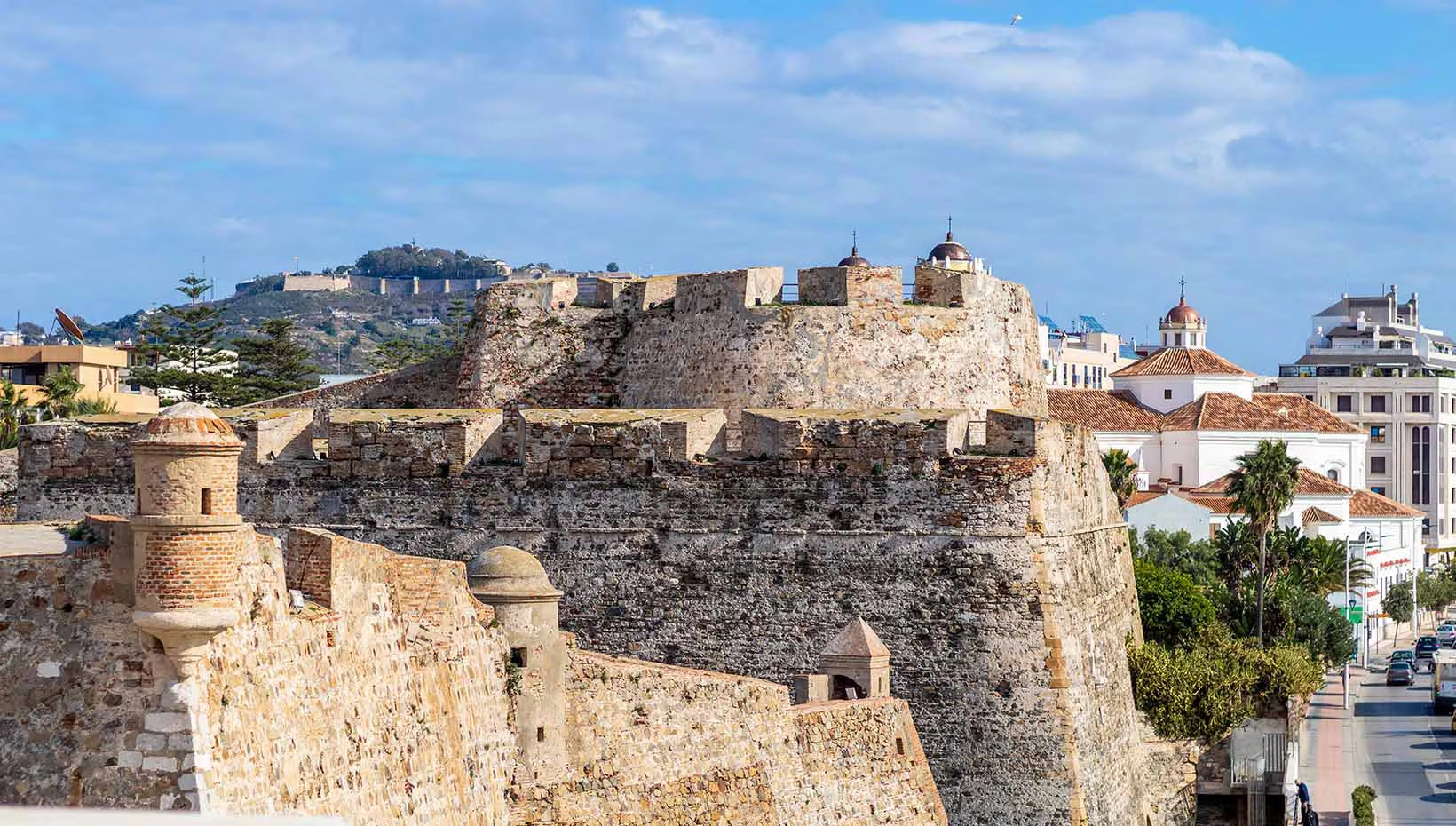
Royal Walls
Walk the monumental fortifications and moat that separate the old peninsula from the modern city.
Explore Ceuta’s fortifications, Mediterranean waterfront and North African setting, then plan the fast ferry connection across the Strait to Algeciras.
The search is pre-filtered to the most relevant destination country or region where supported. Select the exact ports and travel date before booking. Click Here to view other available ferry destinations.
Click Here to view all other available ferry routes and destinations
Spanish and North African influences beside one of the world’s great maritime crossroads
Ceuta occupies a remarkable position where the Mediterranean meets the Atlantic at the entrance to the Strait of Gibraltar. Although politically part of Spain, its North African setting gives the city a character unlike mainland Spanish ferry destinations.
The historic centre is compact and sits immediately beside the harbour. The Royal Walls and their navigable moat form the most striking historic landmark, while churches, civic buildings and viewpoints reveal layers of Portuguese, Spanish and Mediterranean history.
Ceuta is also shaped by the sea. Beaches sit close to the centre, the Parque Marítimo del Mediterráneo creates a landscaped waterfront leisure area, and Monte Hacho rises above the city with broad views over the Strait.
The ferry connection with Algeciras is an everyday transport link rather than simply a tourist service. Fast ferries carry residents, visitors and vehicles between the two shores, making Ceuta easy to combine with a wider Andalusia itinerary.
Because the city has no rail network connecting it to mainland Spain, onward rail travel normally begins after crossing to Algeciras. This makes the ferry terminal an unusually important part of Ceuta’s wider transport system.
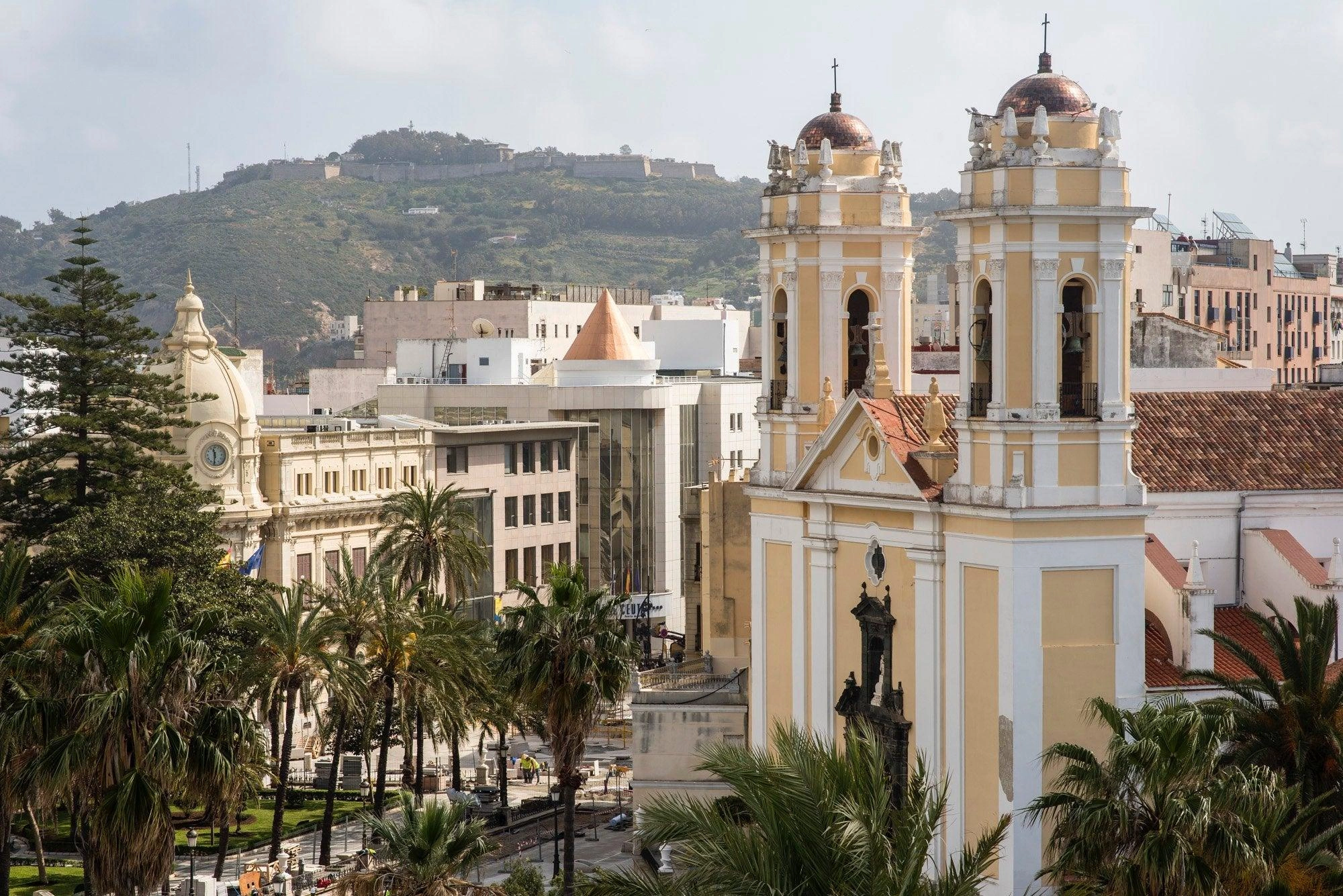
Ceuta packs fortifications, viewpoints, beaches and a lively waterfront into a compact city between the Mediterranean and Atlantic approaches.
Walk the monumental fortifications and moat that separate the old peninsula from the modern city.
Relax around the saltwater pools, gardens and leisure spaces designed into the Mediterranean waterfront.
Head to the high ground for views over Ceuta, the Strait and the surrounding North African coastline.
See the cathedral, civic buildings and monuments around one of Ceuta’s most important central squares.
Look for the distinctive dragon-topped historic building while exploring the central shopping streets.
Spend time at accessible city beaches such as La Ribera or El Chorrillo when weather and season suit.
Browse sightseeing, coastal experiences and excursions in and around Ceuta and the Strait of Gibraltar.
Tours and activities displayed in this section are supplied through Viator. Availability, descriptions and prices are provided by the activity supplier and can change.
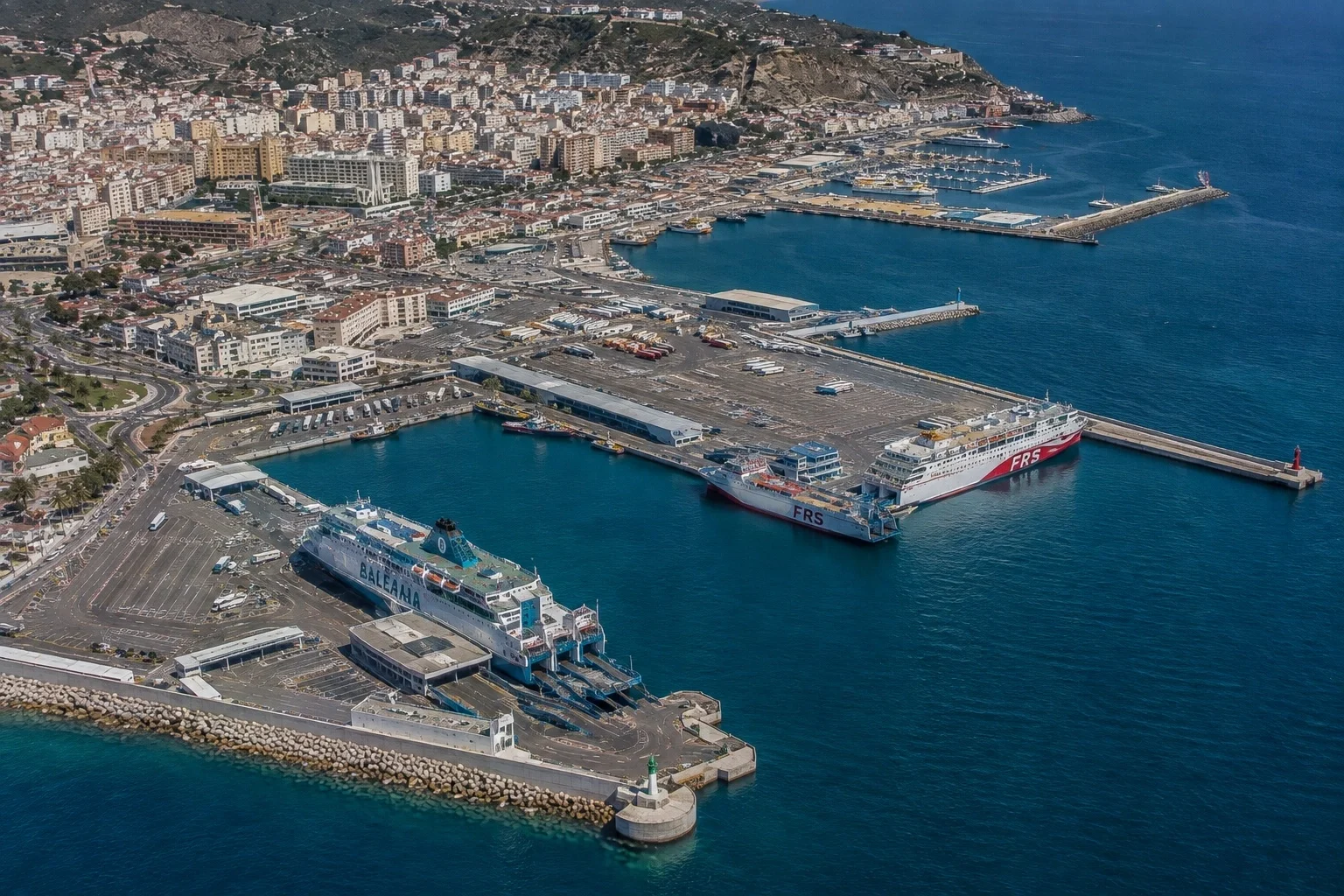
Ceuta’s passenger port is integrated closely with the central city and handles the short sea route to Algeciras. Baleària and other current Strait operators provide frequent passenger and vehicle sailings, with fast-ferry journey patterns designed for both residents and visitors.
The terminal is considerably more convenient for central sightseeing than many large vehicle ports. Once you leave the passenger area, the main commercial streets and central attractions are nearby.
Passengers continuing into mainland Spain should treat Algeciras as the onward transport gateway. From there, road and rail connections extend through Andalusia and towards the wider Spanish network.
Ceuta’s centre is compact, with walking, local buses and taxis covering most visitor needs; mainland rail journeys begin after the ferry to Algeciras.
The Royal Walls, Plaza de África, shopping streets and waterfront attractions are close enough to combine on foot.
Local transport is useful for Monte Hacho, beaches and neighbourhoods outside the compact centre.
For mainland-Spain rail travel, cross by ferry to Algeciras and connect into the Andalusian transport network.
Find onward rail tickets from Algeciras here...Central Ceuta keeps the ferry terminal, main attractions, restaurants and waterfront within easy reach and is the most practical base for a short stay.
The passenger terminal is in the Port of Ceuta beside the central city, making it relatively convenient for foot passengers.
The principal passenger route connects Ceuta with Algeciras across the Strait of Gibraltar.
Fast-ferry services make this a short Strait crossing, but the exact journey time depends on the vessel and departure you choose.
Popular highlights include the Royal Walls, Parque Marítimo del Mediterráneo, Monte Hacho, Plaza de África and the city beaches.
Yes on vehicle-carrying services. Book the correct vehicle category and arrive within the operator’s check-in window.
Yes. The route is widely used by passengers without vehicles, and the terminal is close to the city centre.
No mainland rail line serves Ceuta. For rail travel in Spain, cross to Algeciras and continue from the Andalusian network.
One or two days covers the main city sights, while a longer stay allows more time for beaches, viewpoints and the surrounding coast.
Check live sailing options, passenger fares, vehicle prices and onboard accommodation for your travel dates.


