


Markt & Belfry
Start in Bruges’ central square and climb or admire the medieval Belfry dominating the city skyline.
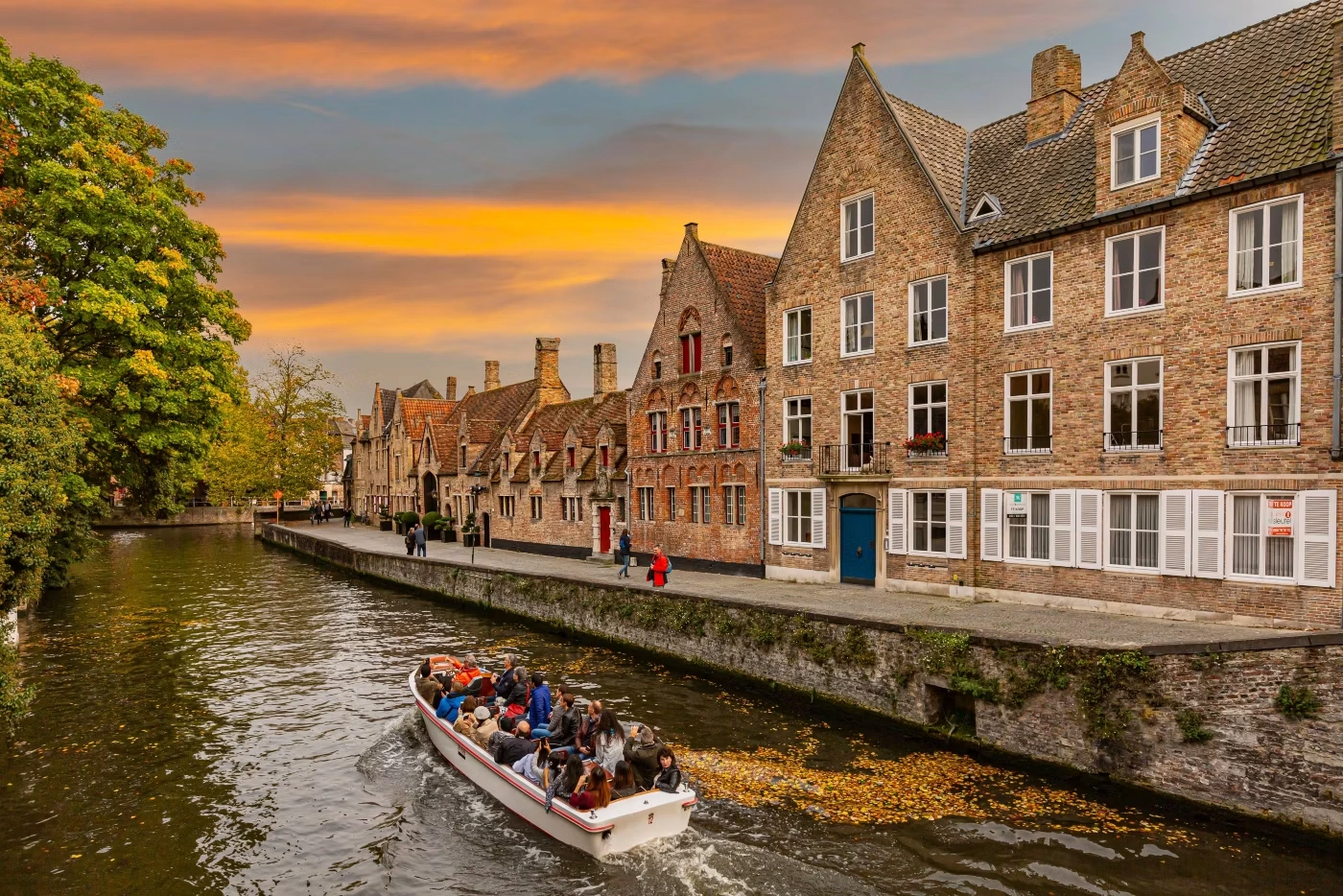
Explore Bruges’ canals, medieval squares and Flemish architecture, with practical Channel ferry gateways for reaching the city.
The search is pre-filtered to the most relevant destination country or region where supported. Select the exact ports and travel date before booking. Click Here to view other available ferry destinations.
Click Here to view all other available ferry routes and destinations
Medieval squares, quiet canals and one of Europe’s best-preserved historic city centres
Bruges is defined by its compact medieval core, canals and dense concentration of historic buildings. The Markt, Belfry and Burg sit at the centre of a city that is best explored slowly on foot rather than treated simply as a stop between ferry ports.
Canal-side viewpoints around Rozenhoedkaai, the Begijnhof and Minnewater give Bruges its postcard character, while the Groeningemuseum and churches add important Flemish art and history.
Zeebrugge is Bruges’ coastal port and an important cruise and freight harbour, but the former direct Hull–Zeebrugge passenger-car ferry no longer operates. Travellers from Britain should therefore use a current passenger ferry gateway rather than expect a conventional ferry to arrive directly for Bruges.
For motorists, Dunkirk and Calais are practical Channel arrival points with straightforward onward road connections into Belgium. Harwich–Hook of Holland can also suit travellers approaching from eastern England and combining the Netherlands with Belgium.
Bruges railway station is close to the historic centre and links the city with Brussels, Ghent and the Belgian coast, making it easy to combine ferry travel with rail once you have reached Belgium.
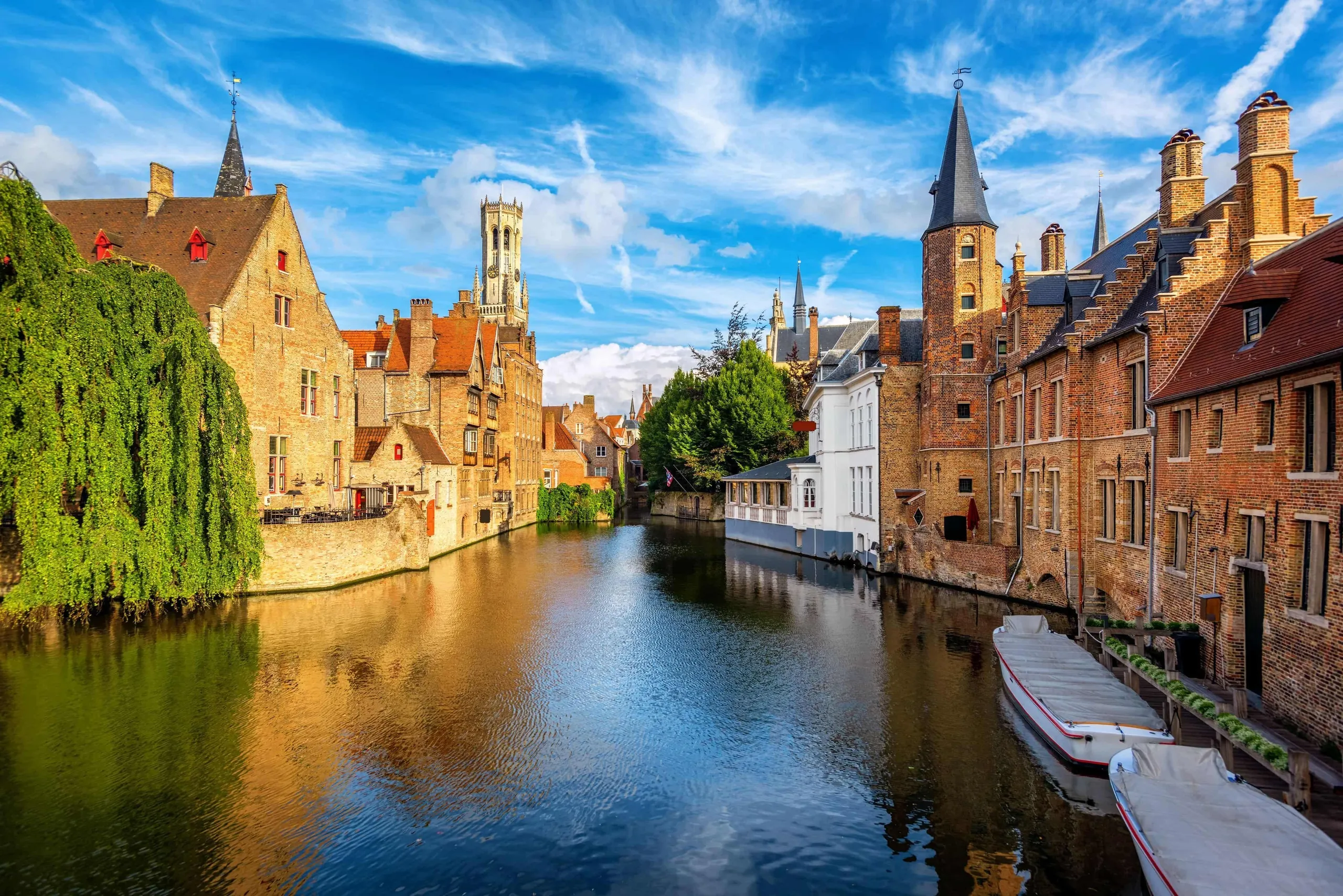
Bruges is exceptionally compact, so the main medieval squares, canals and museums fit comfortably into a walking itinerary.
Start in Bruges’ central square and climb or admire the medieval Belfry dominating the city skyline.
Walk a few steps to the ornate civic square with the Basilica of the Holy Blood and historic city hall.
See one of Bruges’ classic canal views where medieval buildings meet the water.
Explore Flemish art including important works by the Flemish Primitives.
Walk through a quieter historic enclave and landscaped lakeside area south of the centre.
Use local chocolatiers, breweries and traditional cafés as part of exploring the old city rather than a separate attraction.
Browse canal cruises, walking tours, food experiences and day trips available in Bruges and West Flanders.
Tours and activities displayed in this section are supplied through Viator. Availability, descriptions and prices are provided by the activity supplier and can change.
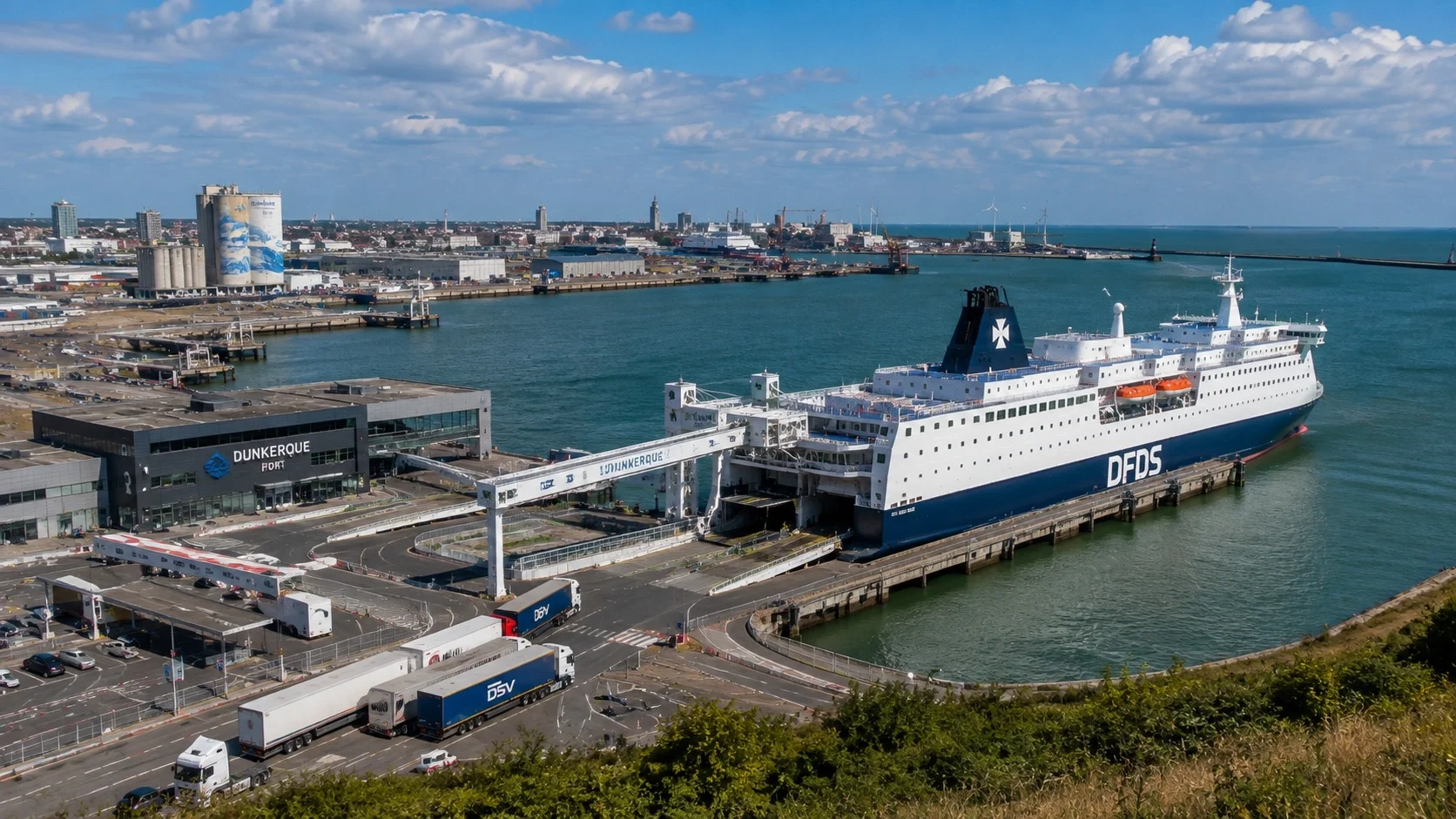
Bruges is not currently served by a conventional UK passenger-car ferry arriving at Zeebrugge. Zeebrugge remains a major commercial and cruise port, but the former Hull passenger service has ended, so ferry travellers should plan around an active gateway.
Dunkirk and Calais are the most practical Channel ferry ports for many motorists travelling from Britain to Bruges. From either port, continue by road into Belgium. The Harwich–Hook of Holland route provides another useful option when a North Sea crossing fits the wider itinerary better.
Foot passengers should plan the onward rail or coach connection carefully because Channel ferry terminals are designed heavily around vehicle traffic. If travelling without a car, compare the complete ferry-plus-ground-transport journey rather than just the sea crossing.
Bruges’ historic centre is highly walkable, with the railway station providing easy links around Belgium and to the coast.
The Markt, Burg, canals, Begijnhof and most museums are best explored on foot.
Frequent trains connect Bruges with Ghent, Brussels, Ostend and other Belgian destinations.
Find Bruges rail tickets here...A car is useful when combining Bruges with a ferry through Dunkirk or Calais and wider touring in Flanders.
The old city is strongest for atmosphere and evening walks, while the station area can be practical for rail-heavy itineraries and onward travel.
The former Hull–Zeebrugge passenger-car ferry no longer operates. Bruges travellers should use an active passenger gateway such as Dunkirk, Calais or Hook of Holland and continue by road or rail.
Dunkirk and Calais are practical Channel gateways for motorists, while Hook of Holland can work well from Harwich. The best choice depends on your starting point and ground transport.
Zeebrugge receives cruise ships and extensive commercial traffic, but it should not be treated as a current conventional UK passenger-car ferry route for Bruges.
Popular highlights include the Markt and Belfry, Burg, canal viewpoints, Groeningemuseum, Begijnhof and Minnewater.
No. The historic centre is best on foot and trains connect other Belgian cities easily. A car is useful mainly for a wider ferry road trip.
Yes, but the connection from your ferry terminal to the rail network depends on the gateway. Plan the complete transfer before travel.
Yes. Frequent Belgian trains make both cities straightforward day trips or onward stops.
Two days gives time for the main sights and quieter evening atmosphere; a longer stay allows museums and day trips around Flanders.
Check live sailing options, passenger fares, vehicle prices and onboard accommodation for your travel dates.


